Context
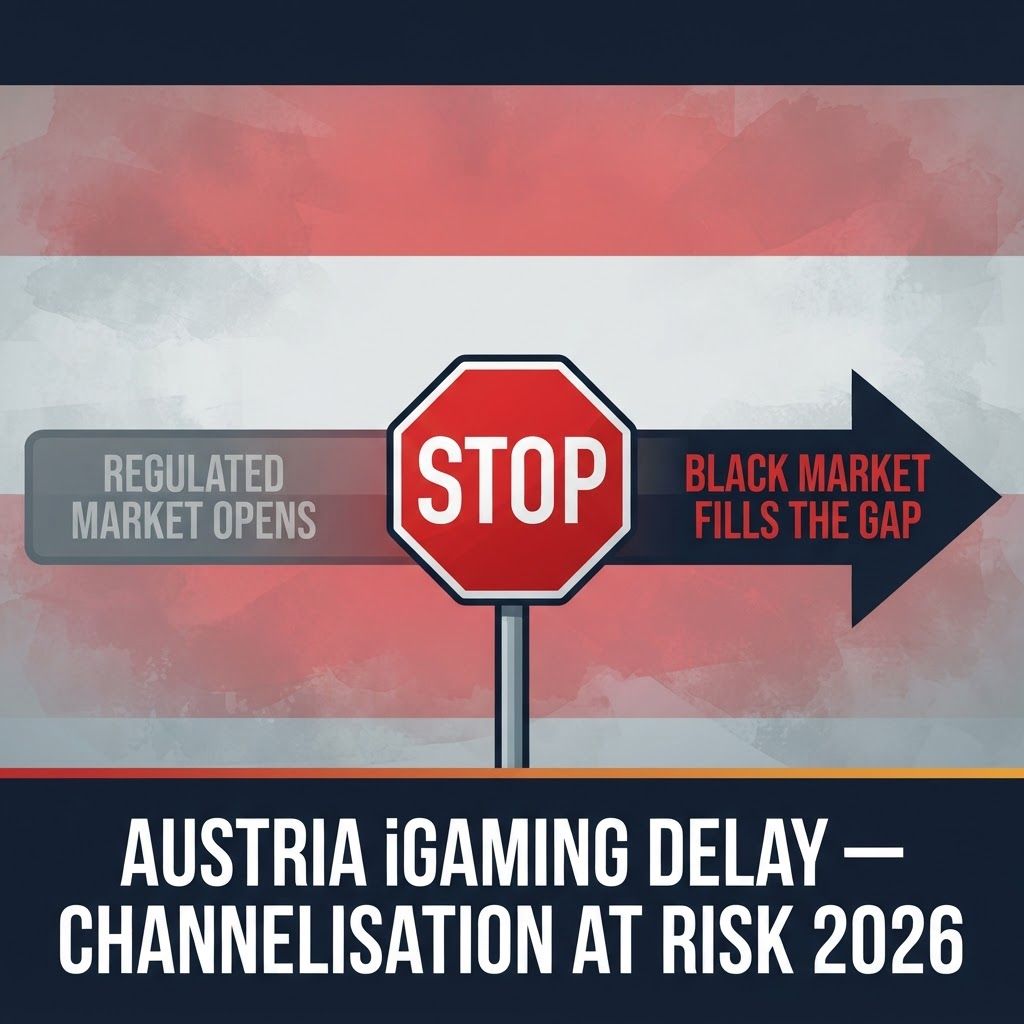
Austria has formalised its timeline for the launch of its newly regulated iGaming market, with plans to observe a prolonged hiatus before licensed operators can commence operations. The delay, announced alongside confirmatory regulatory guidance on 29 June 2026, is intended to allow sufficient time for licensing infrastructure, operator onboarding, and compliance system deployment. However, the length of the pause has prompted substantial concern from operators, industry associations, and gambling harm researchers.
Austria's regulatory overhaul was undertaken to modernise the country's gaming framework, which previously restricted online gaming significantly. The reform agenda includes establishing a licensed iGaming regime with consumer protection standards, responsible gambling requirements, and tax collection mechanisms aligned with EU norms. The channelisation objective — directing Austrian players toward licensed, regulated platforms — underpins the entire regulatory rationale.
What This Means
The core risk of a prolonged market launch delay is that it creates a regulatory vacuum. During the transition period between regulatory announcement and market opening, players who cannot access licensed Austrian platforms will continue using unregulated offshore operators. Black market operators are incentivised to aggressively acquire Austrian customers during this window, knowing that once the licensed market opens they will face intense licensed competition.
Channelisation — the percentage of total gambling spend that flows through licensed operators — is the primary metric by which Austria's regulatory reform will be evaluated. Historical evidence from other European markets, including Sweden and Germany, demonstrates that prolonged delays between regulatory announcement and market opening significantly damage channelisation outcomes. Players who establish habits and loyalty with unlicensed operators during the transition are difficult to recapture once licensed alternatives become available.
For operators awaiting Austrian licences, the delay increases uncertainty around market entry timing and return on licensing investment. Companies that have already committed capital to product localisation, Austrian player acquisition infrastructure, and compliance systems face carrying costs without revenue generation during the extended wait.
Austria's experience is directly relevant to other European jurisdictions contemplating similar regulatory transitions, including those in the Balkans and Central Europe. Policymakers should study Austria's channelisation risk as evidence that regulatory implementation timelines are as commercially significant as the content of the regulations themselves.
What to Watch
Monitor announcements from Austrian gaming authorities regarding revised launch timelines and any interim measures designed to limit black market growth during the transition period. Watch for industry association submissions to Austrian regulators quantifying channelisation risk and advocating for accelerated market opening.
Source: iGaming Business. Published 2026-07-01.
Source: iGaming Business
Marcus De Luca
Regulation Correspondent
Member of the iGaming Pulse editorial team. Covering industry news, analysis, and B2B developments across the global iGaming sector.