Legacy Casino Operator Navigates Liquidity Pressures
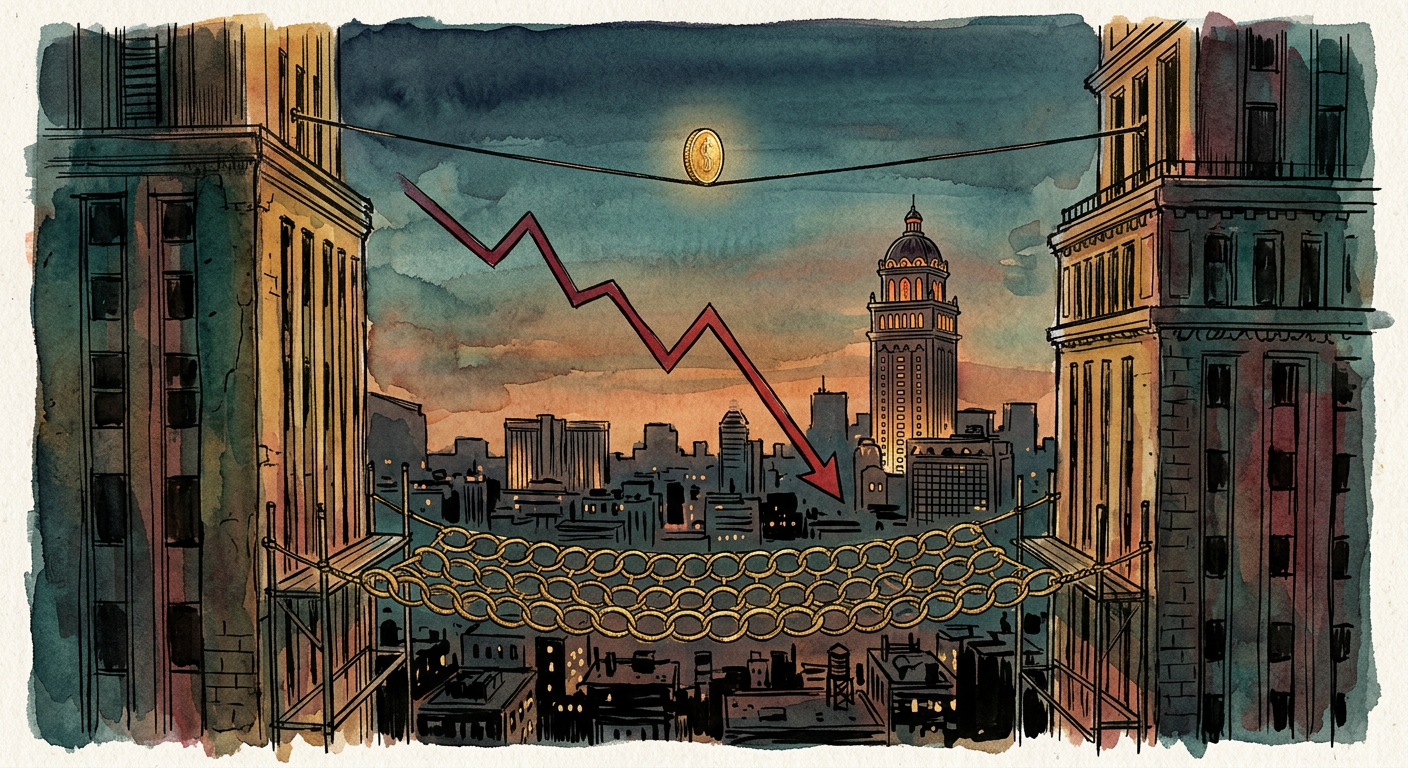
Bally's Corporation reported a $117 million net loss for the third quarter of 2026, revealing the strain beneath modest revenue growth. While the casino operator achieved a 21.7% increase in third-quarter revenue, operational losses and financing challenges have created a precarious financial position that required immediate capital restructuring to avoid covenant violations.
The company secured $560 million in financing commitments to address the liquidity shortfall, narrowly preventing a technical default on existing debt obligations. However, management has explicitly cautioned investors that additional covenant breaches remain possible before year-end, suggesting that Q4 performance will be critical to the company's financial stability.
Capital Structure Challenges in Mature Markets
Bally's situation exemplifies the structural headwinds facing casino operators burdened by legacy debt accumulated during acquisition and expansion cycles. Even with operational revenue growth outpacing inflation, cash generation remains insufficient to service debt obligations, creating a treadmill where financial leverage constrains strategic flexibility.
The Chicago property development—which was highlighted in earlier financing arrangements—represents a major capital commitment during a period of acute liquidity pressure. For management, balancing new project investments against debt management becomes a zero-sum exercise, forcing difficult trade-offs between growth and financial stability.
Operational Performance Masks Structural Issues
The 21.7% revenue growth is a positive operational signal, suggesting properties are performing and customer demand remains intact. Yet it proves insufficient to overcome legacy financing structures, indicating that organic business improvement alone may not resolve Bally's capital structure challenges without additional intervention.
Investors monitoring gaming sector consolidation and distressed debt trading should track Bally's covenant compliance closely. If the company breaches additional covenants in Q4, it could trigger accelerated debt maturity, force asset sales, or create refinancing pressure that leads to ownership restructuring. For suppliers, vendors, and service providers in the gaming ecosystem, Bally's financial status affects payment reliability and contract stability.
Source: gamblinginsider.com
James Whitfield
Editor-in-Chief
Member of the iGaming Pulse editorial team. Covering industry news, analysis, and B2B developments across the global iGaming sector.