BetMGM's Q1 Is Solid, But Prediction Markets Are Eroding Its Acquisition Economics
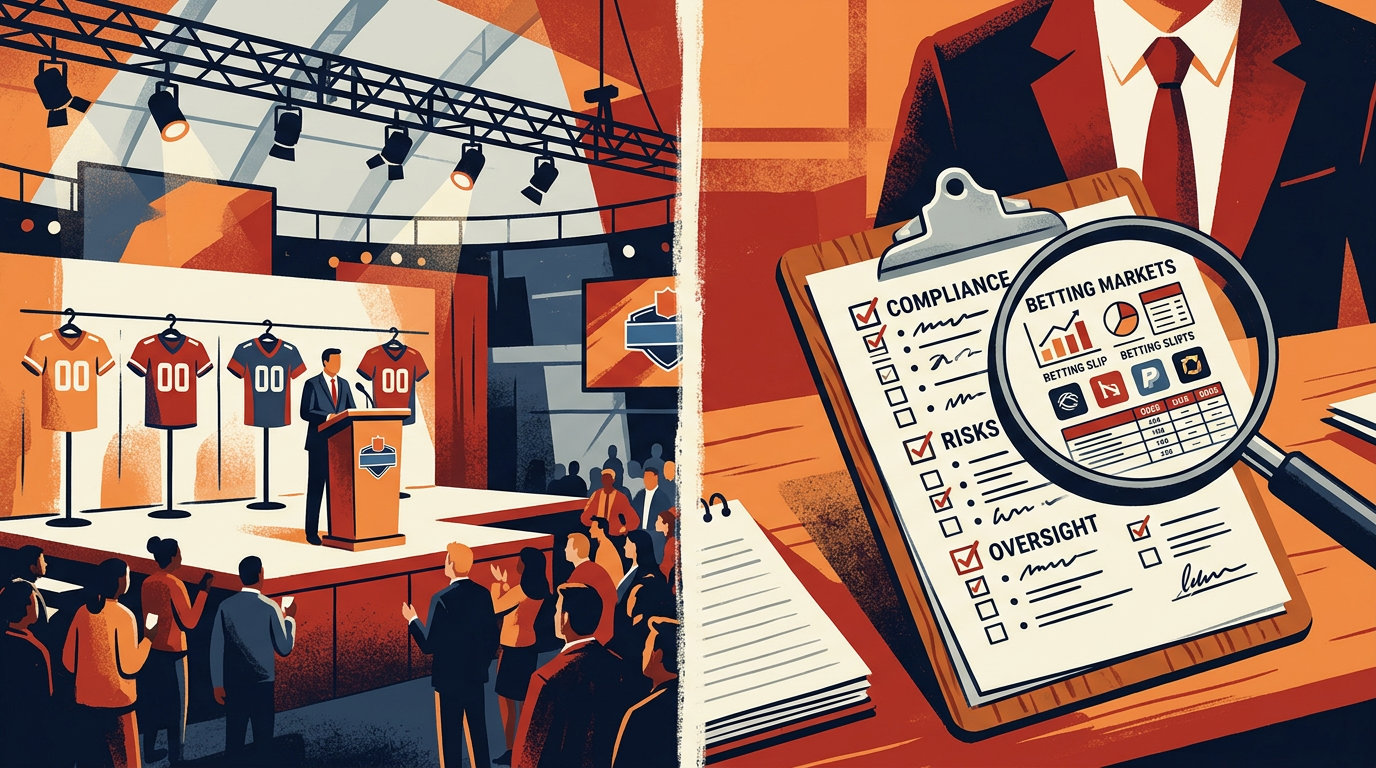
BetMGM has reported first quarter 2026 results that show continued revenue growth, but a downward revision to full-year guidance reveals a more complex operational picture — one in which prediction market platforms are directly competing for the same media inventory that sportsbooks use to acquire customers.
What Happened
BetMGM reported Q1 2026 net gaming revenue of $696 million, representing a 6% increase year-on-year, with iGaming revenue up 9% and online sports betting revenue up 4%. Despite the top-line growth, the company revised its full-year 2026 net revenue guidance downward from $3.1–$3.2 billion to $2.9–$3.1 billion. CEO Adam Greenblatt attributed the guidance cut to two related factors: strong bettor performance (meaning the house won less relative to handle in Q1), and — more structurally — a 'significant increase' in customer acquisition costs. Greenblatt pointed specifically to prediction market platforms that are buying sports betting search keywords and sports media advertising, competing directly in the same channels where BetMGM acquires new sportsbook customers. This bidding war has meaningfully extended the payback period on new customer investments. In response, BetMGM has reduced promotional spending on lower-value recreational players and focused marketing budgets on acquiring and retaining higher-value users. Despite the guidance cut, management maintained its EBITDA guidance range, describing prediction market disruption as 'near-term' rather than a long-term structural threat.
Why It Matters
BetMGM's disclosure is the most quantified public acknowledgment to date that prediction markets are affecting sportsbook unit economics. The mechanism is indirect but significant: prediction market platforms do not need state-level sports betting licences, so they can operate in all 50 states — and in doing so they compete for the same search and media inventory that sportsbooks rely on. For every dollar a prediction market platform spends on sports betting keywords, BetMGM's customer acquisition cost rises. Greenblatt's comments directly validate the rationale behind the $48M Sports Betting Alliance super PAC announced the previous week — the political spending is an attempt to lock in state legalisation before prediction market platforms entrench further.
Industry Context
BetMGM is the third-largest US online betting operator and a 50/50 joint venture between Entain and MGM Resorts — two major public companies with different shareholder bases and strategic priorities. Its guidance cut will be watched carefully by both parents, and by DraftKings and FanDuel, whose own Q1 results will reflect whether the CPA inflation Greenblatt described is an industry-wide phenomenon or specific to BetMGM's marketing mix.
Source: Reuters / SBC Americas
James Whitfield
Editor-in-Chief
Member of the iGaming Pulse editorial team. Covering industry news, analysis, and B2B developments across the global iGaming sector.