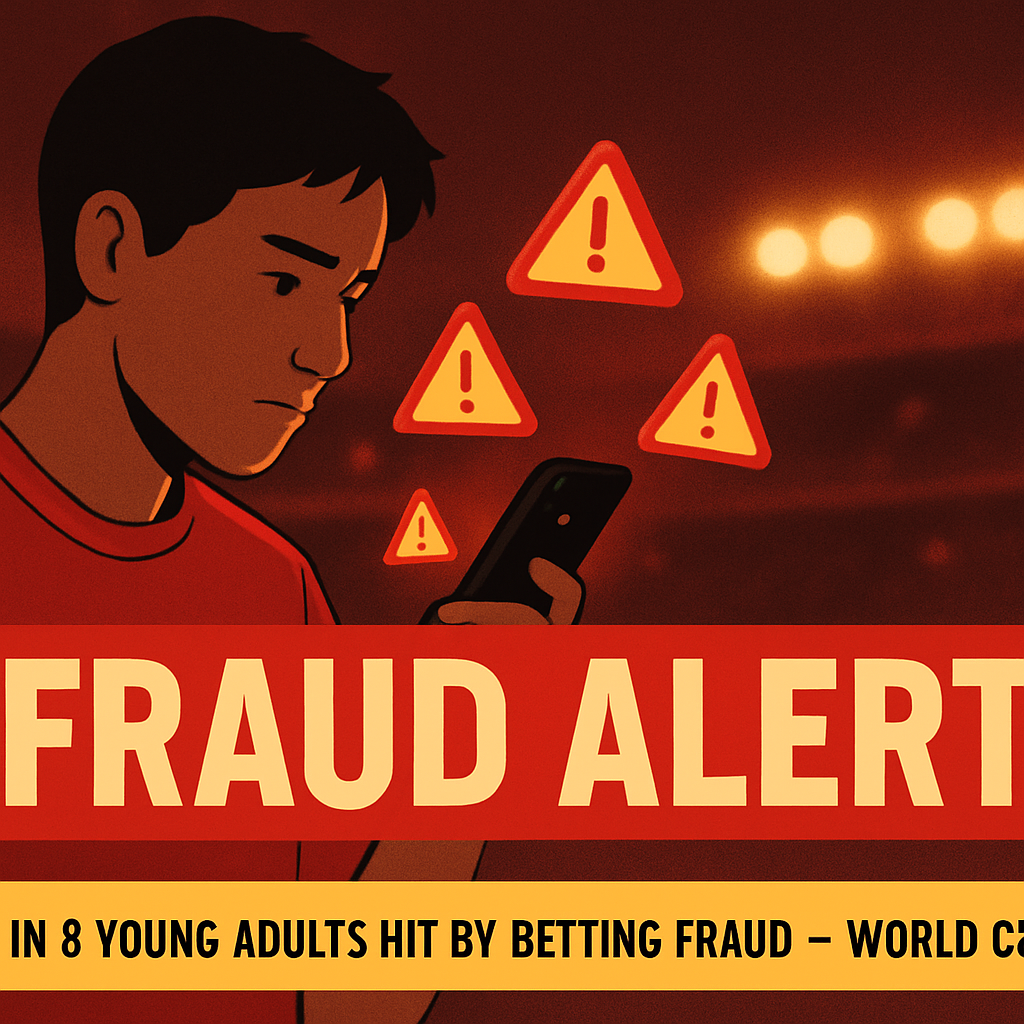
Fraud Targeting Young Bettors Rises Ahead of Major Tournament
A new research report from TransUnion, a global risk and information services provider, has identified a significant surge in betting fraud targeting young adults in the lead-up to the 2026 FIFA World Cup. The study found that approximately one in eight young adults encountered fraudulent betting schemes, scams, or phishing attempts during the pre-tournament period.
The same research revealed geographic concentration in betting interest: over half of surveyed bettors in London indicated they planned to place wagers specifically on England matches, suggesting that major sporting events and national team participation drive high-volume, predictable betting patterns that fraudsters actively exploit.
Context: The Fraud Environment
Major sporting events create peak betting activity windows, attracting both legitimate operators and criminal networks. Fraudsters deploy tactics including:
- Phishing schemes: Fake betting sites mimicking legitimate platforms
- Account takeover: Credential harvesting targeting bettors with existing operator relationships
- Payment fraud: Unauthorised transactions using stolen payment methods
- Bonus abuse: Exploiting welcome offer mechanics to generate false profits
- Social engineering: Impersonating customer support to extract sensitive information
Young adults (typically 18–34) represent a high-value fraud target: they are digitally native, less likely to verify operator legitimacy, and often use unsecured payment methods or shared devices. Tournament events amplify exposure by creating urgency and elevated emotional decision-making.
What This Means
For licensed operators, fraud prevalence among young bettors presents both a risk and an opportunity.
Risk side: Regulatory agencies will increase scrutiny of player protection measures. Young players affected by fraud may file complaints that implicate licensed platforms even when the fraud occurred on illegitimate sites. Reputational damage from fraud incidents — regardless of fault — can suppress player acquisition and retention.
Opportunity side: Licensed operators with robust fraud prevention, account verification, and player education programmes can credibly differentiate from grey-market providers. Transparent communication about player protection, combined with visible security measures, builds trust with exactly the demographic most at risk.
For B2B fraud prevention and identity verification vendors, the World Cup timing creates an acute demand signal. Operators seeking to protect high-volume tournament betting windows need deployable solutions immediately — not after the tournament concludes.
What to Watch
Monitor post-tournament fraud data from TransUnion and sector regulators for confirmation of actual fraud incident volumes versus pre-tournament warnings. Also watch for any regulatory responses — particularly from the UK Gambling Commission — that impose new fraud prevention requirements on licensed operators following the tournament period.
Source: iGamingBusiness, TransUnion research. Published 2026-06-17.
Source: iGamingBusiness

Illia Lisovskyy
Senior Editor
Member of the iGaming Pulse editorial team. Covering industry news, analysis, and B2B developments across the global iGaming sector.