Context
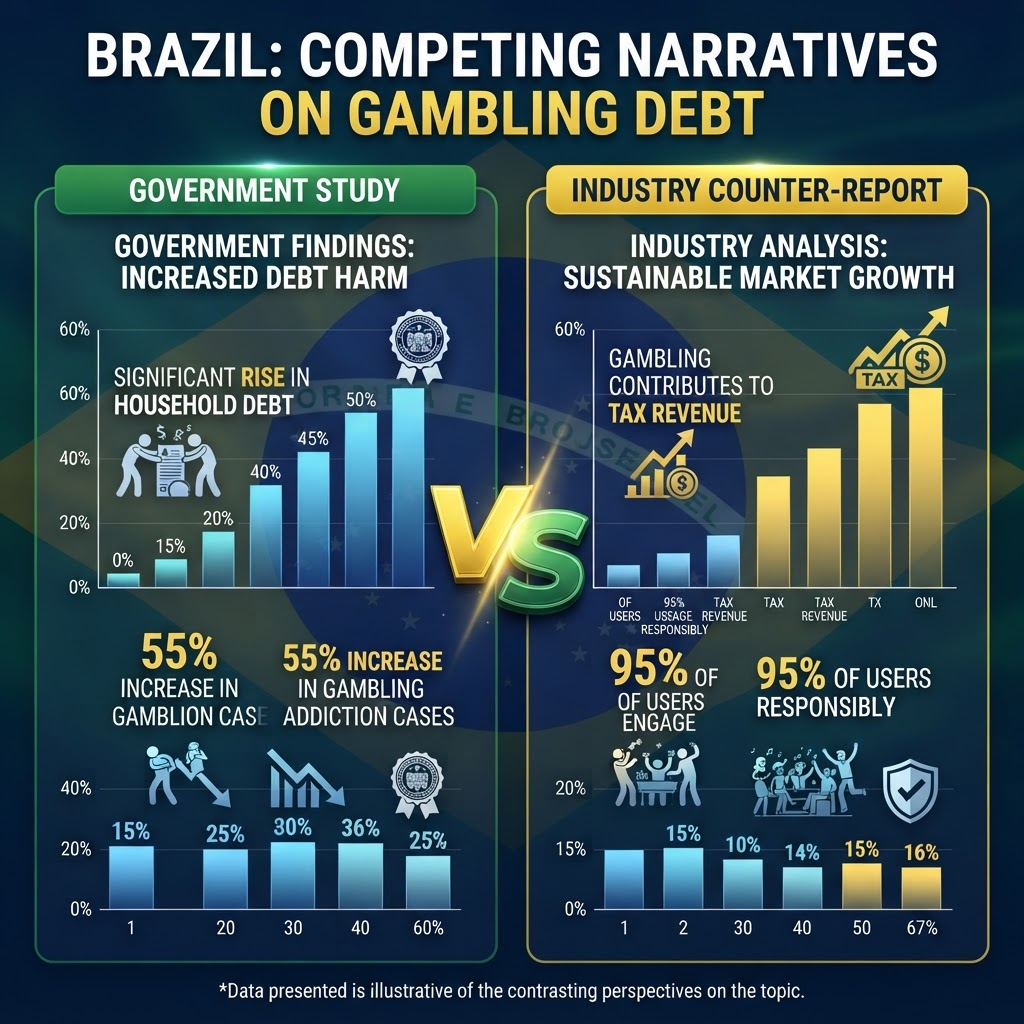
Brazil's betting industry has entered a critical regulatory phase as operators face mounting scrutiny over social impact claims. The National Trade Confederation (CNC) released a study asserting that betting activities significantly contribute to household debt among Brazilian consumers. However, the ANJL (Associação Nacional de Jogos Legalizados), representing licensed operators, has formally disputed these findings.
The ANJL's response document alleges that the CNC study contains substantial methodological flaws and presents data with significant discrepancies compared to alternative sources. This confrontation reflects broader tensions between industry stakeholders and regulators seeking evidence-based policy frameworks for the Brazilian market.
Brazil's regulated betting market has expanded rapidly since licensing reforms, attracting major international operators and generating substantial tax revenue. However, this growth has intensified debate over social costs, particularly regarding problem gambling and household financial strain.
What This Means
The ANJL's challenge to the CNC study demonstrates that Brazil's regulatory environment remains contested terrain. Industry and government agencies hold competing interpretations of betting's impact on consumer financial health. Resolution of this dispute will likely determine the trajectory of future regulations.
Policymakers may now demand independent, peer-reviewed research before implementing restrictions or additional taxes. Operators should prepare comprehensive data submissions demonstrating their responsible gambling investments and consumer protection measures. The burden of proof is shifting toward quantifiable, defensible evidence rather than anecdotal or methodologically questionable claims.
The stakes are significant: if the CNC study's conclusions stand unchallenged, they could justify additional operator taxes, advertising restrictions, stake limits, or mandatory player spending controls. The ANJL's countermove is therefore not merely academic—it is a strategic intervention to protect operator revenue and market conditions.
Why It Matters
This industry pushback indicates intensifying debate over problem gambling regulation in Brazil's rapidly expanding regulated market. How policymakers respond to conflicting data will shape future responsible gambling mandates and potential taxation or restrictions on operators.
Source: iGaming Business
Marcus De Luca
Regulation Correspondent
Member of the iGaming Pulse editorial team. Covering industry news, analysis, and B2B developments across the global iGaming sector.