Context
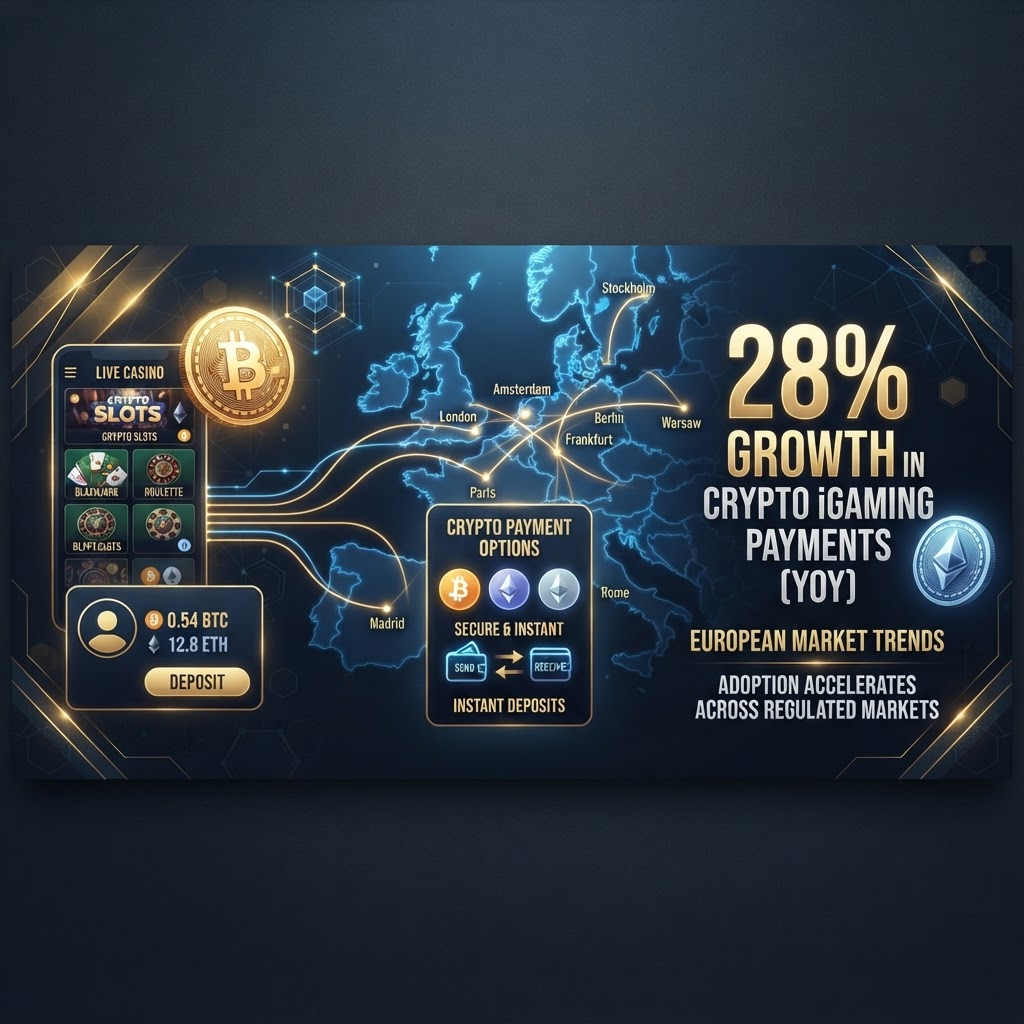
New research from PaymentsSource indicates that 28% of licensed European iGaming operators now offer cryptocurrency payment options, up from 11% in July 2025. The research surveyed 340 licensed operators across regulated European markets including the UK, Malta, Spain, Sweden, Romania, Bulgaria, Netherlands, Portugal, and Germany.
Bitcoin and Ethereum represent 89% of crypto transaction volume, while stablecoin adoption (USDC, USDT) is accelerating among retail players. The regulatory framework codified by ESMA and national regulators in early 2026 has significantly reduced implementation barriers for operator adoption.
The 2026 ESMA regulatory guidance, combined with individual member state frameworks, has substantially reduced legal uncertainty that previously inhibited operator adoption. A key breakthrough came in March 2026 when ESMA classified crypto-to-fiat conversion (stablecoin settlement) as an eligible banking function under the MiFID II framework, enabling traditional payment processors to legally settle crypto transactions.
What This Means
For operators, cryptocurrency payment integration has transitioned from experimental novelty to standard operating capability. Players increasingly expect crypto options parity with traditional payment methods, particularly younger demographics (18–35) and internationally mobile players.
The economics for operators remain favourable: cryptocurrency payment processing fees (typically 1.5–2.5%) compare favourably to credit card processing (2.8–4.0%). More significantly, crypto payments enable operators to serve populations with limited banking access or credit card availability—particularly relevant for operators targeting Eastern European, Latin American, and emerging Asian-Pacific markets.
Fintech providers offering seamless crypto-to-fiat settlement are capturing substantial market share from traditional payment processors, as operators seek single-vendor solutions that handle both fiat and digital currency flows without maintaining separate treasury operations.
Why It Matters
Cryptocurrency payment integration reduces operational friction for players while enabling operators to access unbanked demographics and operate in jurisdictions with limited banking infrastructure. The 17-percentage-point growth in a single year indicates mainstream acceptance acceleration, creating competitive pressure on operators to support crypto options.
Source: PaymentsSource

Alex Bilyi
Senior Editor
Member of the iGaming Pulse editorial team. Covering industry news, analysis, and B2B developments across the global iGaming sector.