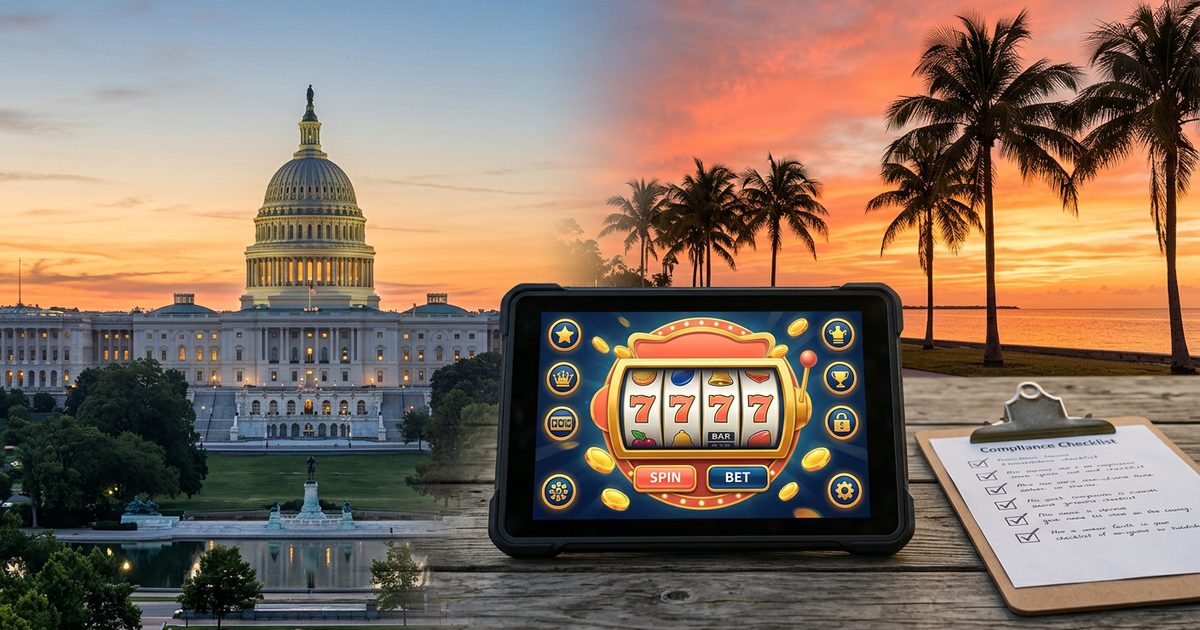
Washington D.C. has moved significantly closer to legalizing regulated online casinos after a council committee approved enabling legislation on Wednesday. The bill now faces additional hurdles before final passage, including a full council vote and a compressed legislative calendar heading into year-end.
The D.C. proposal would create a new iGaming market operated under the District's gaming control board. If enacted, D.C. would join approximately 20 other U.S. states and territories that have legalized and regulated online casino gambling. The timing is critical; D.C. officials have indicated a tight deadline for final passage, suggesting the bill faces pressure from competing priorities in the legislative schedule.
Approval Path Forward
The committee approval represents a substantial milestone, as most jurisdictional obstacles have been cleared. The bill enjoyed bipartisan support and backing from D.C.'s Mayor's office. Full council passage is not guaranteed, however, particularly if opponents can mobilize concerns about problem gambling or cannibalization of existing retail gambling venues.
D.C. already operates a mature sports betting market following federal legalization in 2018. Online casinos would represent an expansion of that framework into broader iGaming categories.
Florida Challenges DraftKings
Across the country, Florida's attorney general has challenged the legality of DraftKings' newly launched real-money casino product, creating unexpected compliance friction for one of the nation's largest betting platforms.
DraftKings had positioned its casino offering as an expansion of existing betting products, but Florida's legal analysis appears to dispute whether the product complies with the state's gaming compact and statutory framework. The attorney general's office has questioned whether DraftKings' product launch followed proper regulatory approval procedures or exceeded the operator's existing license scope.
Broader Market Implications
Florida's move signals heightened state scrutiny of operator product expansion and suggests that existing sports betting licenses may not automatically extend to online casino offerings. Other operators operating in Florida have taken note, with some reconsidering planned product launches pending legal clarity.
The twin developments—D.C.'s legislative progress and Florida's compliance challenge—reflect the fragmented regulatory landscape that U.S. iGaming operators navigate. Each state applies different legal frameworks, approval processes, and product restrictions, requiring platform-by-platform compliance strategies.
Source: gamblinginsider.com
Marcus De Luca
Regulation Correspondent
Member of the iGaming Pulse editorial team. Covering industry news, analysis, and B2B developments across the global iGaming sector.