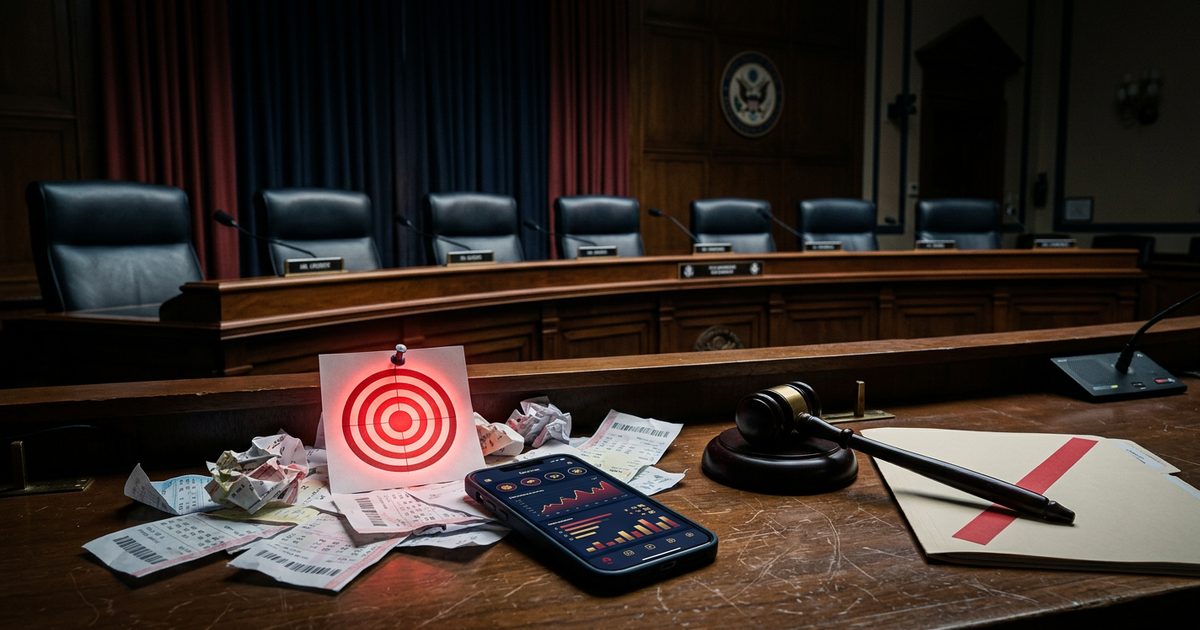
Congressional Pressure Mounts on DraftKings Over Targeting Practices
DraftKings is defending its marketing practices after facing direct allegations from U.S. lawmakers that the sportsbook specifically targets losing customers with incentives and perks designed to keep them engaged.
The pushback comes in response to an inquiry from Sen. Richard Blumenthal (D-Conn.) and Representatives Paul Tonko (D-NY) and Valerie Foushee, who have questioned whether the company's promotional strategies exploit vulnerable populations.
What the Lawmakers Are Claiming
The congressional inquiry centers on allegations that DraftKings uses customer data to identify bettors experiencing losses and then targets them with tailored incentives—such as bonus credits, free bets, or deposit matches—to encourage continued wagering. Lawmakers are concerned that these practices constitute predatory marketing that prioritizes revenue generation over consumer welfare.
The timing of the inquiry reflects broader congressional interest in regulating the sportsbook industry, which has expanded rapidly across U.S. states since the 2018 Supreme Court decision striking down the federal sports betting ban.
DraftKings' Response
The operator has rejected the characterization of its marketing approach, arguing that promotional incentives are a standard industry practice designed to enhance customer experience and engagement. DraftKings maintains that its programs comply with all applicable regulations and incorporate responsible gaming safeguards.
The company's defense underscores a fundamental tension in the regulated sportsbook business: balancing customer acquisition and retention strategies with responsibility obligations to protect against problem gambling.
Why This Matters for the Industry
This congressional scrutiny signals that marketing practices targeting specific customer segments—particularly those showing signs of problem gambling—are becoming a focal point for regulators. If lawmakers move forward with legislation restricting how operators can use customer data for promotional targeting, it could establish new compliance costs and operational constraints across the industry.
Similar inquiries may follow at both federal and state levels, potentially leading to standardized rules around promotional practices, customer segmentation, and transparency requirements. Operators will need to reassess how they balance growth initiatives with increasingly stringent player protection standards.
The outcome of this inquiry could establish precedent for how Congress views operator accountability in regulated markets and influence future regulatory frameworks.
Source: Casino.org
Marcus De Luca
Regulation Correspondent
Member of the iGaming Pulse editorial team. Covering industry news, analysis, and B2B developments across the global iGaming sector.