Context
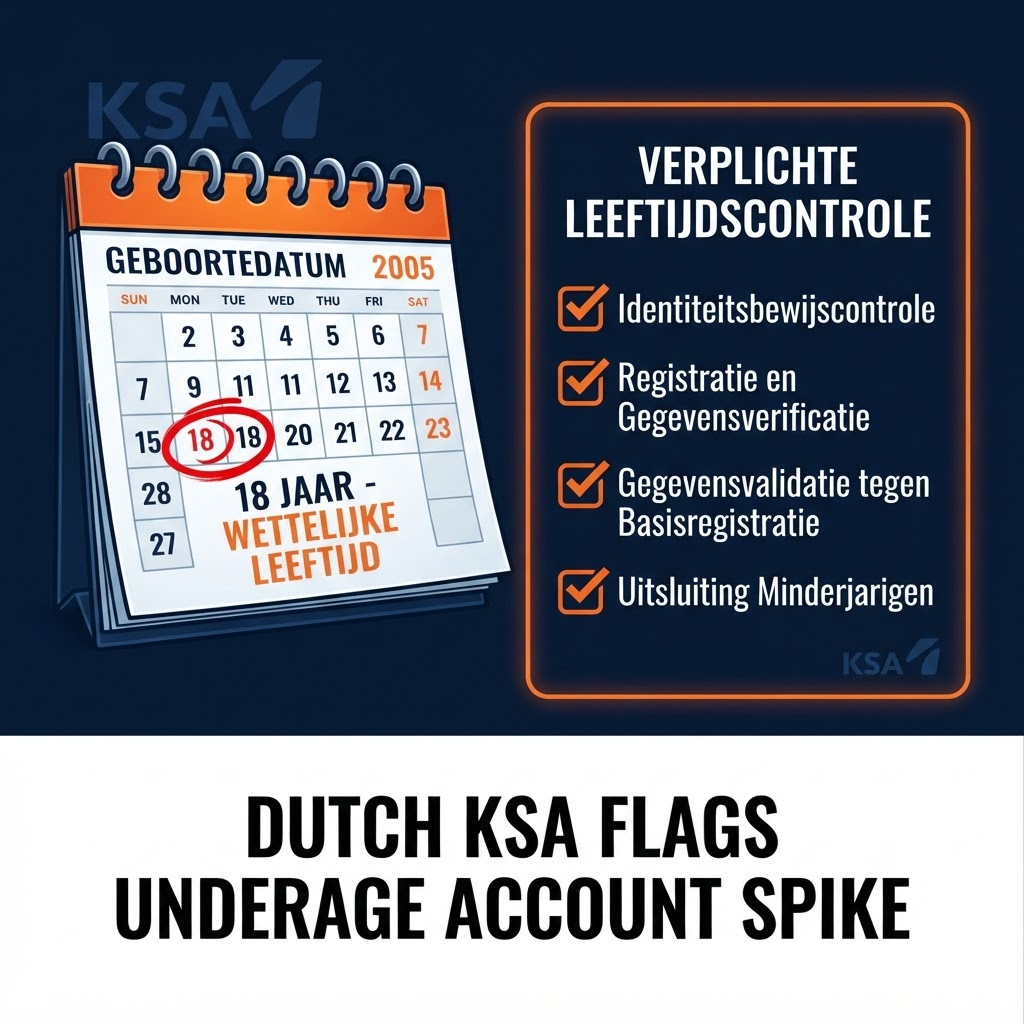
The Dutch gambling authority (Kansspelautoriteit, KSA) has released findings that paint a concerning picture of age verification practices in the country's online gambling sector. Analysis of account opening data shows that approximately 10% of gambling accounts created by newly-turned 18-year-olds were registered on their actual birthday—a statistical anomaly that suggests either deliberate circumvention of age gates or systemic weaknesses in identity verification protocols.
The KSA's discovery arrives amid heightened political scrutiny of the Dutch gambling market. Earlier this year, a representative from the Christian Democratic Party (CDA) publicly called for a significant policy shift, proposing that the minimum gambling age be raised from 18 to 24. This proposal reflects growing concern within conservative political circles about the accessibility of gambling products to young adults whose prefrontal cortex development research suggests may be more susceptible to problem gambling behaviors.
Netherlands-regulated operators have long operated under a framework established by the 2021 Gambling Act, which introduced legal online gambling and was intended to create a safer, regulated market. However, findings like these suggest the regulatory framework's implementation may have critical gaps.
What This Means
For operators and service providers, this KSA data represents a significant compliance warning. Birthday clustering in account openings typically indicates one of three scenarios: (1) systematic failure in age-verification systems to properly validate identity documents; (2) customers deliberately timing registrations to coincide with their 18th birthday to circumvent pre-screening; or (3) data quality issues in operator reporting to regulators.
Regulators across Europe have been moving toward stricter age verification standards, and the Netherlands is unlikely to be an exception. Operators should expect enhanced audit scrutiny, potential enforcement actions, and possible mandatory implementation of third-party identity verification vendors. Companies focused on operator compliance infrastructure will likely see increased demand for solutions that can credibly demonstrate robust age-gating.
The political pressure to raise the minimum age to 24 represents an existential threat to the market's addressable player base. While such legislation would require parliamentary approval, the combination of regulatory data and political momentum creates a non-trivial risk that could reshape the Dutch market within 18-24 months.
What to Watch
Monitor for official KSA enforcement action announcements targeting specific operators. Watch for guidance updates from the regulator on acceptable age verification methodologies. Track political developments around the CDA's proposal and whether it gains traction with other parliamentary parties. Additionally, observe whether other European regulators (UK, Germany, France) issue similar analyses of their markets—if birthday clustering is appearing in multiple jurisdictions, it suggests an industry-wide vulnerability rather than a Dutch-specific problem.
The coming months will be critical in determining whether this becomes a localized compliance issue or a catalyst for broader European regulatory reform.
Source: iGaming Business
Marcus De Luca
Regulation Correspondent
Member of the iGaming Pulse editorial team. Covering industry news, analysis, and B2B developments across the global iGaming sector.