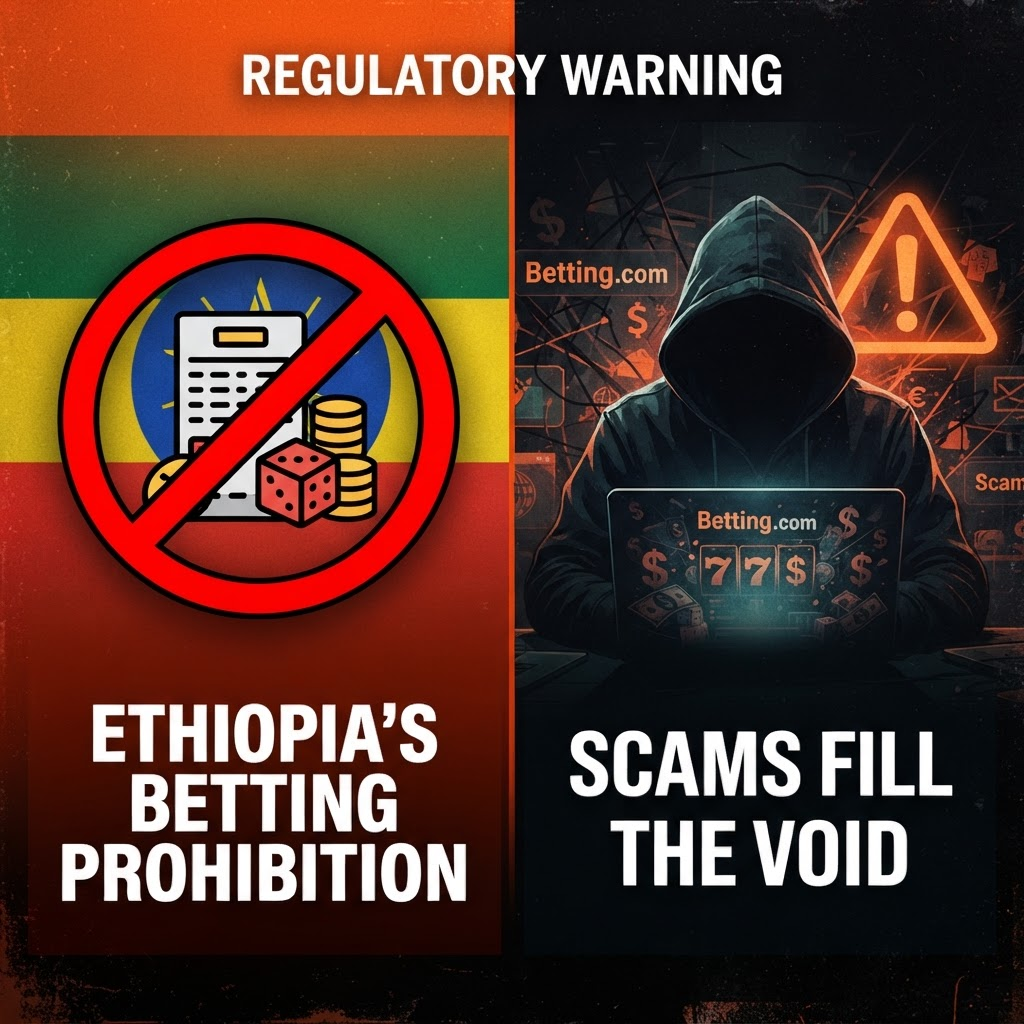
Ethiopia Closes Door on Licensed Betting Operations
Ethiopia's regulatory authorities issued an unambiguous reaffirmation: no sports betting operators—licensed or otherwise—are permitted to operate within the country's borders. The statement, delivered amid ongoing speculation that recent court developments might signal a regulatory shift, makes clear that Ethiopia intends to maintain its categorical prohibition on sports betting activities.
The timing of the reaffirmation is significant. Industry observers have periodically speculated that Ethiopia might loosen its stance on betting, particularly as neighbouring African nations have licensed sports betting operators and captured tax revenue. Occasional court cases involving betting-related disputes have fuelled these expectations. However, Ethiopian government authorities have now decisively closed the door on such speculation.
Scam Networks Flourish in Regulatory Vacuum
Paradoxically, Ethiopia's strict prohibition has not eliminated betting activity—it has simply driven it underground into unregulated, predominantly fraudulent channels. The regulatory vacuum has created ideal conditions for scam networks that operate unlicensed online betting platforms accessible to Ethiopian consumers via VPN or offshore servers, offering no customer protections, dispute resolution mechanisms, or refund guarantees.
These networks frequently engage in account closures and fund seizures once customers accumulate winnings. They harvest customer personal and financial data for identity theft and secondary fraud, and operate with impunity lacking any enforcement oversight. The result is a market where betting demand persists but is entirely captured by criminal networks rather than regulated operators.
What This Means
Ethiopia's experience provides a cautionary case study in the limits of prohibition as a regulatory strategy. For operators and regulators in adjacent markets, Ethiopia demonstrates that consumer demand for sports betting is structurally persistent—banning it does not eliminate it, but rather redirects it toward channels that cause maximum consumer harm with minimum state oversight.
For international operators, Ethiopia remains firmly off-limits for the foreseeable future. Any commercial activity in Ethiopia targeting sports betting consumers would expose operators to significant legal and reputational risk.
Why It Matters
Ethiopia's hardline stance against betting creates a cautionary case study for operators eyeing African markets. The persistence of scams despite the ban reveals that prohibition alone does not eliminate gambling demand—it simply channels activity toward unregulated, often fraudulent operators.
Source: iGaming Business
Marcus De Luca
Regulation Correspondent
Member of the iGaming Pulse editorial team. Covering industry news, analysis, and B2B developments across the global iGaming sector.