Gaming Suppliers Are Still Living With Liberation Day — A Year-One Assessment
iGaming Business has reviewed the 12-month impact of Trump's Liberation Day tariffs on the gaming supply sector, finding that while the Supreme Court's February 2026 ruling removed the most extreme tariff levels, the operational consequences for manufacturers and distributors of gaming hardware have not unwound.
What Happened
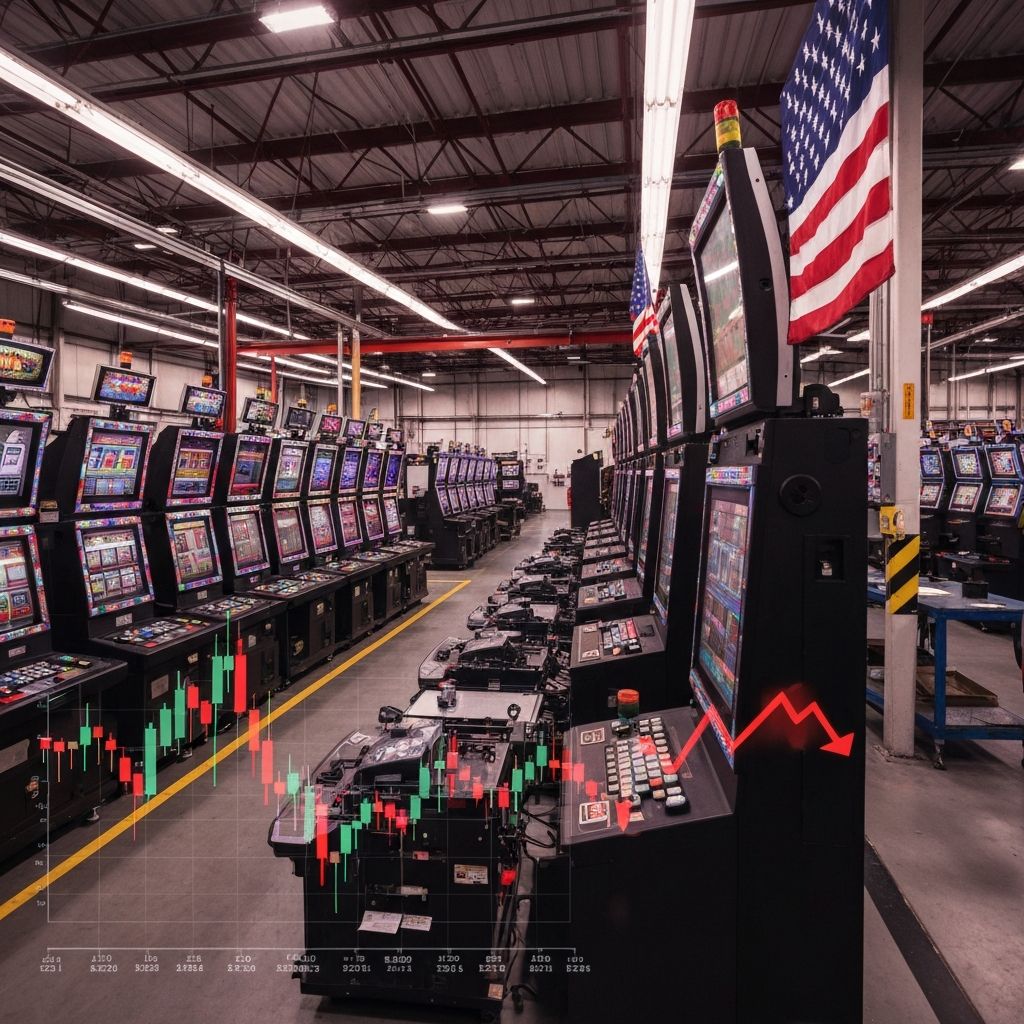
On April 2, 2025, President Trump declared a national trade emergency and announced tariff rates on virtually every US trading partner, lifting the average effective US tariff rate to 22.5% — the highest since 1909. Gaming suppliers with hardware components sourced from China, Taiwan, and Southeast Asia faced immediate cost pressure. Aristocrat saw its share price fall approximately 19% over the subsequent 12 months. The AGEM Index — tracking publicly listed gaming equipment manufacturers — declined 9% year-on-year. IGT and Everi, merged under Apollo following their 2025 deal close, announced layoffs affecting approximately 10% of their combined workforce, partly attributed to cost management in the tariff environment. The US Supreme Court ruled in February 2026 that the International Emergency Economic Powers Act did not grant the president authority to impose such broad tariff schedules, striking down the majority of the original Liberation Day rates. However, the Association of Gaming Equipment Manufacturers noted that relief had not been "meaningful" in practice, given residual tariffs and the disruption already baked into supply chains.
Why It Matters
Gaming hardware manufacturers rely on international component supply chains that cannot be quickly restructured. Display panels, microprocessors, and custom electronics used in slot cabinets are predominantly sourced from Asia. Tariff-driven cost inflation on these components compresses margins for both manufacturers and casino operators investing in technology refresh cycles. For the online-focused B2B segment, the indirect effects are a more significant concern: hardware cost inflation among land-based operators reduces investment in technology refresh cycles, potentially slowing the upgrade of casino floors to platforms that support cross-channel iGaming integration.
Industry Context
The gaming supply industry's year-one tariff experience demonstrates how trade policy shocks create durable operational consequences even after the policy itself is partially reversed. Supply chain relationships and inventory planning decisions made in response to the April 2025 tariffs will take 12–24 months to fully normalise — meaning the Liberation Day legacy will persist through 2026 regardless of the Supreme Court's ruling.
Source: iGaming Business
Marcus De Luca
Regulation Correspondent
Member of the iGaming Pulse editorial team. Covering industry news, analysis, and B2B developments across the global iGaming sector.