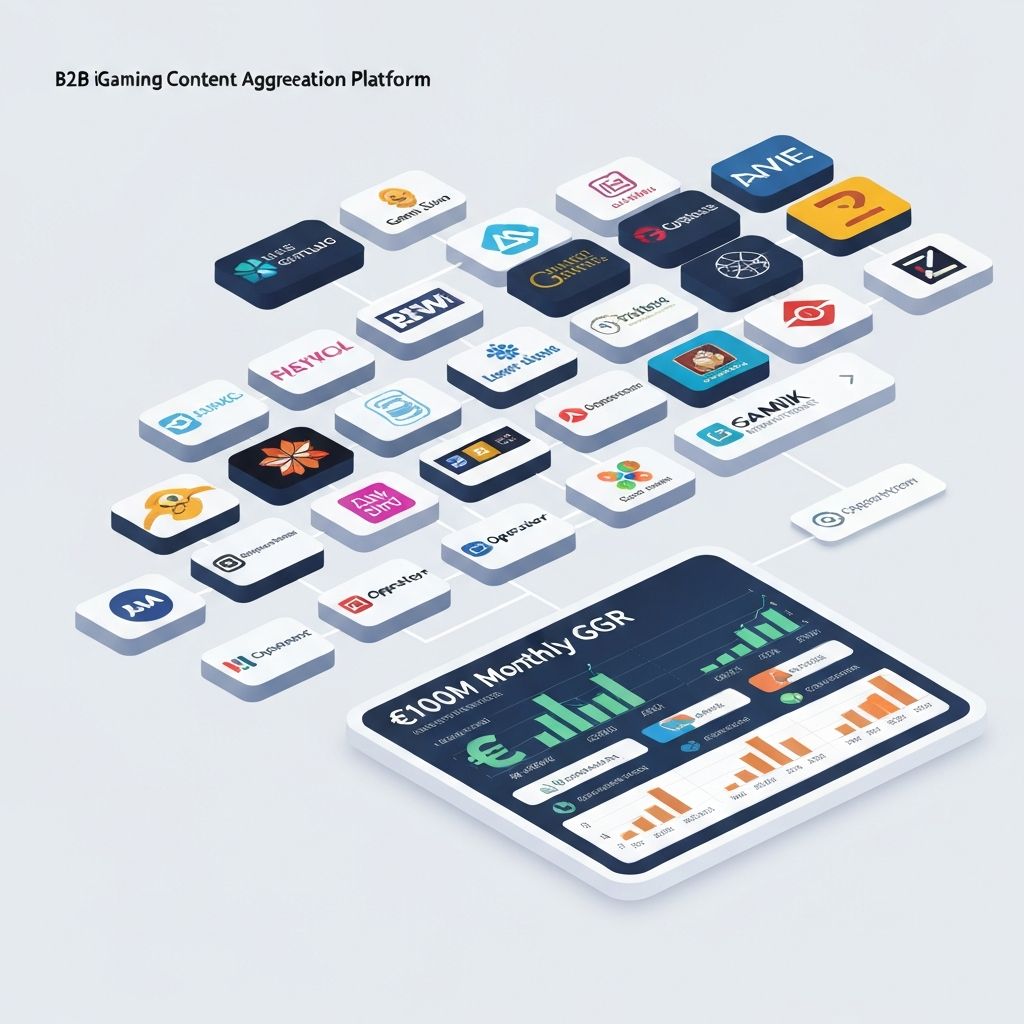
iGB/Alea Report Maps the Aggregator Segment at €100M+ Monthly GGR — and Finds It Is Far More Than a Distribution Layer
iGaming Business and Alea have published a comprehensive state-of-market report on iGaming aggregators, providing the most detailed quantification to date of a segment that sits at the intersection of game studios and operators.
What Happened
The report draws on contributions from Alea, SlotMatrix, Gaming Realms, EstrelaBet, and LeoVegas Group. Key findings include: the aggregator segment collectively handles more than €100 million in monthly GGR across its operator network; Platform-as-a-Service (PaaS) models are growing, allowing operators to use aggregator infrastructure while maintaining direct studio negotiation rights; and aggregators are increasingly providing compliance certification support, player data analytics, and market-entry consulting as value-added services beyond content routing. LeoVegas' Sam Leggott noted that aggregator-provided network-wide insights — performance data across a broad portfolio of games across multiple operators — help the group optimise game positioning in ways that direct studio data alone cannot provide.
Why It Matters
The €100M+ monthly GGR figure gives the aggregator segment a public scale anchor for the first time. More strategically, the report documents a perception shift: aggregators are no longer primarily seen as technical routers or licensing intermediaries, but as B2B strategic partners with compliance infrastructure, data capabilities, and regional market expertise. For game studios, this means aggregators are a more valuable — and potentially more expensive — distribution channel than their technical positioning has historically suggested.
Industry Context
The aggregator market includes established players such as Relax Gaming, SoftSwiss Aggregator, Pariplay, and hub88, alongside newer entrants like Alea. The shift toward PaaS models documented in the report reflects a broader technology trend: operators increasingly prefer to retain control of their game library management and studio relationships while outsourcing the technical infrastructure layer. This model creates a new competitive dynamic for aggregators — one based on platform quality and data value rather than simply the breadth of content catalogue.
Source: iGaming Business / Alea
Sofia Eriksson
Senior Reporter
Member of the iGaming Pulse editorial team. Covering industry news, analysis, and B2B developments across the global iGaming sector.