Context
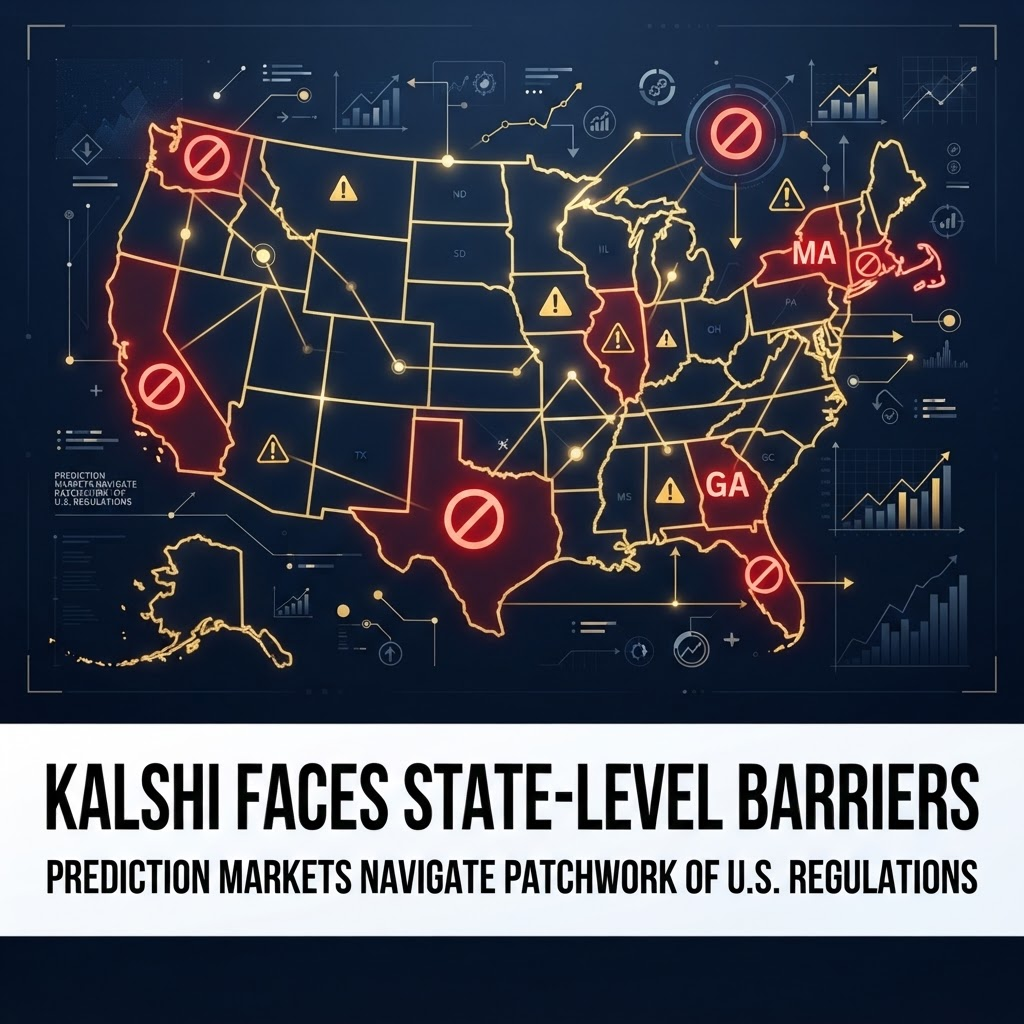
The Ninth Circuit's August 29 decision upholding Nevada's authority to regulate and prohibit Kalshi sports contracts has created immediate demand for specialized compliance and legal services within the prediction market ecosystem. Unlike traditional sports betting, which operates within relatively standardized regulatory frameworks across multiple states, prediction markets now face jurisdiction-specific legal uncertainty that could render products legal in one state while prohibited in another.
Kalshi and competing prediction market platforms have built their business models and technology infrastructure on the assumption that federal CFTC oversight would provide a unified regulatory framework. The appeals court's decision shattered that assumption, revealing that state-level gambling authority supersedes federal commodities regulation when state law explicitly prohibits gambling-like products.
This creates a cascading set of operational challenges for Kalshi and other prediction market platforms. They must now conduct comprehensive state-by-state legal assessments, implement jurisdiction-specific access controls, develop compliance protocols tailored to individual state requirements, and potentially redesign products for markets where state authorities view them as impermissible gambling.
What This Means
Service providers supporting prediction market platforms—including legal counsel, compliance consultants, technology infrastructure providers, and payment processors—must rapidly expand their capabilities to address state-level regulatory fragmentation. Compliance as a service (CaaS) providers will see increased demand for state-specific regulatory intelligence and product assessment services.
Payment processors and financial service providers supporting prediction markets now face elevated scrutiny. Nevada's victory suggests that state attorneys general may target financial infrastructure companies facilitating wagers that state authorities classify as prohibited gambling. Payment processors must implement state-aware transaction filtering and risk management protocols.
Data providers and risk analytics vendors serving prediction market platforms will need to develop enhanced geolocation and jurisdiction-detection capabilities. Real-time compliance requires accurate identification of user location and immediate application of jurisdiction-specific product restrictions.
Technology platforms supporting prediction markets must now incorporate regulatory compliance checks into their core architecture. Rather than relying on a single federal compliance framework, platforms must implement logic that evaluates user location against state-specific regulations and restricts access to prohibited products accordingly.
Operators pursuing iGaming B2B pipeline development should recognize that compliance and legal service providers now represent critical business partners. Companies offering sophisticated state-by-state regulatory assessment, compliance technology, and legal guidance will become essential to prediction market platform success.
What to Watch
Monitor which states move most aggressively to prohibit prediction market offerings following Nevada's legal victory. States with powerful attorneys general or well-resourced gambling regulators may view this decision as an invitation to enforce prohibitions against Kalshi and competitors. Early enforcement actions will clarify the scope of state authority and potential regulatory strategies.
Watch for Kalshi's response strategies. Will the company seek Supreme Court review, negotiate with state regulators, pursue legislative solutions, or pivot its business model? The company's regulatory strategy will establish precedents for how prediction market platforms respond to state-level restrictions.
Also monitor whether prediction market platforms begin consolidating or exiting jurisdictions where legal uncertainty is highest. Market consolidation and geographic retrenchment would signal that state-level regulatory barriers make national prediction market operations economically unviable.
Source: Gambling Insider
Anton Voronov
B2B Analyst
Member of the iGaming Pulse editorial team. Covering industry news, analysis, and B2B developments across the global iGaming sector.