Competing Operators Assess Strategic Implications of MGM-Diller Deal
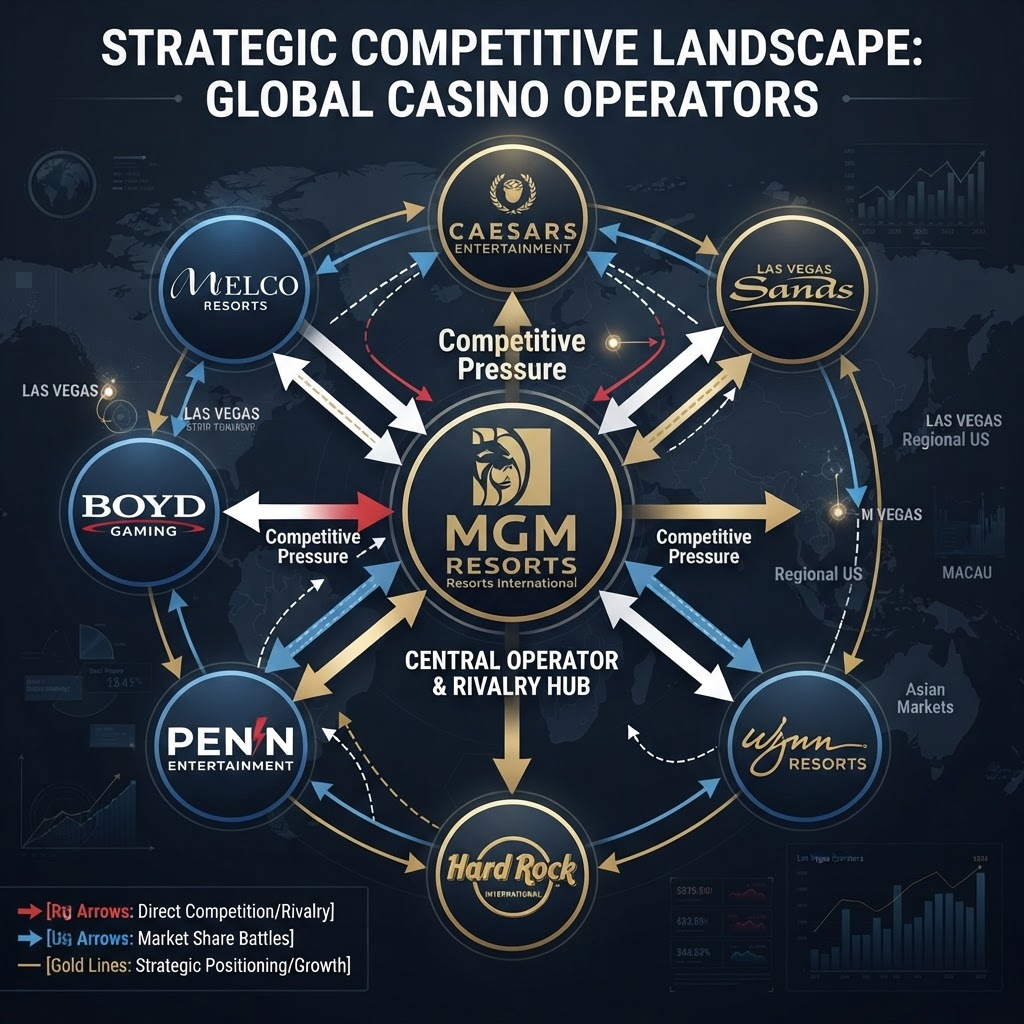
As MGM Resorts formed its special committee on July 11, 2026, to review Barry Diller's $12.4 billion acquisition proposal, competing casino operators immediately began evaluating strategic implications. For the broader gaming industry, MGM's potential change of control represents a significant competitive inflection point.
Major competitors including Las Vegas Sands, Caesars Entertainment, Penn Entertainment, and other regional operators are assessing how Diller's strategic vision and management approach could affect their own competitive positioning. The deal's potential outcomes range from transformational integration of entertainment and digital platforms to maintenance of current operations with enhanced financial resources.
What This Means
Competing operators must consider whether Diller's involvement could accelerate MGM's digital transformation, entertainment integration, or geographic expansion strategies. If Diller rapidly implements digital-first strategies, competitors may face pressure to accelerate their own digital initiatives or risk competitive disadvantage.
Diller's acquisition could also trigger portfolio rationalisation. If Diller views certain MGM properties as underperforming or misaligned with strategic direction, divestitures could offer acquisition opportunities for competitors seeking targeted portfolio expansion. Larger competitors like Las Vegas Sands and Caesars Entertainment must also assess whether maintaining current strategies remains viable if MGM gains strategic advantages from Diller's media and entertainment expertise.
Source: casino.org

Illia Lisovskyy
Senior Editor
Member of the iGaming Pulse editorial team. Covering industry news, analysis, and B2B developments across the global iGaming sector.