Context
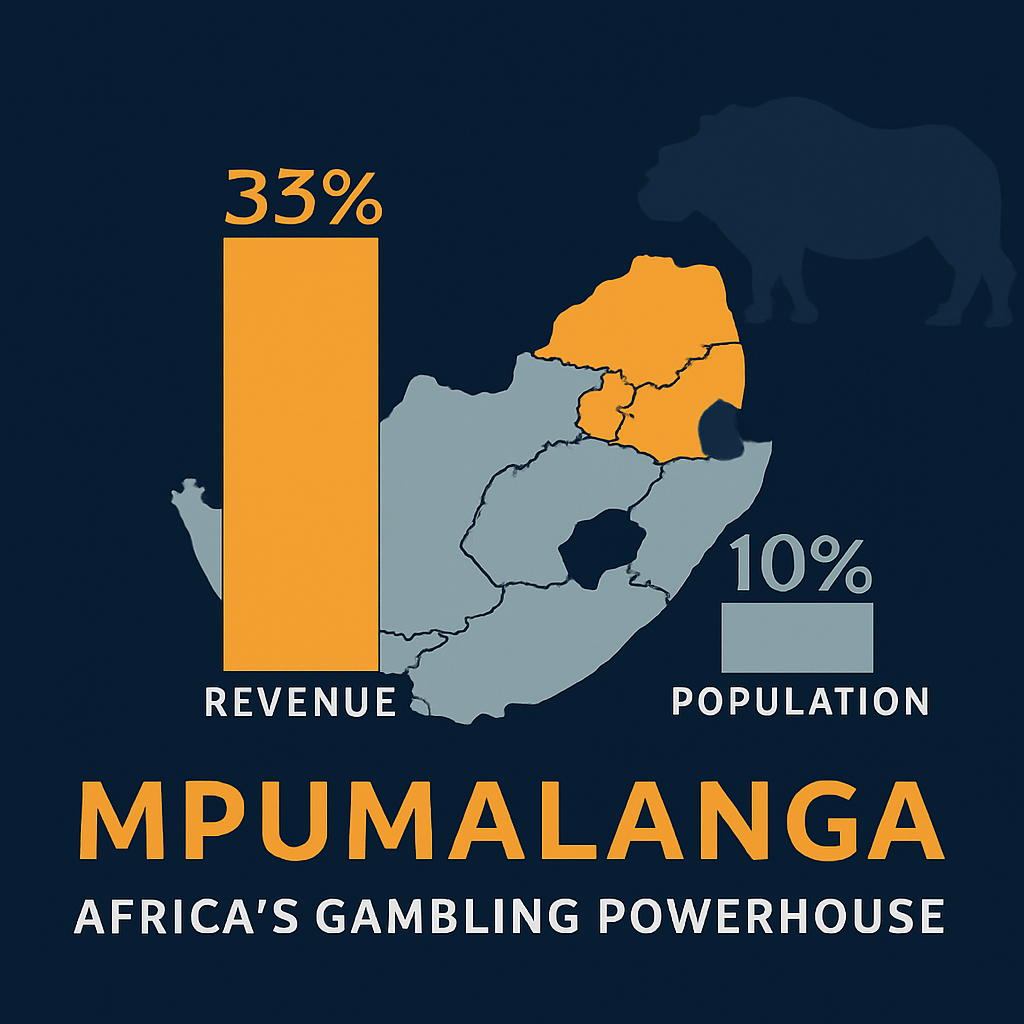
Mpumalanga province has emerged as Southern Africa's gambling revenue engine, generating approximately one-third of South Africa's total gambling revenue while maintaining a population share below 10% of the national total. This remarkable revenue concentration — roughly 3-4x the per-capita gambling output of the broader South African average — reveals the province's unique position within the regional gaming ecosystem.
Located in northeastern South Africa, bordering Mozambique and eSwatini (formerly Swaziland), Mpumalanga's gambling supremacy reflects convergence of geographic advantages, regulatory frameworks, tourism infrastructure, and cross-border dynamics that have established the province as a preferred destination for both domestic and regional gamblers.
What This Means
Mpumalanga's outsized revenue performance demonstrates that gambling market success depends less on total population than on strategic positioning, regulatory environment, and accessibility to high-value customer segments.
Geographic Proximity to Johannesburg: Mpumalanga's proximity to South Africa's economic powerhouse means wealthy urban gamblers can reach gaming venues within 2-3 hours, creating a consistent weekend-destination dynamic from the nation's highest-income metropolitan area.
Cross-Border Appeal: Positioned adjacent to Mozambique and eSwatini, Mpumalanga attracts cross-border traffic from residents of neighbouring countries with limited regulated gaming infrastructure — effectively expanding the addressable market beyond South African borders.
Tourism and Hospitality Integration: Mpumalanga's natural attractions — Kruger National Park proximity, scenic Panorama Route — combine gambling venues with leisure travel, creating multi-day visits that drive higher per-visit spending compared to purely urban gaming facilities.
Regulatory Environment: The provincial Mpumalanga Gambling Board has historically maintained a framework that attracts significant operator investment in premium venue infrastructure, reinforcing the destination-gaming positioning.
For operators and investors, the Mpumalanga model provides a blueprint for identifying high-value niche markets within broader regulated jurisdictions — demonstrating that provincial regulatory environments, strategic geography, and tourism integration can amplify market performance well beyond demographic expectations.
What to Watch
Monitor whether Mpumalanga's revenue share shifts as South African online gambling regulation matures. The province's land-based dominance could face structural pressure if digital gambling captures a growing share of high-value bettors who previously made the journey to physical venues. Provincial regulators will need to manage this transition carefully to preserve the tax revenue contribution.
What this means for B2B outreach: The Mpumalanga case study is directly applicable to conversations with operators evaluating African market entry. Suppliers — particularly those serving land-based casino technology, loyalty programmes, and hospitality integration — should study the Mpumalanga model as a reference for high-performance provincial gaming markets across Africa.
Source: iGamingBusiness. Published 2026-06-09.
Source: iGamingBusiness
Marcus De Luca
Regulation Correspondent
Member of the iGaming Pulse editorial team. Covering industry news, analysis, and B2B developments across the global iGaming sector.