Context
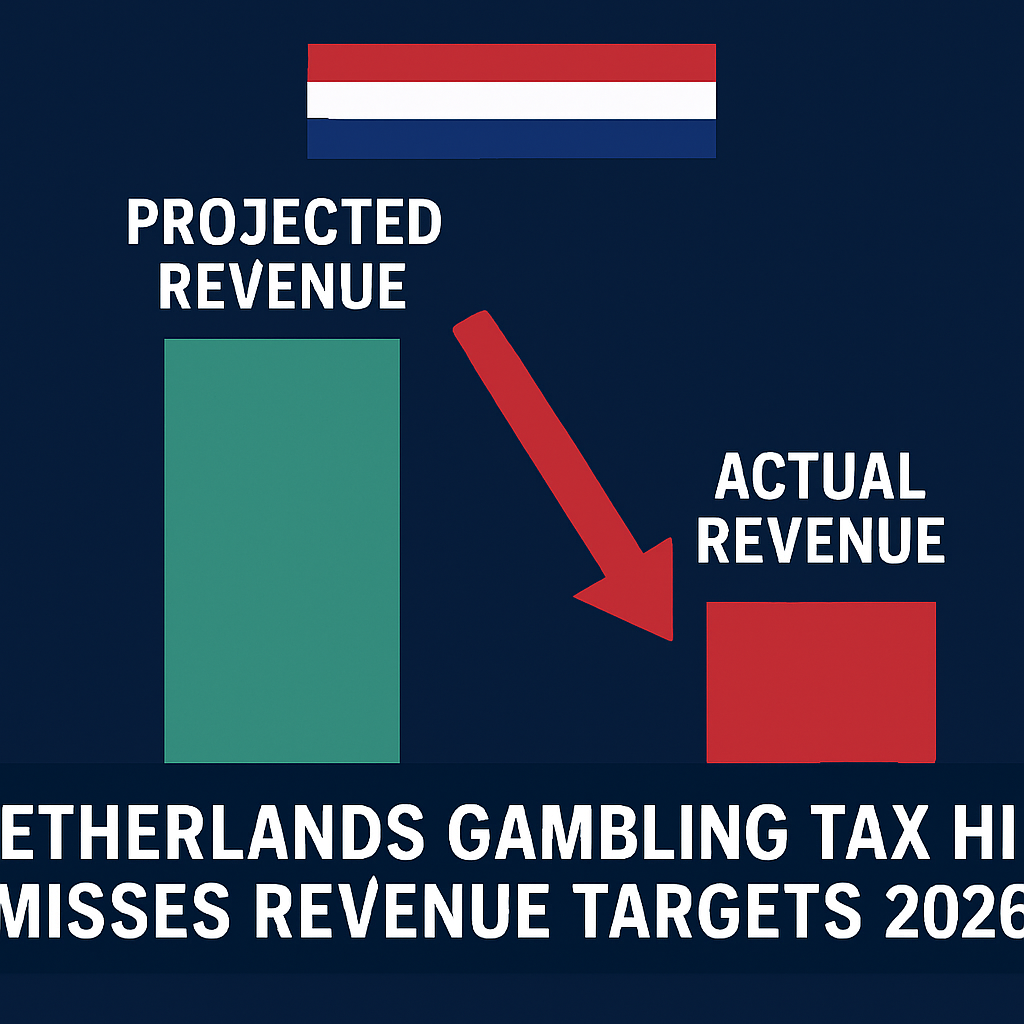
The Dutch government implemented a gambling tax increase intended to boost public revenue from the regulated iGaming market. Tax authorities projected substantial additional income based on historical player spending patterns and participation rates. However, recent analysis reveals that actual tax collections fell significantly short of forecasted figures, prompting reconsideration of tax policy effectiveness in mature gaming markets.
The Netherlands has operated a licensed gambling framework for decades, making it a fully matured market with established player bases, competitive operator landscapes, and sophisticated regulatory infrastructure. This context makes the tax shortfall particularly significant — it occurred in a stable, well-regulated environment rather than a volatile or developing market.
What This Means
The revenue shortfall reflects a fundamental economic principle often overlooked in tax policy design: regulated markets have optimal taxation points beyond which increased rates produce diminishing or negative revenue returns. Several mechanisms likely contributed to the underperformance.
First, licensed operators facing reduced profit margins from higher taxation may have decreased marketing spend, bonus offers, and player acquisition investment. Lower operator activity directly reduces new player recruitment and existing player engagement, contracting overall market size.
Second, price-sensitive player segments likely migrated to unlicensed operators offering better value, lower fees, or higher return-to-player percentages. Each player who shifts to illegal platforms represents lost tax revenue plus additional enforcement costs for the KSA.
Third, some operators may have reduced their Dutch market presence entirely, allocating resources to higher-margin jurisdictions with more favourable tax regimes — directly reducing the tax base the higher rate was meant to exploit.
The Dutch case provides crucial empirical evidence for jurisdictions currently considering tax increases, including Germany, Sweden, and several US states. The underperformance suggests that taxing regulated gambling markets beyond their optimal point can produce the opposite of intended effects: lower total revenue, higher black market activity, and reduced consumer protection coverage.
What to Watch
Monitor whether the Dutch government commissions a formal review of the tax rate's impact on market behaviour and whether any adjustment to the rate is proposed. Watch also for the KSA's illegal market activity data following the tax increase, which will quantify player migration to unlicensed operators.
Source: iGaming Business. Published 2026-06-25.
Source: iGaming Business

Alex Bilyi
Senior Editor
Member of the iGaming Pulse editorial team. Covering industry news, analysis, and B2B developments across the global iGaming sector.