Context
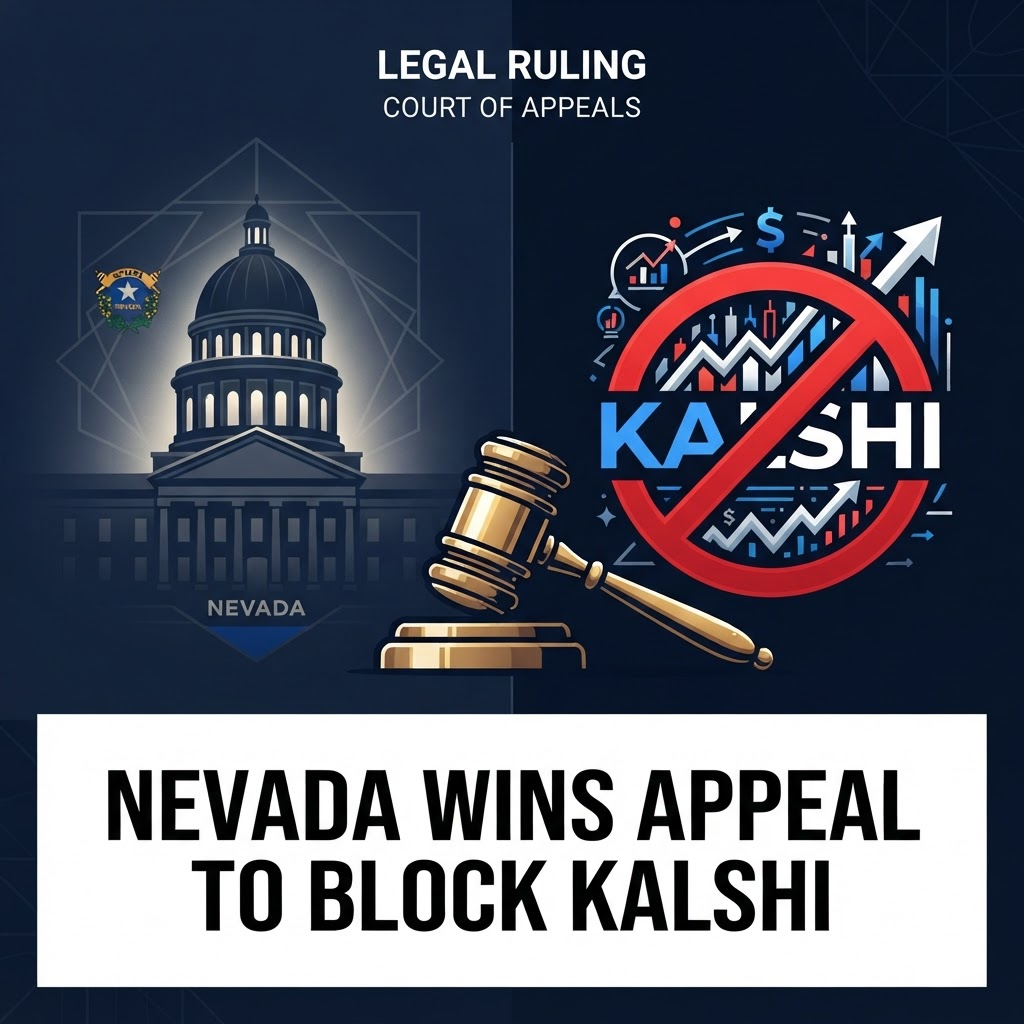
The Ninth Circuit Court of Appeals delivered a significant victory for Nevada on Friday, August 29, 2026, when a three-judge panel ruled that the state retains the right to regulate and prohibit gambling products, even when those products are structured as federal commodities contracts. The ruling represents a major setback for Kalshi, the prediction market platform that has aggressively pursued expansion into sports betting and event prediction markets.
Kalshi had argued that its sports betting contracts should be regulated under the Commodity Exchange Act (CEA) and overseen by the Commodity Futures Trading Commission (CFTC), not state gambling authorities. The company maintained that its products were financial instruments, not traditional gambling offerings. However, the appeals court rejected this argument, determining that substance matters more than structure when evaluating whether an offering constitutes gambling under state law.
What This Means
The decision fundamentally reaffirms state sovereignty in gambling regulation and creates immediate compliance headaches for prediction market platforms seeking to operate across multiple states. Kalshi now faces potential prohibitions in Nevada and potentially other states that may use this ruling as a template for their own enforcement actions.
For the broader iGaming and sports betting industry, the ruling suggests that innovative product structures and federal regulatory frameworks offer limited protection against state-level crackdowns. Operators and platforms pursuing novel betting products cannot assume that federal commodities oversight provides a safe harbor from state gambling laws. This creates a fragmented regulatory landscape where a single product may be legal in some states while prohibited in others, based on how state authorities classify its nature.
Third-party service providers and B2B iGaming outreach platforms must adjust their go-to-market strategies accordingly. Companies advising operators on expansion, compliance infrastructure, and market entry will need to account for state-by-state product legality assessments rather than relying on blanket federal approval.
What to Watch
Industry observers should monitor whether other states follow Nevada's approach and begin targeting prediction market offerings within their borders. Several states with active gambling regulators may view this decision as legal cover for enforcement actions. Additionally, watch for Kalshi's next steps—the company may seek Supreme Court review, file new litigation challenging specific state bans, or pivot its business model entirely.
The CFTC's response will also be critical. The commission may issue guidance clarifying which products it considers financial instruments versus gambling, or it may attempt to assert primary regulatory jurisdiction over certain offerings. How the CFTC positions itself relative to state authorities will shape the entire prediction market industry's regulatory pathway.
Finally, monitor the impact on other prediction market platforms and sports betting operators. Companies with multi-state operations will need to conduct immediate legal audits to ensure their product offerings comply with each state's gambling definitions and regulations.
Source: Gambling Insider
Marcus De Luca
Regulation Correspondent
Member of the iGaming Pulse editorial team. Covering industry news, analysis, and B2B developments across the global iGaming sector.