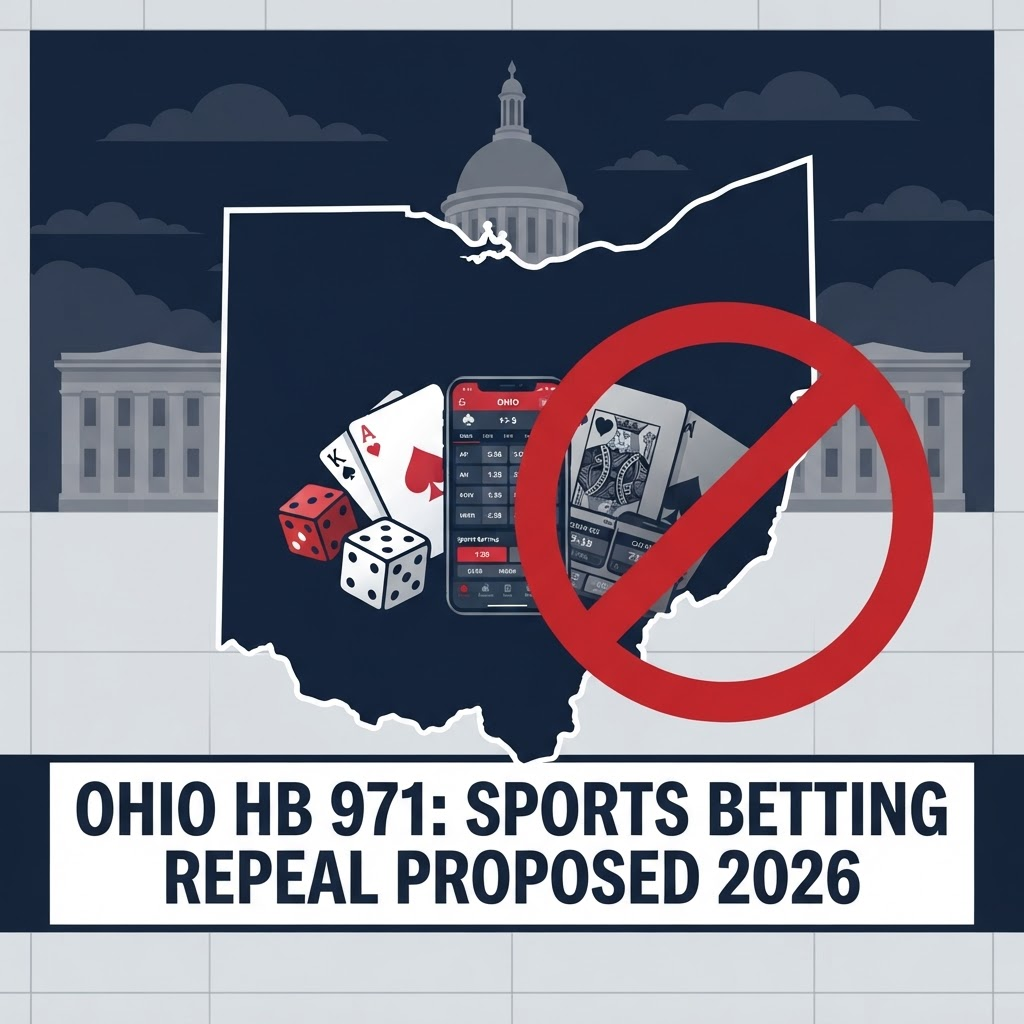
Ohio Proposes Historic Reversal of Sports Betting Legalization
Ohio Republican lawmakers have introduced House Bill 971, termed the "Save Ohio Sports Act," which would make Ohio the first state to repeal legalised online sports betting if enacted. Beyond repealing sports betting entirely, the bill proposes additional restrictions including a ban on credit card usage to fund sports betting accounts. The proposal represents a dramatic policy reversal and signals rising political concerns about gambling-related harms.
Context
Ohio legalised online sports betting in 2021, relatively early in the national trend toward sports wagering legalisation. The state developed a framework that allowed multiple licensed operators to offer betting services across the state, generating revenue and contributing to the broader momentum toward nationwide sports betting acceptance.
However, growing concerns about problem gambling, youth access, and sports integrity have prompted pushback from some conservative lawmakers. The introduction of HB 971 reflects these concerns and signals that even established sports betting markets are not politically secure. The timing of the proposal — approximately five years after legalisation — suggests that initial enthusiasm is giving way to reconsideration as problem gambling data has accumulated.
What This Means
If enacted, HB 971 would reverse one of the most significant policy achievements in the modern sports betting era. Legalisation was widely viewed as irreversible once markets established, revenue streams materialised, and operator relationships developed. An Ohio repeal would shatter that assumption and demonstrate that political support for sports betting can be conditional and subject to reversal if public opinion shifts.
The bill's specific provisions are particularly significant. A ban on credit card funding directly addresses concerns about customers gambling with borrowed money — a specific responsible gambling risk factor that UK regulators addressed in 2020 and that has since influenced policy discussions globally. This provision is likely to attract bipartisan support even from lawmakers who do not support full repeal.
For operators with significant Ohio exposure — DraftKings, FanDuel, BetMGM, and others — this bill creates immediate strategic risk. Even if HB 971 does not pass in its current form, it signals that Ohio's political environment has shifted. Operators must now invest in political risk assessment and proactive stakeholder engagement in Ohio and monitor similar legislative activity in other states where political dynamics resemble Ohio's.
The broader national implication is stark: the "once legalised, never reversed" assumption no longer holds. Every state sports betting market must now be evaluated with some probability assigned to regulatory reversal, particularly as problem gambling data from legalised markets accumulates.
What to Watch
Monitor HB 971's committee hearing schedule and sponsor statement activity. Track Ohio problem gambling programme statistics and any state-commissioned research cited by bill supporters as evidence of harm. Watch for operator lobbying disclosures in Ohio's campaign finance filings.
Source: Casino.org. Published 2026-07-08.
Source: Casino.org
Marcus De Luca
Regulation Correspondent
Member of the iGaming Pulse editorial team. Covering industry news, analysis, and B2B developments across the global iGaming sector.