Context
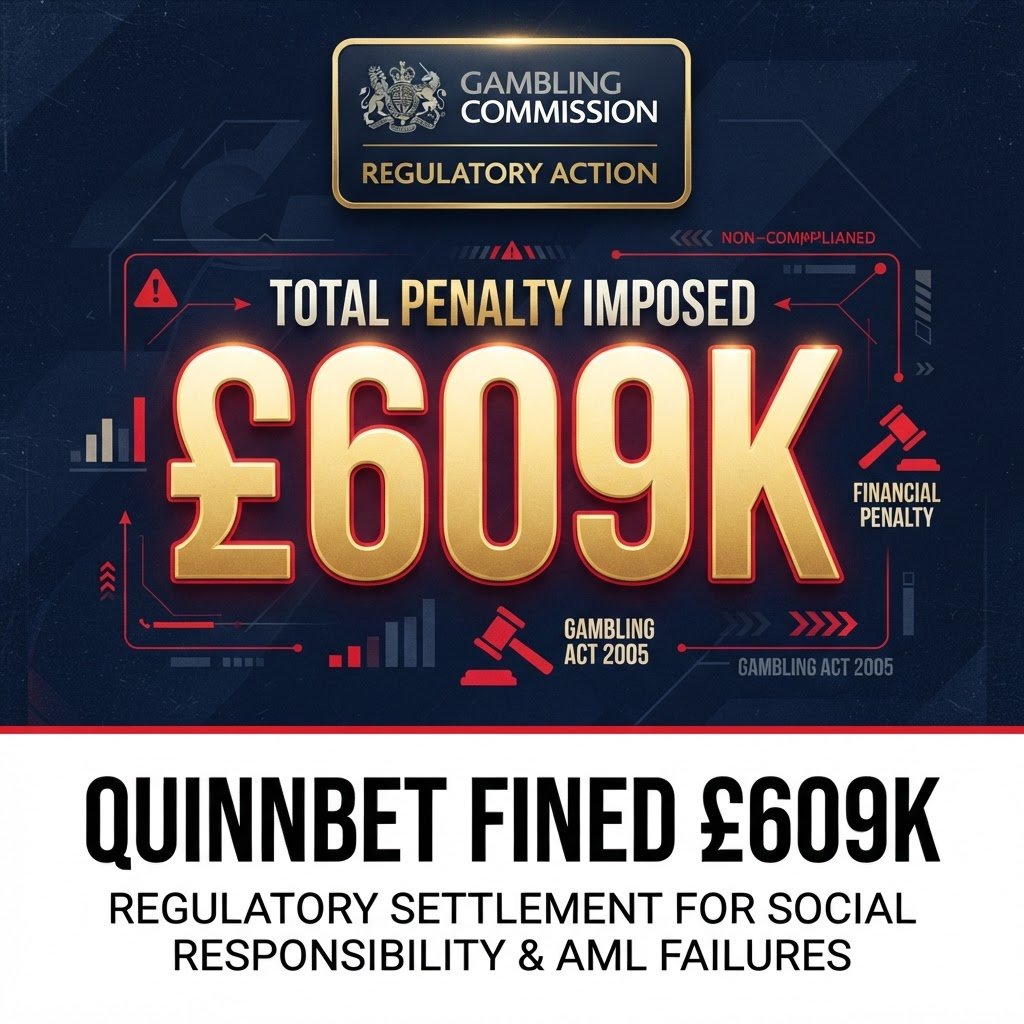
The UK Gambling Commission has concluded enforcement proceedings against QuinnBet, resulting in a substantial financial penalty and a stark reminder of the regulatory expectations governing licensed operators in Britain. The £609,104 fine reflects serious deficiencies in two foundational compliance pillars: anti-money laundering (AML) controls and safer gambling protections.
According to the enforcement action, QuinnBet's primary failures centered on response timeliness and reporting accuracy. The operator maintained "insufficient controls to act in a timely manner" when addressing suspicious activity flagged within its systems. Additionally, the company failed to submit suspicious activity reports (SARs) to the Financial Conduct Authority (FCA) within the required statutory timeframes—a critical obligation under UK money laundering regulations.
Suspicious activity reporting represents one of the most heavily scrutinized compliance functions in regulated gambling. Operators are required to maintain robust transaction monitoring systems and submit SARs without undue delay once suspicious patterns are identified. Delays in reporting can constitute breaches of the Proceeds of Crime Act 2002 and trigger regulatory action.
QuinnBet's case is particularly significant because it involves a mid-tier operator with established UK licensing. This suggests that compliance failures are not limited to newer entrants or smaller players—a finding that will likely prompt regulators to examine compliance infrastructure more broadly across the licensed operator base.
What This Means
For the broader iGaming industry, the QuinnBet enforcement sends a clear message about regulatory tolerance thresholds. The £609,104 penalty is substantial but not unprecedented; however, the specific nature of the violations—delayed SAR submissions and insufficient response controls—indicates that the UK Gambling Commission is prioritizing active monitoring of operator compliance processes, not merely their existence.
Operators relying on legacy compliance systems or outsourced AML vendors should treat this as an urgent signal to audit their transaction monitoring and SAR submission workflows. The Commission's focus on timeliness suggests that even operators with documented AML policies may face enforcement if their operational execution is slow or inconsistent.
For compliance technology vendors and consultancy firms, this enforcement action creates immediate demand for audit services and system upgrades. Operators will likely accelerate investments in transaction monitoring platforms, workflow automation, and real-time reporting infrastructure to prevent similar violations. Those providing operator compliance support should expect a surge in engagement requests from risk and compliance teams across the sector.
The safer gambling component of the fine also signals the Commission's integrated approach to compliance—operators cannot compartmentalize AML and responsible gambling as separate functions. Weak controls in one area often correlate with gaps in the other.
What to Watch
Monitor whether the UK Gambling Commission announces additional enforcement actions against other operators in the coming weeks or months—QuinnBet's fine may be part of a broader compliance sweep. Watch for updates to the Commission's regulatory guidance on AML and SAR submission expectations, particularly regarding acceptable timescales for response to suspicious activity.
Also track how this enforcement influences the emerging debate around regulatory costs and market consolidation. If compliance penalties increase in frequency and magnitude, smaller operators with limited compliance budgets may face existential pressure, potentially accelerating M&A activity in the sector.
Finally, observe whether this case influences professional indemnity insurance (PII) underwriting for compliance officers and whether auditors increase their scrutiny of operator SAR submission records during routine compliance reviews.
Source: iGaming Business
Marcus De Luca
Regulation Correspondent
Member of the iGaming Pulse editorial team. Covering industry news, analysis, and B2B developments across the global iGaming sector.