Context
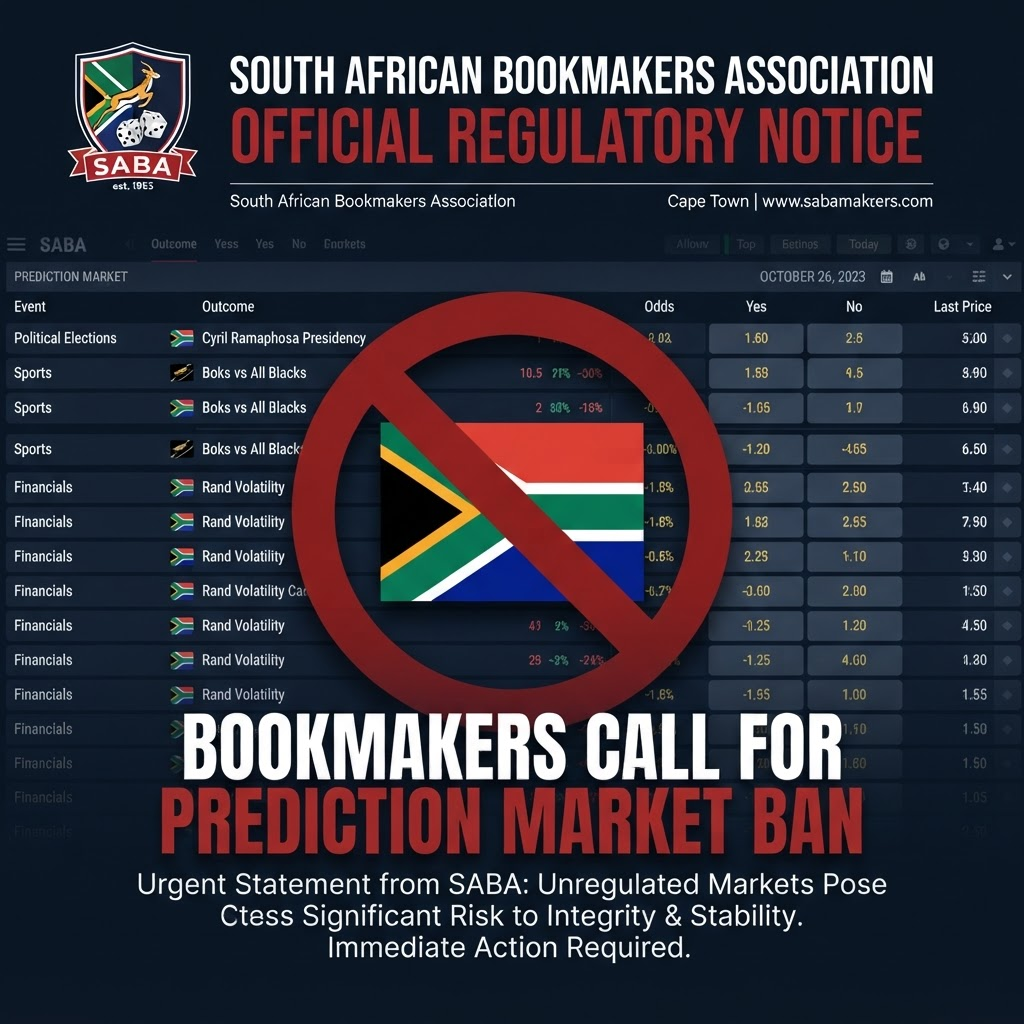
The South African Bookmakers' Association, representing licensed sports betting operators in the country, has issued a formal call to South African regulators requesting a ban on unlicensed prediction markets. The association's primary concerns centre on three issues: match and event integrity, anti-money laundering (AML) compliance, and lost tax revenue from unregulated operators.
Prediction markets—platforms where users trade contracts based on the outcomes of events, from sports matches to political elections—have proliferated globally in recent years. However, many operate outside traditional gambling regulatory frameworks, creating a compliance blind spot. South Africa's licensed bookmakers argue that these unregulated platforms undermine the integrity of the licensed betting ecosystem while creating AML risks and depriving the government of gaming tax revenue.
The intervention comes at a critical time for South African sports betting regulation. The country has been gradually modernising its gambling framework, but legacy rules from the National Gambling Act and provincial regulators still create ambiguity around emerging betting products and unregulated operators.
What This Means
The association's formal call to regulators represents an escalation in industry efforts to create a more defined competitive moat around licensed operators. Rather than competing purely on product and customer service, established bookmakers are using regulatory advocacy to increase barriers to entry for unlicensed competitors.
From an integrity perspective, prediction markets create unique risks that traditional sportsbooks do not. Because they allow users to trade outcomes rather than simply place bets, they can facilitate market manipulation based on non-public information, creating integrity violations that are difficult to detect and prosecute.
If South African regulators respond with enforcement action, it could establish a precedent affecting other jurisdictions across Africa and beyond that are grappling with the same regulatory grey zone around prediction markets.
Why It Matters
This intervention signals potential regulatory tightening in a key African gaming market and demonstrates how established operators are using industry bodies to shape the competitive landscape. Operators with South African exposure must monitor regulatory developments closely as the bookmakers' association pushes for formal prohibition of unlicensed prediction markets.
Source: iGaming Business
Anton Voronov
B2B Analyst
Member of the iGaming Pulse editorial team. Covering industry news, analysis, and B2B developments across the global iGaming sector.