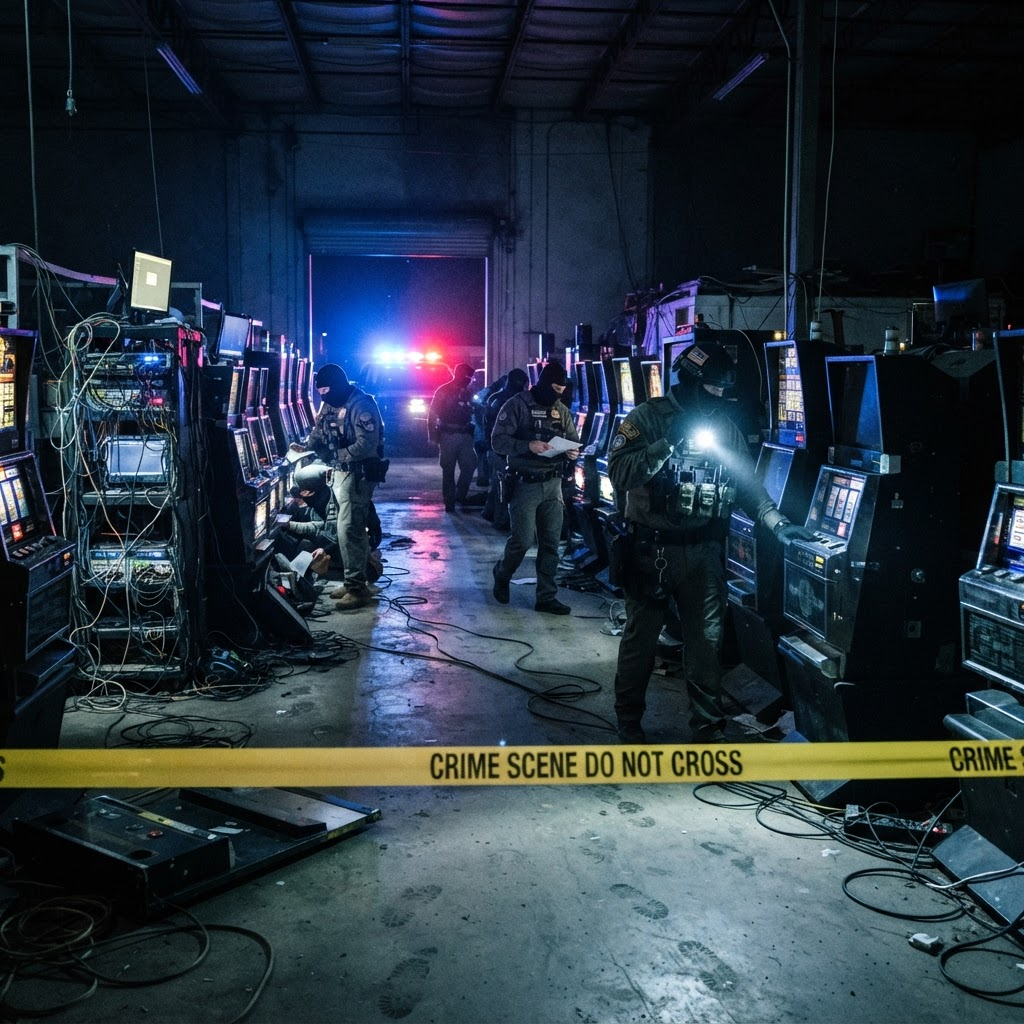
Marked Card Scheme Unmasked at Jeju Island Casino
Two casino dealers employed at an unidentified hotel casino on South Korea's Jeju Island are under investigation for their alleged role in defrauding three Chinese tourists of approximately KRW100 million (approximately US$72,000) through a marked card cheating scheme at a blackjack table.
The investigation reveals a troubling security gap at a facility operating within South Korea's regulated gaming environment. Casino personnel allegedly used marking techniques on playing cards to manipulate game outcomes in their favor and against the targeted players.
How the Scheme Operated
Marked card cheating remains one of the oldest and most persistent threats to casino integrity. The scheme typically involves subtle modifications to card backs—including tiny scratches, ink marks, or other alterations invisible to casual observation—that allow dealers and collaborators to identify cards during play.
In this Jeju Island case, the marked cards presumably allowed the dealers to control which cards would reach the targeted players during play, systematically directing losing hands their direction while the victimized tourists believed they were engaged in fair play.
The scheme affected three Chinese nationals, a significant detail given that international high-value players are often targets for organized cheating operations. Chinese tourists represent a substantial portion of Jeju Island casino revenue, and targeting this demographic suggests either opportunistic exploitation or coordinated activity.
Detection and Investigation
Casino management identified the scheme following suspicious win patterns that deviated significantly from expected mathematical probabilities. Modern casino surveillance systems employ sophisticated algorithms analyzing dealer statistics and game outcomes, flagging anomalies that trigger further investigation.
The subsequent investigation—which led to formal charges—demonstrates that casino security measures can eventually detect dealer-led cheating schemes, though the delay between fraudulent activity and discovery reveals vulnerabilities in real-time monitoring.
Broader Industry Implications
This incident carries significant implications for casino operators globally, particularly those serving high-value international players. The scheme underscores that even regulated markets with substantial gaming infrastructure remain vulnerable to insider threats and sophisticated cheating operations.
Operators must invest continuously in:
- Dealer surveillance systems monitoring behavioral patterns and statistical anomalies
- Card handling protocols with rigorous inspection for marking or damage
- Personnel vetting and ongoing background monitoring
- Game surveillance analysis detecting outcome patterns inconsistent with probability expectations
The case also highlights the risk profile associated with attracting international whale players, who become targets for organized cheating rings specifically because large losses attract less scrutiny than unusual patterns of success.
South Korean gaming authorities will likely increase oversight at Jeju Island casinos and may issue new guidance on dealer monitoring and card inspection protocols.
Source: Casino.org
Marcus De Luca
Regulation Correspondent
Member of the iGaming Pulse editorial team. Covering industry news, analysis, and B2B developments across the global iGaming sector.