Context
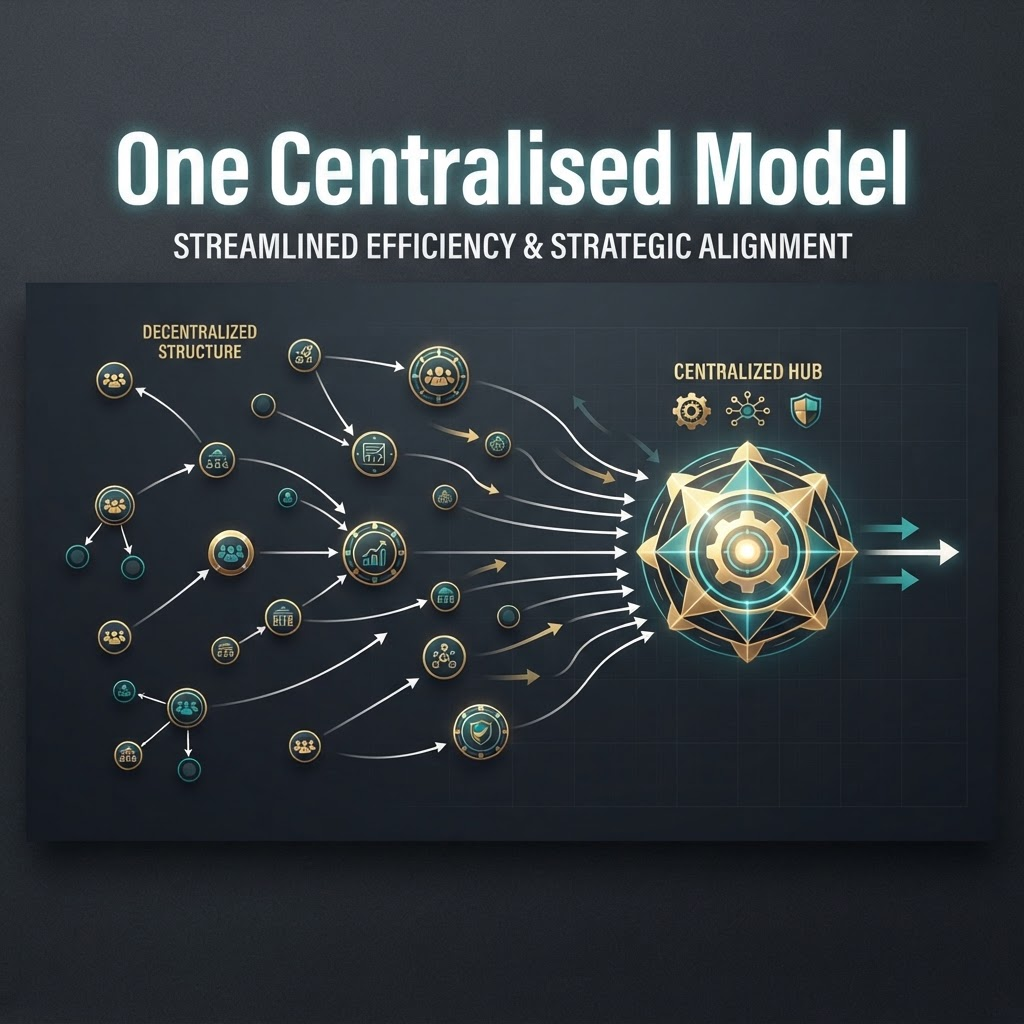
Sun International, Africa's largest gaming and hospitality group, has committed to a strategic restructuring aimed at implementing a "lower-cost, more centralised operating model." The announcement, disclosed alongside strong H1 2026 financial results, signals management's belief that operational efficiency is the next lever for shareholder value creation.
The group currently operates multiple brands (SunBet, Sunbet Sportsbook, and associated hospitality properties) across several African jurisdictions, each with regional management structures, back-office functions, and technology systems. This distributed model was appropriate during the growth phase but has created redundancy and complexity as the company matures.
Centralisation—consolidating shared functions like finance, human resources, customer service, risk management, and technology into unified centres—is a standard evolution for gaming operators as they grow beyond startup phase. However, executing centralisation is operationally complex and carries execution risk.
What This Means
The restructuring will likely involve:
Back-Office Consolidation: Finance, HR, legal, and compliance functions will be centralised in primary hub(s), reducing duplicate regional roles. This typically reduces headcount by 15-25% in support functions.
Technology Standardisation: Disparate regional systems for player management, payments, and analytics will be replaced with unified platforms. This improves data quality and decision-making but requires significant IT investment and change management.
Retail Footprint Optimisation: Physical retail locations (betting shops, sportsbooks) may be consolidated or closed if profitability metrics don't justify ongoing operation. Online channels may receive increased marketing investment as lower-cost alternatives.
Procurement Centralisation: Vendor relationships, licensing fees, and supplier contracts will be renegotiated at group level rather than regional level, leveraging Sun International's scale to reduce unit costs.
One-Time Costs: Restructuring charges—severance, system migration, lease termination penalties, and consulting fees—may reduce H2 2026 earnings by 10-20%, despite ongoing operational improvements.
For employees in regional offices, uncertainty will be high during the transition. The company should expect elevated attrition among mid-level and senior regional staff as opportunities elsewhere appear more stable.
For customers, the impact depends on execution. Well-managed centralisation improves customer service through faster issue resolution, better technology, and more standardised player protections. Poor execution creates service degradation, system downtime, and operational delays.
For B2B service providers, the restructuring creates opportunities. Sun International will require consulting support for organisational design, change management, technology selection, and vendor transition.
What to Watch
Restructuring Announcement Details: Management will need to provide cost savings targets, implementation timeline, and expected one-time charges. Vague announcements signal uncertain execution.
Customer Retention Metrics: Churn rates and net player acquisition costs during the restructuring period will indicate whether operational disruption harms the business.
H2 2026 Guidance Revision: The company will likely reduce earnings guidance for 2026 to account for restructuring charges. The magnitude of this reduction will reveal the scope of planned changes.
Technology Vendor Selections: Announcements of primary system vendors (player management, payments, analytics) will provide specifics on the centralised platform strategy.
Competitive Positioning: Competitors including Betking (Nigeria), Hollywoodbets (South Africa), and international entrants will be watching for opportunities to poach SunBet customers during transition disruption.
African Market Expansion: Post-restructuring, the centralised model should enable faster regional expansion into new African markets (Kenya, Zambia, Zimbabwe) with lower overhead per market. Announcements of new market entry should be monitored.
Sun International's restructuring represents the typical evolution of successful gaming operators: from decentralised growth model to centralised efficiency model. Execution quality will determine whether shareholders benefit from improved profitability or suffer from temporary value destruction.
For B2B suppliers tracking this story, iGaming B2B outreach strategies that align with these regulatory shifts tend to outperform generic approaches.
Analysis based on: igamingbusiness.com. Published 2026-09-08.
Source: igamingbusiness.com
Anton Voronov
B2B Analyst
Member of the iGaming Pulse editorial team. Covering industry news, analysis, and B2B developments across the global iGaming sector.