The UK Gambling Commission (UKGC) remains the toughest licensing gatekeeper in regulated iGaming, and 2026 has raised the bar further. Between a new application fee, a reshaped Licence Conditions and Codes of Practice (LCCP), and a steady drumbeat of multi-million-pound enforcement settlements, operators eyeing the UK market — or already inside it — need a current, practical map of what the Commission actually requires.
This guide walks through who needs a licence, how the application process works in 2026, what changed in the LCCP this year, and the compliance failures that keep showing up in enforcement notices.
Who needs a UK Gambling Commission licence
Any business offering gambling facilities to consumers located in Great Britain needs a Gambling Commission licence, regardless of where the operator itself is based. This applies to remote (online) casino, betting, and bingo operators, non-remote premises such as casinos and adult gaming centres, and gambling software providers whose products are used by licensed operators.
Two licence categories sit alongside the corporate operating licence:
- Personal Management Licences (PMLs) — required for individuals in specified management functions, including compliance officers, finance directors, and other decision-makers with material influence over the business.
- Personal Functional Licences (PFLs) — required for certain customer-facing roles in the non-remote sector.
A business cannot legally offer real-money gambling to UK consumers, or advertise UK-facing gambling products, without the correct licence class in place first.
The 2026 application process, step by step
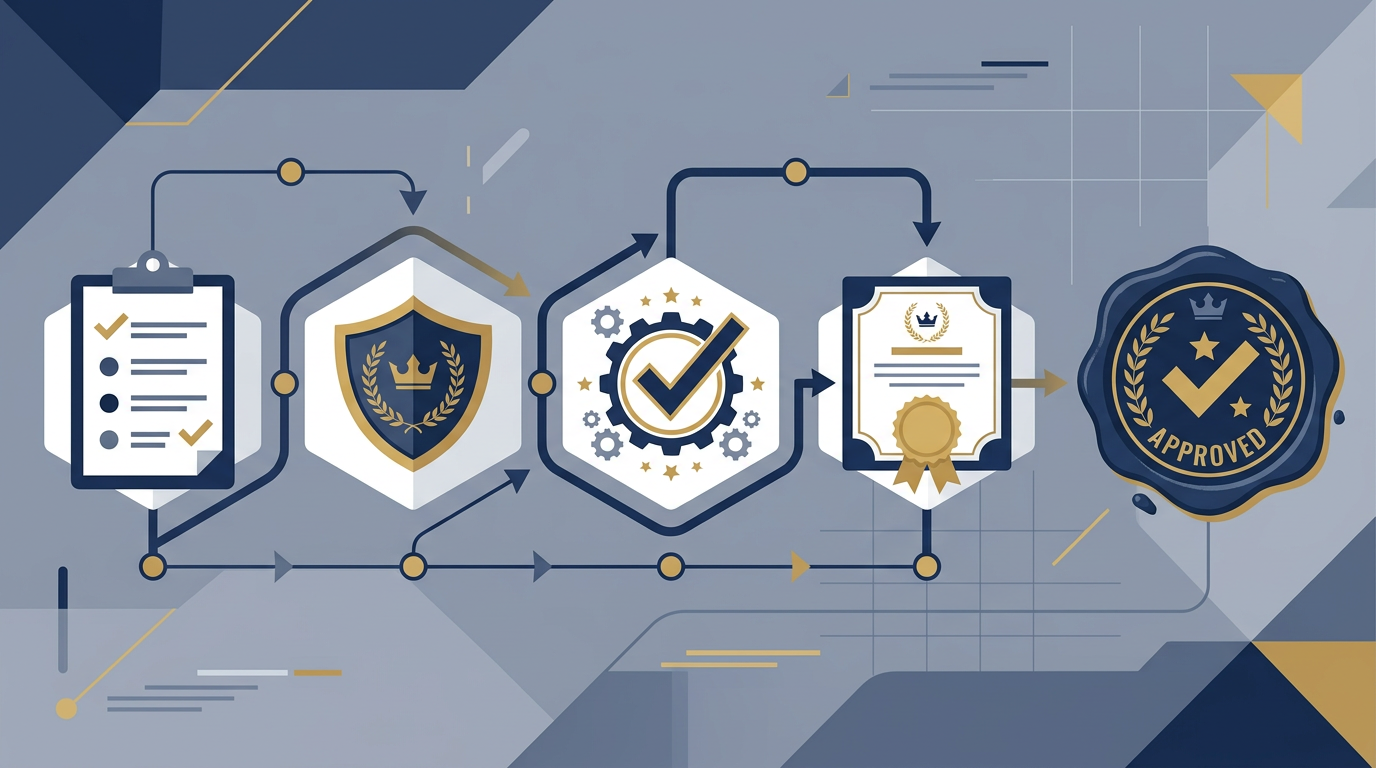
1. Confirm the correct licence type. Remote and non-remote licences are assessed separately, and the required activity (casino, betting, bingo, gaming machine technical, gambling software, etc.) determines the specific licence class.
2. Prepare the business case. The Commission expects a full business plan with a three-year financial projection, a clear corporate and ownership structure, and evidence of the source of funding — typically six months of bank statements for relevant shareholders.
3. Disclose ownership and control. Full disclosure is required for all Ultimate Beneficial Owners and any individual or entity exercising significant control, in line with the Commission's source-of-funds and anti-money-laundering expectations.
4. Secure Personal Management Licences for key staff. Individuals filling specified management functions — including compliance and finance leadership — must hold or be in the process of obtaining a PML before the operating licence can be granted.
5. Submit technical and responsible gambling documentation. This covers IT security policy, evidence of independent software testing, age-verification controls, and the social responsibility framework operators will run once licensed.
6. Pay the application fee. As of 1 October 2026, the base application fee rises from £370 to £463; it is non-refundable regardless of outcome. Ongoing operation also requires an annual fee, payable in full before the licence anniversary — the Commission does not accept instalments.
7. Await assessment. A complete, accurate application typically takes around 16 weeks to process; missing documentation or unresolved ownership questions extend that timeline substantially.
What changed in the LCCP in 2026
The Commission updated the Licence Conditions and Codes of Practice on a rolling basis through the year rather than in a single release:
- 19 March 2026 — the threshold for reporting changes in operator status or "relevant persons" dropped from 3% to 5% (i.e., a lower ownership stake now triggers a reporting obligation), the definition of relevant persons broadened to cover entities without share capital, and operators must now report all relevant loans regardless of whether formal documentation exists.
- 6 April 2026 — references to the Consumer Protection from Unfair Trading Regulations 2008 in licence conditions covering fair terms, transparency, and marketing were replaced with references to the Digital Markets, Competition and Consumers Act 2024, aligning gambling-specific consumer protection with the UK's broader competition and consumer framework.
- 29 July 2026 — new Licence Condition 18.1.1 requires non-remote operators to remove non-compliant gaming machines from premises immediately on written notification from the Commission, closing a gap that had allowed disputed machines to remain in service during review.
Operators with UK licences should treat LCCP monitoring as a standing compliance task, not a once-a-year review — several 2026 changes arrived with short implementation windows.
Compliance failures that keep triggering enforcement
The Commission's 2026 enforcement record shows a consistent pattern: settlements cluster around social responsibility and customer-interaction failures, self-exclusion scheme non-participation, and licensing without proper authorisation.
Notable 2026 actions include a £900,000 payment from Petfre (operator of betfred.com) after a licence review found failings in remote customer-interaction controls, a £4.75 million payment from software and casino host licensee Evolution following a licence review, a £609,104 penalty against QuinnBet (Gibraltar) Limited for regulatory failures, and a £150,000 fine against Holland Park Leisure Limited for failing to join a mandatory multi-operator self-exclusion scheme even after its licence had already been suspended over the same issue. Separately, the Commission issued a formal warning to Spribe after finding it had operated without the appropriate licence for roughly four and a half years.
The through-line across these cases is that documentation and system design are not enough — the Commission is enforcing on whether social responsibility and self-exclusion controls actually function as intended for real customers, and whether licensing status is continuously maintained rather than assumed.
Common mistakes operators make
- Treating the application as a one-time document exercise. Source-of-funds and ownership disclosure gaps are among the most common reasons applications stall well past the 16-week target.
- Under-resourcing the PML process. Delays in getting compliance and finance leads through Personal Management Licensing can hold up an otherwise-ready application.
- Losing track of ownership-change reporting. With the relevant-persons reporting threshold now at 5%, changes that would previously have gone unreported may now require disclosure.
- Assuming customer-interaction policy equals customer-interaction practice. Several 2026 settlements involved operators with documented responsible-gambling policies that were not being applied consistently to at-risk customers.
- Missing short-notice LCCP implementation windows. The 2026 changes arrived at three different points in the year; operators that review the LCCP annually rather than continuously risk falling out of compliance without realising it.
FAQ
How much does a UK Gambling Commission licence cost in 2026? The base application fee is £463 from 1 October 2026 (up from £370), and it is non-refundable win or lose. Total cost varies by licence type and projected turnover, since annual fees scale with the size of the business — the Commission publishes an online fee calculator for exact figures.
How long does UKGC licence approval take? Around 16 weeks for a complete, accurate application. Missing ownership disclosure, incomplete source-of-funds evidence, or unresolved PML applications for key staff are the most common causes of delay beyond that window.
Do software suppliers need a separate licence from operators? Yes. Gambling software providers whose products are used by UK-facing operators require their own gambling software licence, separate from the operator's licence — and the Commission has shown in 2026 it will pursue enforcement against suppliers directly, not only operators.
What happens if a business operates without the right licence? The Commission can issue formal warnings, financial penalties, or suspend and revoke licences. The 2026 Spribe case shows enforcement can arrive years after the fact — operating without appropriate authorisation does not become lower-risk with time.
The bottom line
UK Gambling Commission licensing in 2026 rewards operators who treat compliance as continuous rather than transactional: current ownership and funding disclosure, properly licensed management, and social responsibility controls that hold up under real customer scrutiny, not just on paper. Given the pace of LCCP updates and the size of recent settlements, budgeting for ongoing compliance capacity — not just the initial application — is now a cost of doing business in the UK market.
Source: iGaming Pulse Editorial Desk

Illia Lisovskyy
Senior Editor
Member of the iGaming Pulse editorial team. Covering industry news, analysis, and B2B developments across the global iGaming sector.