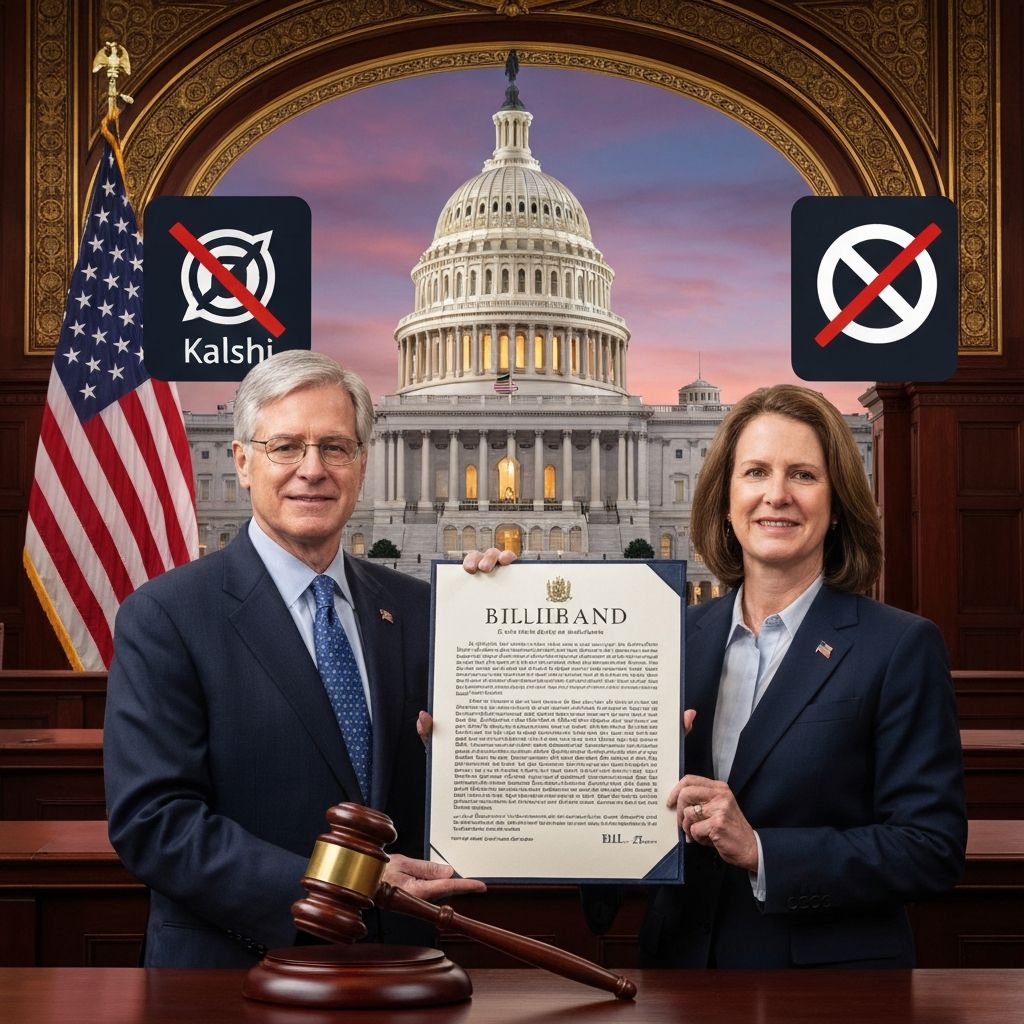
The Senate Has Banned Itself from Prediction Markets — And Now Wants Everyone Else to Follow
In a unanimous vote that carries both symbolic and practical weight for the US online gambling regulatory environment, the US Senate passed a chamber-wide resolution on April 30, 2026, barring senators and all Senate staff from participating in prediction market platforms.
What Happened
The Senate resolution, which passed without dissent, prohibits senators and their staff from placing bets on prediction market platforms — including Kalshi and Polymarket — effective immediately. The stated rationale is conflict of interest: senators make decisions that directly affect government actions, financial policy, and sports-adjacent legislation, and their access to non-public information could give them trading advantages on event contracts tied to those outcomes. On the same day, Senators Kirsten Gillibrand (D-NY) and Dave McCormick (R-PA) introduced the Prediction Market Act of 2026, a bipartisan bill that would extend the prohibition to House members, the President, Vice President, and senior executive branch officials, while establishing clearer CFTC registration and anti-money-laundering requirements for prediction platforms. Senate Majority Leader Chuck Schumer subsequently called on the House of Representatives and the White House to adopt equivalent prohibitions.
Why It Matters
The unanimous Senate vote transforms the prediction market debate from a commercial dispute between licensed sportsbooks and unregulated event contract platforms into a matter of congressional ethics and governmental integrity. For the American Gaming Association and Indian Gaming Association — which have been lobbying Congress to restrict sports event contracts — the Senate's self-regulatory action removes a significant rhetorical obstacle: it is now impossible for prediction market advocates to claim that Congress is acting on behalf of incumbent operators when the Senate has just voted to restrict its own members' participation.
Industry Context
The bipartisan nature of the Gillibrand-McCormick bill is significant: prediction market regulation is one of the few issues in the current political environment where Democrats and Republicans have found common ground, suggesting it has cross-partisan political appeal that can survive electoral cycle changes. The May 20 Senate Commerce Subcommittee hearing on prediction market integrity is the next scheduled milestone.
Source: CNBC / Washington Post
James Whitfield
Editor-in-Chief
Member of the iGaming Pulse editorial team. Covering industry news, analysis, and B2B developments across the global iGaming sector.