Based on a conversation with Imam Elci, Sales Director at sportwetten.de.
Imam Elci is not a market theorist.
He is one of the people who sees the German betting market from the inside — every day.
Today, he works as Sales Director at sportwetten.de, one of the established names in the German sports betting market. In this role, he is responsible for a retail network of around 240 betting shops across Germany and manages the connection between sales teams, shop operations, compliance, marketing and product.
Before that, Imam spent years in senior sales roles at Playtech BGT Sports Germany and more than a decade at mybet.
That background matters.
Because Germany is a market many companies try to understand from reports, lawyers, conferences and outside assumptions. Imam understands it from the street level — from betting shops, from customers, from franchise partners, from retail behaviour, from payout expectations, from the gap between regulation and commercial reality.
That is why I wanted to speak with him. Not to ask another generic question about German regulation. But to understand why so many companies enter Germany with money, product and ambition — and still fail.
Germany is attractive, but not simple
From the outside, Germany looks like one of the most attractive betting markets in Europe. It is large, wealthy, has more than 80 million people, a strong sports culture, and a regulated market structure. For international operators, it looks like a market where serious money can be made.
That part is true.
But it is also one of the markets where operators can burn millions before understanding what they actually got wrong. Most people explain this with one word: regulation. And yes, regulation matters. But after speaking with Imam, I think many companies over-focus on regulation and under-focus on the customer. A company can have lawyers, capital, product, licence strategy and a marketing budget — and still be commercially wrong.
Know Your Customer is not only compliance
One of Imam's strongest points was simple: Know Your Customer is not only a regulatory concept. It is also a commercial concept. It means understanding how German players think, behave, deposit, withdraw, trust, hesitate, switch and stay.
Many companies enter Germany with a product, brand or marketing strategy that worked somewhere else — the UK, Spain, Turkey, Malta — and assume they can bring the same logic to Germany. But German betting behaviour is different. The customer is different. The trust barrier is different. The role of retail is different. The relationship with cash is different.
Trust comes before product
The most important word in our conversation was not regulation. It was trust.
In Germany, betting is not only entertainment. It is also a financial trust transaction. A player is not only asking: "Can I place a bet?" He is asking: "If I win, will I receive my money?"
That question defines the market.
German players are often conservative when it comes to money, payments and institutions. They want reliability. They want confidence. If a payout takes too long, trust breaks quickly. If a company looks unstable, trust breaks quickly. For many German players, the first layer of trust is not the app — it is the feeling that the company can and will pay.
That is why retail still matters.
Retail is not dead. Retail is trust infrastructure.
A common outside assumption is that retail betting is slowly becoming irrelevant. Germany shows a more complex picture.
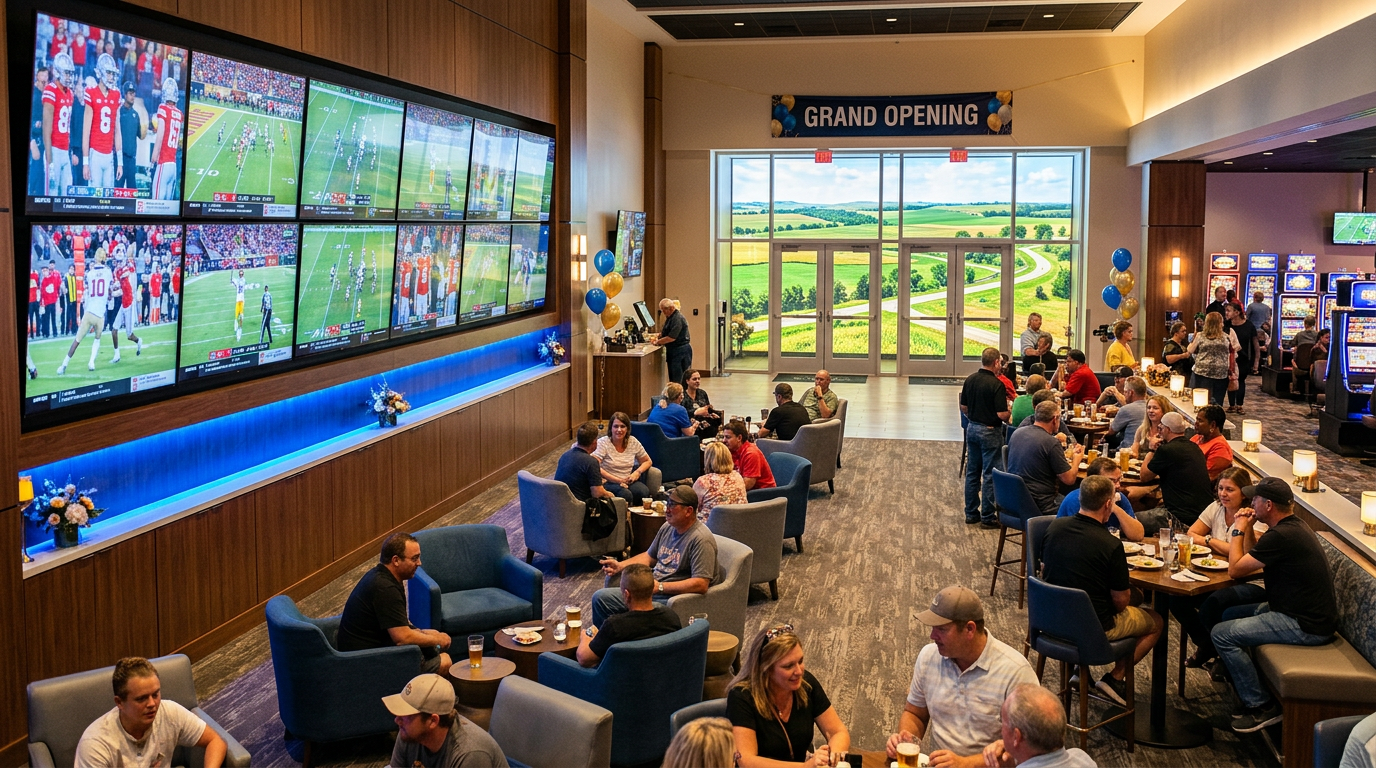
In Germany, betting shops are not only places where bets are placed. They are physical trust points. Customers know the shop. They know the people behind the counter. They know where to deposit cash. They know where to go if something does not feel right. Retail customers can be much more loyal than online-only customers. Online users may switch quickly. Retail customers can stay connected to the same shop for years.
Retail should not only be viewed as an old distribution channel. In Germany, retail can become a trust layer for online growth.
Germany is omnichannel
One of the most important points from our conversation was that Germany cannot be reduced to "retail versus online." The market is increasingly omnichannel.
The betting shop, customer card, online account, app, website, cash deposit, payout experience and customer support need to work together. For retail customers, the bridge into online often comes through the member card — the shop creates trust, the card creates continuity, the online account creates digital usage.
This is why a serious German strategy cannot treat retail and online as completely separate worlds. The physical presence can support digital confidence. That is the real meaning of omnichannel in Germany.
Copying market leaders with less money does not work
Many new entrants make the same expensive mistake. They look at established brands and copy what they see — same bonus logic, same football angle, same celebrity ambassador approach — but with less money.
Imam's point was direct: doing the same marketing as the market leaders, but with a smaller budget, is not a strategy. It is a weak copy.
If a German player has been using the same betting brand for years, knows the interface, trusts the payout process and feels comfortable with the brand — why should he switch to a new company offering almost the same thing?
The deeper problem is that many companies build marketing from the boardroom, not from the customer. They ask what worked elsewhere and which football personality to use. But they do not ask the most important question: why should a German customer trust us and change behaviour?
Without a strong answer, marketing becomes expensive noise.
Starting from zero may be the wrong strategy
Perhaps the strongest strategic point from the conversation was this: for many serious entrants, starting from zero may be the wrong strategy.
Getting a licence takes time. Building trust takes time. Building a brand takes time. And in Germany, time is expensive.
Imam's view was practical: instead of starting from scratch, some international companies should consider acquiring or investing in an existing licensed operator. A new entrant can spend years on licensing, setup, hiring, marketing and customer acquisition before reaching serious traction. By contrast, an existing operator may already have a licence, product, customers, brand presence and local knowledge.
For companies serious about Germany, "buy then grow" may be more rational than "build from zero." The real cost is not only the acquisition price. The real cost is lost time.
Germany requires a long-term horizon
Germany is not a quick-win market. A company entering Germany needs to think in years, not months. Operators that expect fast returns often become frustrated.
According to Imam, many companies enter with unrealistic expectations. They think they can invest heavily, take market share quickly and see fast returns. Then they discover that Germany does not move that way. A serious German strategy needs a five-year view. In many cases, even ten years is more realistic.
The real lesson
After speaking with Imam, my conclusion is simple: Germany is not impossible. Germany is misunderstood.
Many companies fail not because the market has no potential, but because they enter it with the wrong assumptions. They think regulation is the main problem. They copy market leaders with less money. They underestimate trust. They underestimate retail. They underestimate local behaviour. They underestimate the time horizon.
The German betting market is a trust-driven market. It is a customer-behaviour market. It is a retail and omnichannel market where product, marketing, compliance, payments and local knowledge need to work together.
For companies looking at Germany, the first question should not only be: "How do we get a licence?" The better question is: "Do we really understand how this market works?"
Because if the answer is no, Germany can become very expensive very quickly.
Imam Elci is Sales Director at sportwetten.de, responsible for a retail network of around 240 betting shops across Germany.
Source: iGaming Pulse

Alex Bilyi
Senior Editor
Member of the iGaming Pulse editorial team. Covering industry news, analysis, and B2B developments across the global iGaming sector.