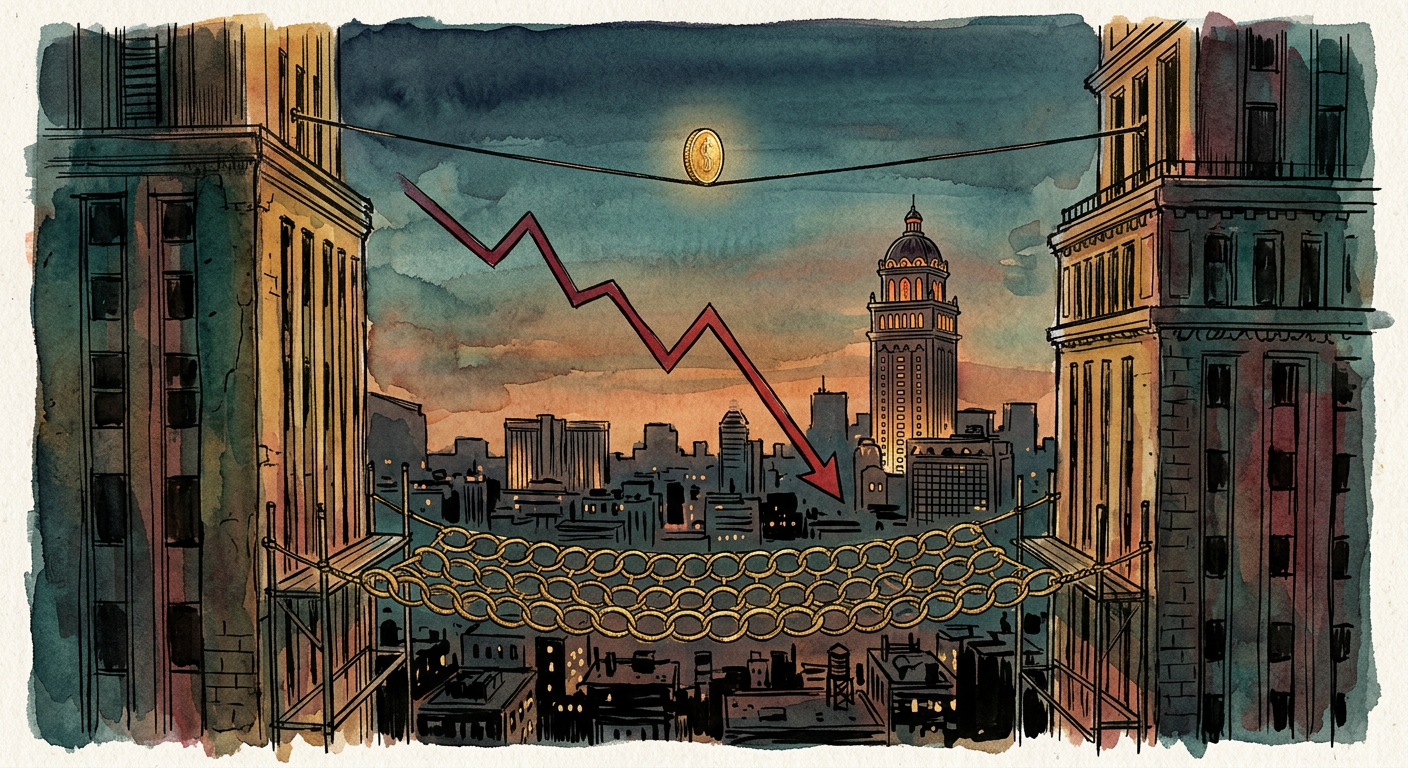
Bally's Q3 Results Reveal Financial Pressure
Bally's Corporation disclosed significant financial headwinds in its third-quarter 2026 results, reporting a $117 million consolidated loss and revealing a gap between actual liquidity and loan covenant requirements. Despite the challenging results, the company announced it had secured $560 million in financing commitments intended to stabilize its capital structure.
The disclosure signals ongoing financial stress within the regional casino operator category, where legacy property portfolios and expansion capital requirements strain debt capacity. Bally's cautioned that additional covenant breaches may occur before year-end without further operational improvement or capital restructuring.
Revenue Growth Insufficient
While Bally's reported a 21.7% increase in third-quarter revenue, operational losses and elevated debt service requirements offset the top-line gains. The divergence between revenue growth and profitability reflects margin compression—a common challenge for operators modernizing properties while managing elevated leverage from past acquisitions and expansions.
The liquidity covenant breach is particularly significant because it typically gives lenders contractual rights to accelerate debt repayment or impose stricter operational controls. These financial constraints may limit Bally's ability to invest in iGaming platforms, sports betting expansion, or property upgrades necessary to compete with better-capitalized operators.
2027 Outlook and Options
The company's warning about potential year-end covenant breaches suggests management is considering multiple options: asset sales, debt restructuring, operational efficiency initiatives, or strategic partnerships. Bally's $560 million financing commitment provides near-term breathing room but does not address structural profitability concerns.
Investors and creditors will watch closely whether Chicago expansion and iGaming investments can drive sufficient margin improvement in 2027, or whether more aggressive restructuring becomes necessary. The financial pressure may force consolidation discussions with better-capitalized gaming companies.
Source: gamblinginsider.com
James Whitfield
Editor-in-Chief
Member of the iGaming Pulse editorial team. Covering industry news, analysis, and B2B developments across the global iGaming sector.