Context
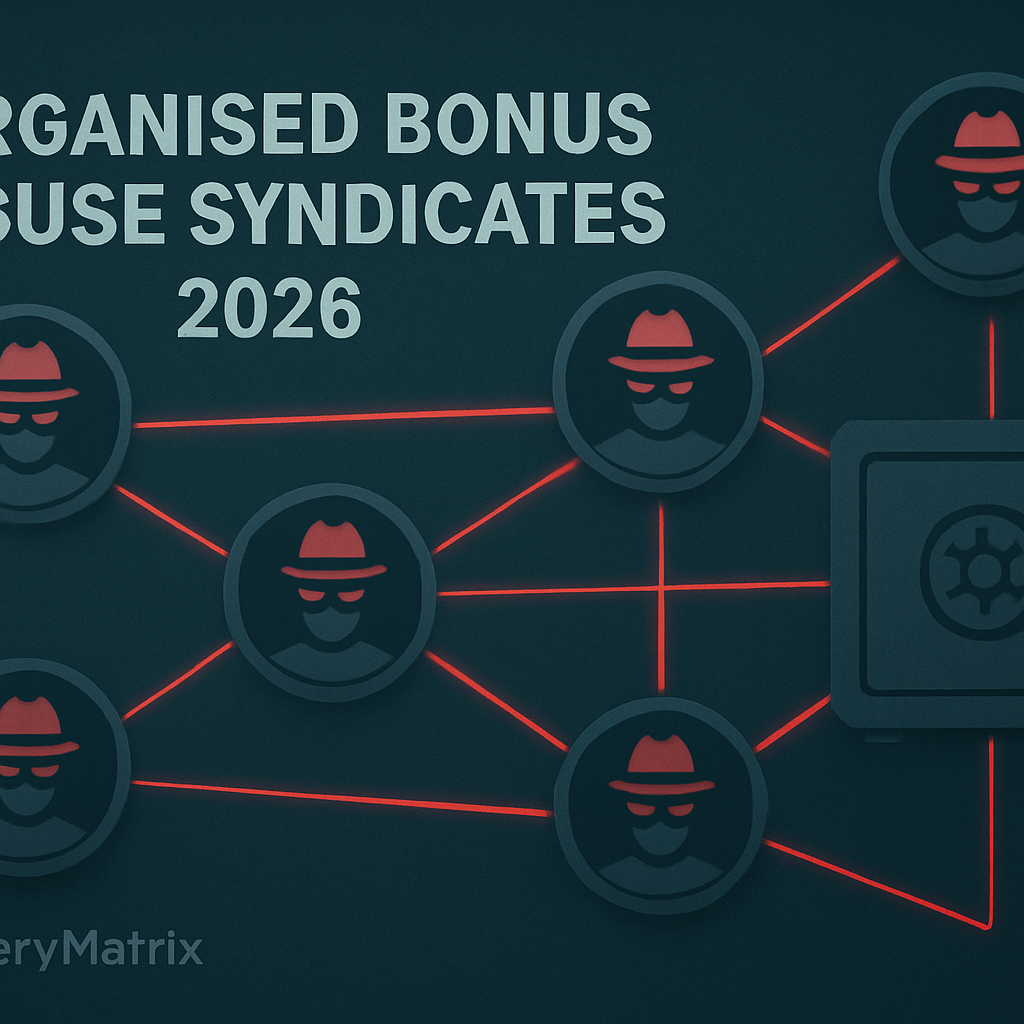
Bonus abuse — the systematic exploitation of promotional offers through methods ranging from account farming to collusion — has long been a challenge for iGaming operators. However, according to insights shared by EveryMatrix's Tetiana Dychenko and Stian Enger Pettersen, the problem has evolved significantly beyond the traditional model of individual players attempting to extract promotional value through rule violations. Instead, organised syndicates have emerged as sophisticated actors coordinating multi-account exploitation, identity fraud, and collusion schemes designed to systematically drain operator bonus budgets.
These experts emphasise that many operators continue to treat bonus abuse as a sporadic, manageable problem addressable through standard fraud detection tools and manual review processes. This assumption significantly underestimates both the scale and the coordination of modern bonus abuse operations. Organised syndicates employ multiple actors, sophisticated account obfuscation techniques, and coordinated betting patterns designed to evade traditional fraud algorithms.
What This Means
The evolution of bonus abuse from individual player opportunism to organised syndicate activity represents a fundamental shift in the threat landscape. Operators have historically budgeted for bonus abuse as a percentage of marketing spend — typically treating it as an acceptable loss rate or controllable through standard KYC and account verification procedures. However, if syndicates are operating at scale with coordinated strategies, this traditional risk model becomes obsolete.
First, operators must recognise that bonus abuse is not a marketing problem alone but a comprehensive fraud and security issue requiring integration across multiple departments: player acquisition, fraud prevention, compliance, and financial operations. Second, traditional fraud detection relying on individual account analysis is insufficient against coordinated, multi-account strategies — operators need network-level analysis tools capable of identifying syndicate behaviour patterns rather than isolated account anomalies.
Third, and most commercially significant: operators who underinvest in anti-syndicate fraud prevention face disproportionate losses because syndicates specifically target high-value promotional periods — welcome offers, major event specials, loyalty promotions — precisely when operators expect to be generating profitable new customer relationships.
For B2B fraud prevention vendors, the EveryMatrix research creates a powerful and urgent sales narrative. The ROI case for advanced fraud detection technology is no longer speculative — it can be quantified against specific bonus campaign exposure and syndicate exploitation rates.
What to Watch
Monitor EveryMatrix's follow-up publications and any industry benchmarking data on syndicate bonus abuse rates across major markets. If quantified loss data becomes available, it will dramatically strengthen the commercial case for fraud prevention investment conversations.
Source: iGaming Business, EveryMatrix research. Published 2026-06-18.
Source: iGaming Business
Sofia Eriksson
Senior Reporter
Member of the iGaming Pulse editorial team. Covering industry news, analysis, and B2B developments across the global iGaming sector.