Context
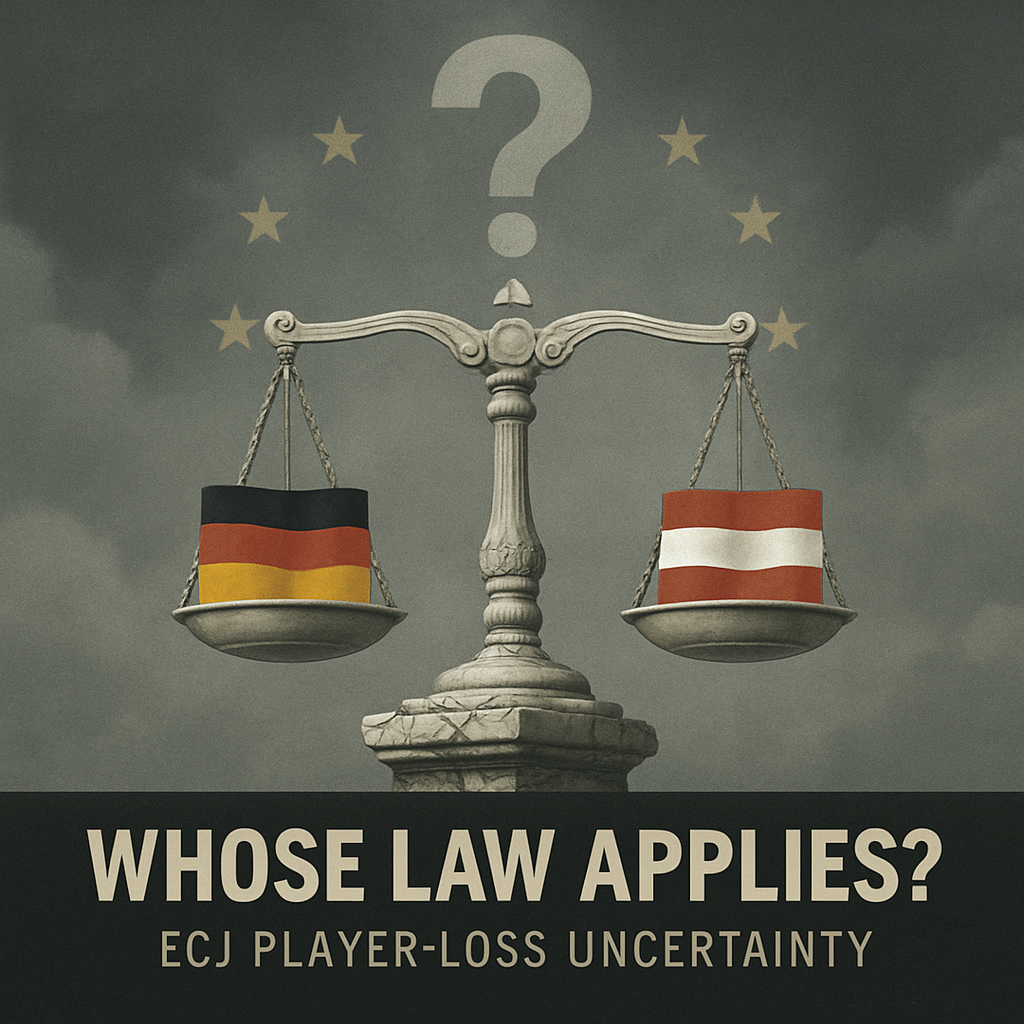
For years, the European Court of Justice has faced referrals from national courts seeking clarification on operator liability for player losses — a question fundamental to iGaming compliance across the EU. Rather than issuing binding EU-wide precedent, the ECJ has repeatedly declined to settle the matter, instead deferring to national judicial systems to apply their own interpretations of EU law.
This pattern has created a fragmented legal landscape particularly problematic in countries like Germany and Austria, where high-stakes litigation over player-loss claims has proliferated. Operators face contradictory guidance from different national courts, each interpreting EU consumer protection law through their own jurisdictional lens. The result is a patchwork of liability standards rather than harmonised European regulation.
What This Means
The ECJ's strategy of jurisdictional deference effectively forces operators to maintain separate compliance and risk management frameworks for each national market. What constitutes acceptable player-loss protocols in Germany may expose an operator to liability in Austria, and vice versa. This fragmentation directly contradicts the principle of a unified European market for services.
Operators cannot establish economies of scale in compliance infrastructure when fundamental liability standards differ across borders. Each market requires distinct legal review, separate financial reserve calculations, and independent litigation risk assessments. This approach significantly increases operational costs and creates barriers to cross-border expansion.
The ECJ's avoidance also suggests institutional hesitation about iGaming regulation itself — possibly reflecting deeper disagreements about whether player protection is primarily a consumer law issue or a services market issue — with different implications for how member state derogations are handled.
What to Watch
Monitor any new referrals to the ECJ from German or Austrian courts that may finally force a definitive ruling. The volume and value of pending player-loss litigation in Germany in particular creates financial pressure on operators that may accelerate lobbying for EU-level resolution. A major insolvency triggered by player-loss claims could be the catalyst that finally compels ECJ action.
What this means for B2B outreach: Legal technology platforms, compliance advisory firms, and litigation management vendors have a clear and urgent mandate in Germany and Austria specifically. Operators exposed to player-loss claims in multiple EU jurisdictions require jurisdiction-specific compliance frameworks that cannot be standardised — creating ongoing demand for localised legal advisory services.
Source: iGamingBusiness. Published 2026-06-04.
Source: iGamingBusiness
Sofia Eriksson
Senior Reporter
Member of the iGaming Pulse editorial team. Covering industry news, analysis, and B2B developments across the global iGaming sector.