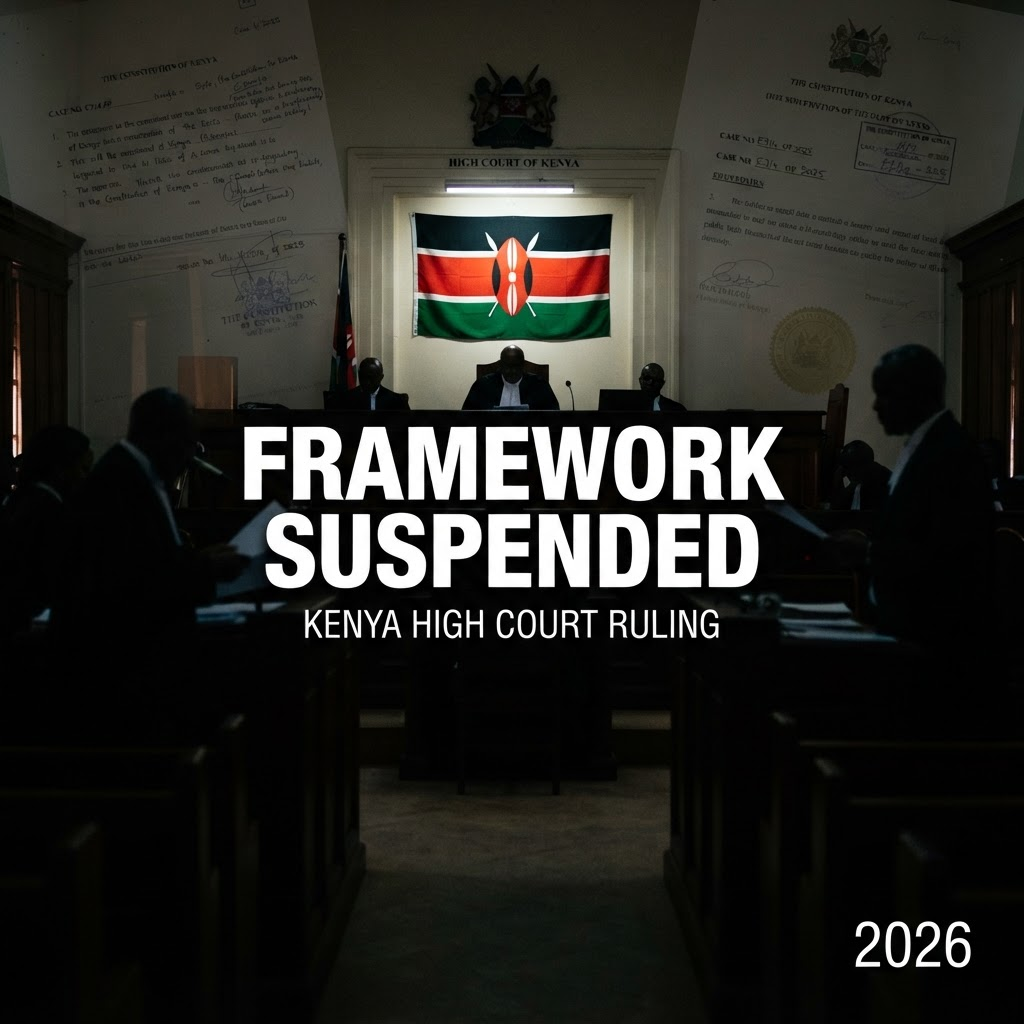
Kenya High Court Suspends Gambling Licensing Framework Amid Consultation Dispute
Kenya's High Court has issued a suspension order against the newly implemented gambling licensing framework, creating significant operational uncertainty for the East African iGaming market. The legal challenge centred on alleged failures to conduct adequate public consultation regarding capital requirements for licence applicants.
Context
Kenya's gambling regulator introduced updated licensing rules designed to modernise the sector's regulatory infrastructure and raise compliance standards. However, petitioners challenged the framework's validity, arguing that the consultation process was inadequate and failed to meet procedural requirements under Kenyan administrative law.
The court agreed with these contentions, determining that capital requirement provisions — which significantly impact licence applicants' cost structures — were not subjected to proper public consultation mechanisms. This procedural defect rendered the entire framework legally suspect, prompting the suspension.
What This Means
The suspension creates a regulatory vacuum that could last months or longer, depending on legal proceedings' timeline. Operators must now navigate unclear compliance obligations — uncertain whether to follow the suspended framework or revert to previous regulatory guidance.
Capital planning becomes exceptionally difficult when regulatory requirements remain in legal limbo. International operators evaluating Kenyan market entry face unfavourable risk-return profiles given the uncertainty. The situation is further complicated by Kenya's importance as an East African gaming hub: regional operators with cross-border operations must carefully evaluate their Kenyan exposure until the legal situation is resolved.
Source: iGaming Business
Priya Sharma
Fintech Editor
Member of the iGaming Pulse editorial team. Covering industry news, analysis, and B2B developments across the global iGaming sector.