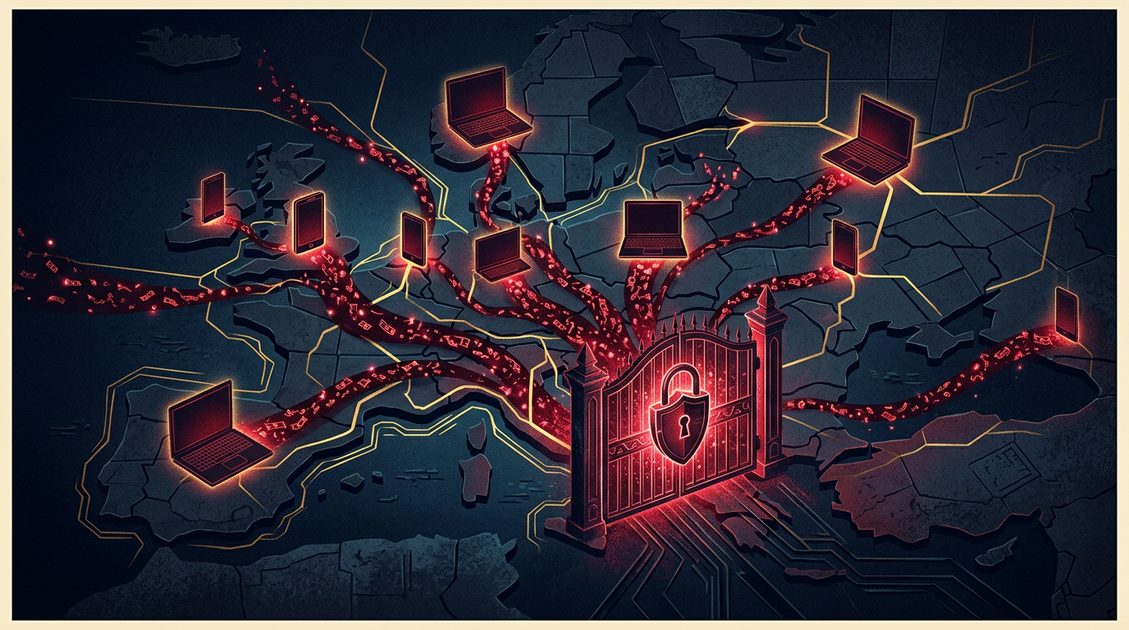
Illegal Gambling Dominates European Online Market
Illegal gambling operations have captured the dominant share of Europe's online betting and gaming market, with new research showing unlicensed operators generated €224.8 billion ($246.1 billion) in gross gaming revenue between 2023 and 2025. The 70% market share held by illegal operators vastly outpaces the licensed, regulated sector—a stark indicator of enforcement and compliance failure across EU member states.
Context
European gaming regulation has undergone significant evolution since 2015, with individual member states implementing strict licensing frameworks, payment processor oversight, and marketing restrictions. Major economies including Germany, Italy, Spain, and France have all introduced dual licensing systems or monopolistic models designed to minimize the illegal market footprint. Despite these regulatory investments, the new data indicates unlicensed operators continue to thrive.
The €224.8 billion GGR figure encompasses all unlicensed online gambling verticals—sports betting, casino games, poker, and skill games—across all European jurisdictions. The sheer magnitude suggests that despite licensing availability and competitive offerings from regulated operators, players continue to patronize illegal sites for perceived advantages: unregulated bonus structures, non-compliant odds offerings, and looser responsible gaming requirements.
Why Illegal Operators Persist
Several structural factors explain the illegal market's dominance. First, payment processing remains porous—while European regulators mandate payment processor oversight, many unlicensed operators use cryptocurrency, offshore payment facilitators, and obfuscated merchant categories to process wagers. Second, marketing enforcement remains inconsistent across member states; illegal operators routinely advertise on social media, affiliate sites, and streaming platforms with minimal consequences. Third, players migrating between EU member states often patronize illegal sites licensed in their home country's jurisdiction rather than re-registering with regulated operators in their current location.
The data likely reflects a bifurcated market where regulated operators serve compliance-conscious players and generate verifiable tax revenue, while illegal operators capture price-sensitive segments and high-value players seeking unrestricted betting limits.
What This Means for Operators
The research underscores that regulatory licensing alone does not guarantee market competitiveness or profitability. Licensed operators face compressed margins due to tax obligations, compliance costs, and responsible gaming investment, while illegal competitors operate without these friction points. This creates a structural disadvantage that cannot be solved through better products or marketing alone—it requires coordinated enforcement.
For payment processors, the finding reinforces that transaction monitoring and merchant category enforcement must become more rigorous. For regulators, it suggests that existing frameworks require substantial enhancement, particularly in cross-border cooperation and payment system integration.
Watch for Next Steps
Expect European regulatory bodies to cite this research when proposing stricter payment processor oversight, potentially targeting stablecoin and cryptocurrency gateways more aggressively. Watch also for discussions around harmonizing marketing restrictions across the EU and potentially establishing a centralized enforcement registry of illegal operators targeting European players.
Source: casino.org
Marcus De Luca
Regulation Correspondent
Member of the iGaming Pulse editorial team. Covering industry news, analysis, and B2B developments across the global iGaming sector.