Context
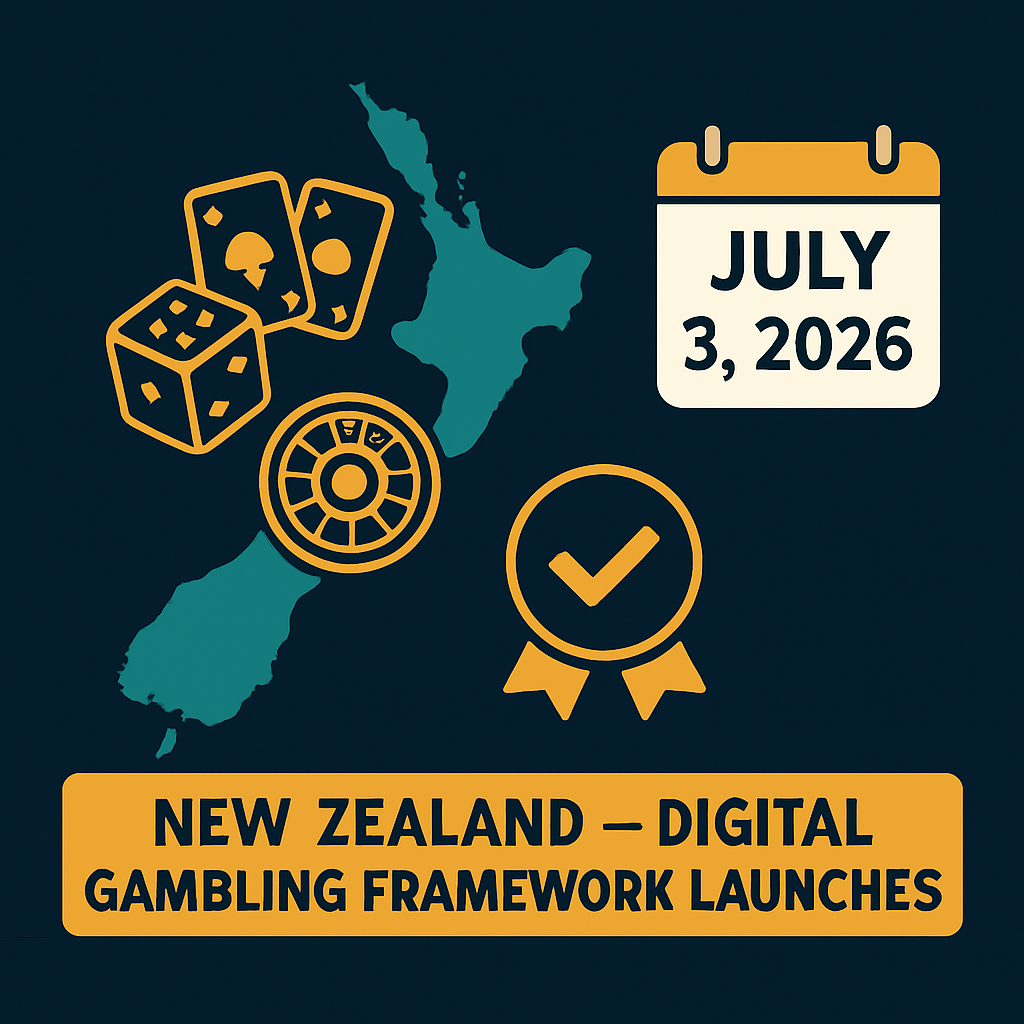
New Zealand has formally introduced comprehensive online gambling regulations designed to bring structure, consumer protection, and revenue oversight to a previously minimally regulated digital gaming landscape. The regulatory framework will become operative on 3 July 2026, the same date the Department of Internal Affairs will open applications for the new competitive licensing process.
This synchronised approach — regulation launch paired with licensing commencement — differs from some international models where regulatory frameworks precede operator licensing by extended periods. New Zealand's coordinated timing suggests a deliberate policy design to establish ground rules and competitive parameters simultaneously, preventing a regulatory vacuum during the transition.
The framework addresses online casinos, poker platforms, sports betting digital channels, and other internet-based gambling services previously operating in legal grey zones or subject only to fragmented local authority oversight.
What This Means
The July 2026 launch date signals that New Zealand considers its regulatory apparatus adequately developed and that stakeholder consultation processes have reached sufficient maturity. Operators have a clear deadline to assess compliance requirements, allocate resources for regulatory applications, and prepare operational adjustments to align with New Zealand-specific rules on player protection, responsible gambling, anti-money laundering, and tax obligations.
The licensing process being "competitive" indicates that New Zealand will not award monopoly status or unlimited licences. Instead, authorities will evaluate applicants against defined criteria — likely including financial stability, player protection commitments, tax compliance history, and operational experience. This creates measurable competitive pressure: well-capitalised, established operators may have advantages, but newcomers with strong compliance records and differentiated product offerings are not automatically excluded.
For the Asia-Pacific region, New Zealand's formal market entry represents one of the most significant regulatory developments of 2026. It creates a new legitimate jurisdiction where compliant operators can compete openly, displacing grey-market operators who have historically served New Zealand players without regulatory oversight.
What to Watch
Track the volume and profile of licence applicants when applications open on 3 July. A high volume of established international operators indicates strong confidence in the New Zealand market's commercial viability. Conversely, a small applicant pool may suggest that the regulatory framework contains provisions — tax rates, localisation requirements, product restrictions — that reduce commercial attractiveness. Initial licensing outcomes will define the competitive landscape for years.
What this means for B2B outreach: The July 2026 licensing window creates a clear procurement trigger. Operators applying for New Zealand licences will require compliant platforms, payment integrations supporting NZD, responsible gambling tools meeting local requirements, and KYC systems certified for New Zealand identity verification standards. B2B suppliers with Asia-Pacific market experience should initiate conversations with prospective applicants immediately.
Source: iGamingBusiness. Published 2026-06-09.
Source: iGamingBusiness

Illia Lisovskyy
Senior Editor
Member of the iGaming Pulse editorial team. Covering industry news, analysis, and B2B developments across the global iGaming sector.