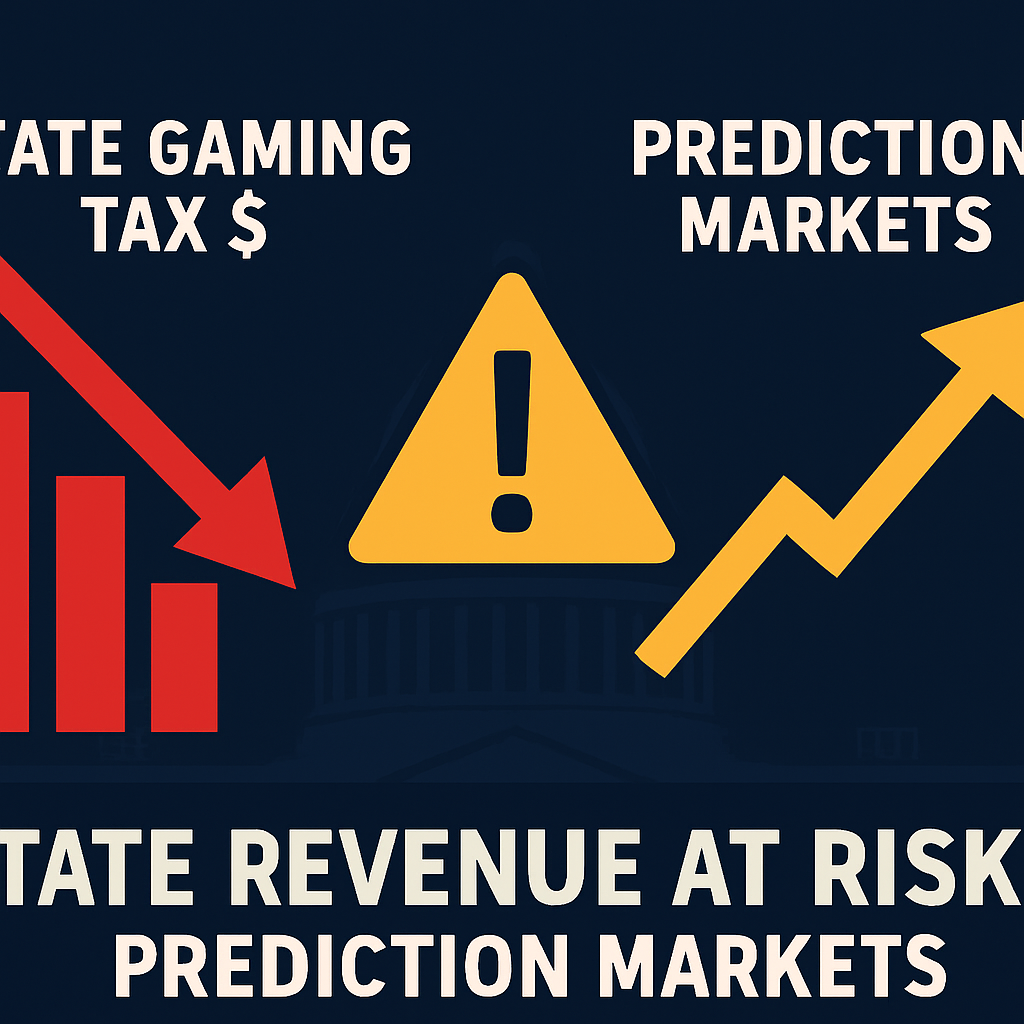
Prediction Markets Emerge as Threat to State Gaming Tax Revenues
The Tax Policy Center (TPC), a nonpartisan research organization, has released analysis indicating that prediction markets pose a material threat to state gaming tax revenues across the United States. The research identifies prediction markets as an alternative betting channel that could redirect wagering activity away from traditional, regulated gaming channels and thus reduce tax collections.
Context
Prediction markets — platforms where users trade contracts based on future event outcomes — have grown rapidly in mainstream adoption. Unlike traditional sports betting and casino gaming, which operate under clear state regulatory frameworks and are subject to established tax rates, prediction markets operate in a regulatory gray area in most jurisdictions.
As prediction market platforms gain consumer awareness and trading volume increases, they are attracting betting activity that historically flowed to traditional state-licensed gaming channels. The TPC analysis examines this behavioral shift and its implications for state budgets.
What This Means
The TPC's findings have prompted regulatory attention at the state level. Cash-strapped states facing budget constraints are now confronting a choice: attempt to regulate and tax prediction markets to recapture revenue, or watch betting activity migrate to unregulated platforms entirely.
Key implications include:
- Tiered Vulnerability: The TPC identifies that certain states — particularly those with lower sports betting market penetration and weaker digital gaming infrastructure — face greater revenue risks.
- Taxation as Mitigation: Forward-thinking states are developing prediction market tax frameworks, though implementation complexity remains high.
- Regulatory Momentum: State legislatures are increasingly considering prediction market regulation, creating both compliance obligations and market legitimacy for operators.
For licensed sports betting operators, the TPC analysis validates competitive concerns. Prediction markets represent direct substitutes for traditional sports wagering, particularly for event-outcome bets that are the core product of most regulated sportsbooks.
What to Watch
Track state legislative sessions in Q3 2026 for prediction market taxation bills. The states that move earliest to establish tax frameworks will define the baseline compliance environment that shapes how prediction market operators structure their products and business models across the broader US market.
What this means for B2B outreach: Regulatory intelligence and compliance advisory firms have a compelling pitch to both traditional sportsbooks (threat assessment) and prediction market operators (opportunity navigation). The TPC analysis creates urgency in conversations about how prediction market growth reshapes competitive positioning and regulatory exposure for all licensed gaming stakeholders.
Source: Casino.org / Tax Policy Center. Published 2026-06-10.
Source: casino.org
Sofia Eriksson
Senior Reporter
Member of the iGaming Pulse editorial team. Covering industry news, analysis, and B2B developments across the global iGaming sector.