RegulationTrending

SAFE Bet Act Gains Senate Momentum: Federal Minimum Standards for Sports Betting Would Cover Advertising, Deposit Caps, AI Marketing, and Prop Bet Restrictions

The SAFE Bet Act — which would ban gambling ads during live sports broadcasts, cap deposits, require affordability checks, and prohibit AI-driven personalised betting products — received its highest-profile Senate hearing platform yet on May 20, with bipartisan support suggesting federal minimum standards for US sports betting are moving from proposal to credible near-term legislation.

Illia Lisovskyy

Illia Lisovskyy

Senior Editor

3 min read
83
0
SAFE Bet Act Gains Senate Momentum: Federal Minimum Standards for Sports Betting Would Cover Advertising, Deposit Caps, AI Marketing, and Prop Bet Restrictions

SAFE Bet Act: Federal Minimum Standards for Sports Betting Move Closer to Legislative Reality

The Supporting Affordability and Fairness with Every Bet Act has been circulating in Congress since its introduction by Senator Richard Blumenthal (D-CT) and Representative Paul Tonko (D-NY), but the May 20 Senate Commerce Subcommittee hearing gave the legislation its most prominent platform yet. For the first time, the bill's core provisions were examined against real-world industry testimony in a setting that drew bipartisan engagement from senators who had, just days earlier, watched Minnesota become the first state to ban prediction markets outright.

What the SAFE Bet Act Would Do

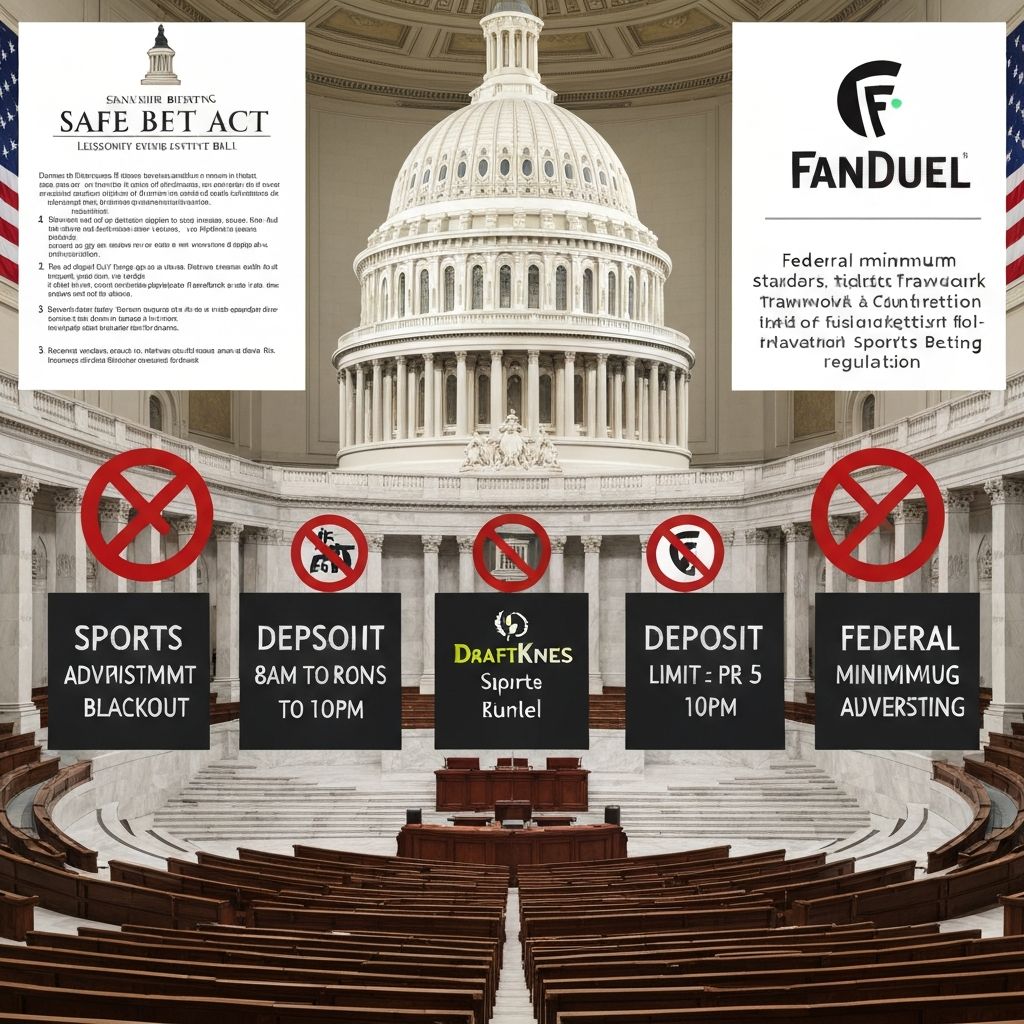
The legislation operates through a federal minimum standards framework: states that wish to continue offering legal sports betting must certify compliance with federal requirements. The substantive provisions span five major areas:

Advertising restrictions. The SAFE Bet Act would prohibit gambling operators from running advertisements between 8am and 10pm — covering the entire broadcast window for professional and college sport — and would ban gambling ads during live sports events, regardless of time. This provision would end the category of advertising that has made DraftKings and FanDuel among the most visible brands in US sports media.

Deposit limits. Operators would be prohibited from accepting more than five deposits from a single customer in a 24-hour period. Credit card deposits would be banned outright, bringing US standards into line with the United Kingdom, where credit card gambling deposits have been prohibited since 2020.

Affordability checks. Operators would be required to conduct affordability checks — verification of a customer's financial means relative to their wagering activity — before accepting wagers exceeding $1,000 within a 24-hour period.

Prop bet restrictions. The bill would establish a national ban on proposition bets involving college and amateur athletes — directly addressing the game-fixing concerns raised during the Senate hearing's integrity segment.

AI marketing prohibition. Operators would be prohibited from using artificial intelligence systems that analyse individual gambling behaviour to generate personalised promotional offers or betting product recommendations.

Why It Matters

If enacted, the SAFE Bet Act would represent the most significant federal intervention in sports betting since PASPA's repeal in 2018. The advertising restrictions alone — banning gambling ads during the broadcast windows when most live sports are watched — would materially impact the US sports betting customer acquisition economics that DraftKings, FanDuel, and BetMGM have built their market share strategies around. For prediction market operators, the bill's implicit framing of event contracts as betting products subject to state licensing requirements is equally significant: if the SAFE Bet Act's framework passes, it would undercut the CFTC's federal preemption argument at the legislative level.

SAFE Bet ActUS SenateResponsible GamblingDigital MarketingUSA
Illia Lisovskyy

Illia Lisovskyy

Senior Editor

Member of the iGaming Pulse editorial team. Covering industry news, analysis, and B2B developments across the global iGaming sector.

0 Comments

Leave a Comment

Related Articles

Illinois SB 1705 Advances: Criminal Felony Classification for Sweepstakes Casinos Moves Forward as 97% of Operators Ignore Civil Cease-and-Desist Orders
RegulationTrending

Illinois SB 1705 Advances: Criminal Felony Classification for Sweepstakes Casinos Moves Forward as 97% of Operators Ignore Civil Cease-and-Desist Orders

Illinois Senate Bill 1705 — which would make operating a sweepstakes casino for Illinois residents a Class 4 felony carrying up to three years imprisonment — is advancing through the legislature after civil cease-and-desist orders achieved only 3% compliance from 65 targeted operators, with Chumba Casino, LuckyLand Slots, and Pulsz still serving Illinois players.

Illia Lisovskyy·
47
CFTC Secures Federal Injunction Against Arizona, Establishing First Court Win in Prediction Markets Preemption Fight — Five States Now Facing Federal Lawsuits
RegulationTrending

CFTC Secures Federal Injunction Against Arizona, Establishing First Court Win in Prediction Markets Preemption Fight — Five States Now Facing Federal Lawsuits

A US District Court in Arizona granted the CFTC a preliminary injunction blocking Arizona from enforcing gambling laws against prediction markets — the commission's first court victory in its five-state legal campaign to establish federal exclusive jurisdiction over Kalshi, Polymarket, and Robinhood's event contract products.

James Whitfield·
119
US Senate Commerce Hearing Grills Sportsbook and Prediction Market Officials on Integrity, Youth Exposure, and Whether Federal Oversight Is Inevitable
RegulationTrending

US Senate Commerce Hearing Grills Sportsbook and Prediction Market Officials on Integrity, Youth Exposure, and Whether Federal Oversight Is Inevitable

The US Senate Commerce Subcommittee convened its most pointed hearing yet on sports betting and prediction markets on May 20, with bipartisan senators questioning executives from both industries on integrity failures, AI marketing, and youth exposure — signalling that federal oversight of gambling is moving from a fringe position to a mainstream legislative agenda.

James Whitfield·
98
Newsletter

Stay ahead of the iGaming industry

Weekly briefings covering regulation, operator moves, B2B deals, and market analysis — delivered free to your inbox every Thursday.

No spam. Unsubscribe at any time. 5,000+ industry professionals already subscribed.