Senate Hearing Puts Prediction Markets and Sports Betting Under Bipartisan Pressure
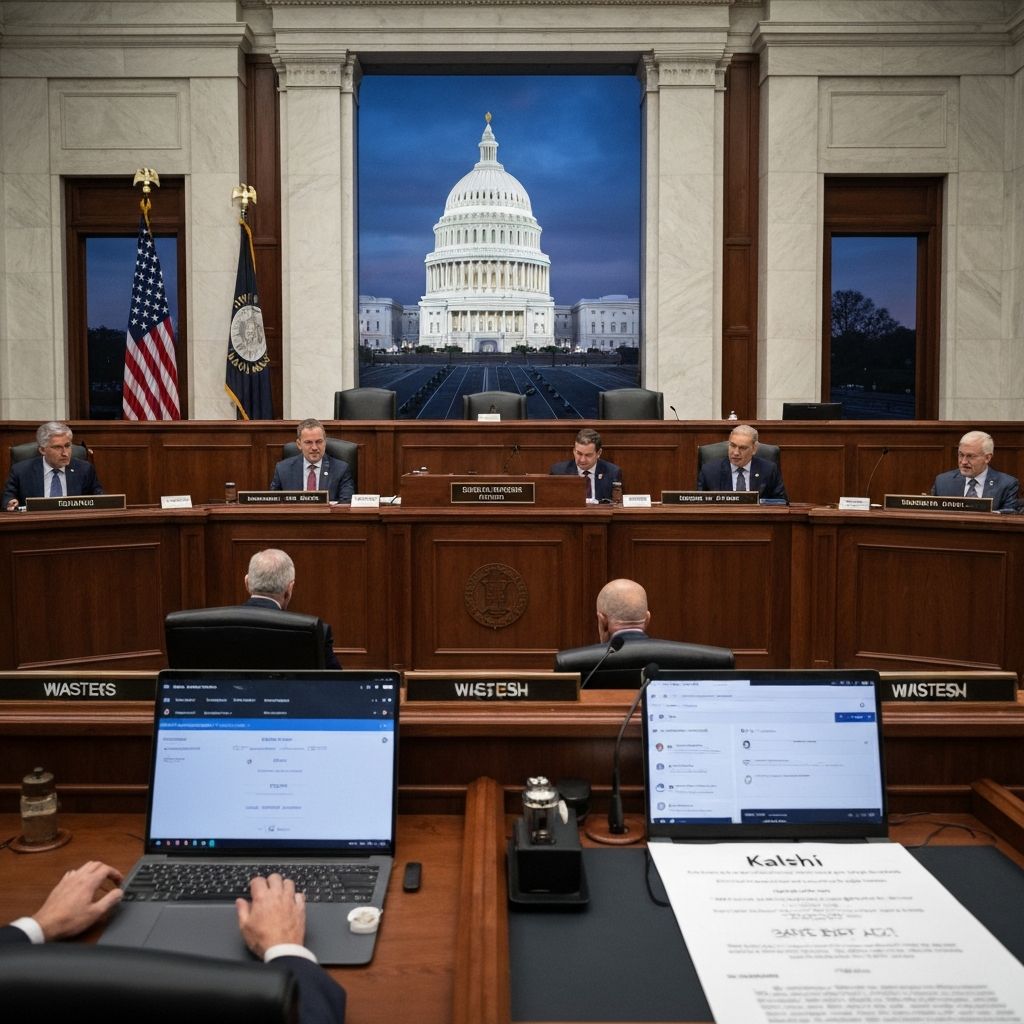
The US Senate Commerce Subcommittee on Consumer Protection, Technology, and Data Privacy held a hearing on May 20, 2026 that framed the politics of sports betting and prediction markets with unusual clarity. Senators from both parties arrived with prepared questions, sharp follow-ups, and a shared premise: the current regulatory framework for American sports wagering is failing consumers, athletes, and the integrity of sport.
The session — titled No Sure Bets: Protecting Sports Integrity in America — drew executives from the sports betting industry, prediction market operators, and responsible gambling advocates into the same room on Capitol Hill, one day after Minnesota became the first state to ban prediction markets outright and the CFTC filed its fifth state lawsuit.
The Hearing's Core Themes
Sports integrity. The hearing opened with the Senate's most immediate concern: a string of recent athlete investigations — spanning college basketball, professional baseball, and the NFL — in which players faced allegations of manipulating games or statistics for wagering purposes. Senators pressed operators on what real-time data-sharing agreements exist with leagues and law enforcement, and whether the rapid proliferation of in-play and micro-betting markets has increased the vulnerability of sports to corruption.
Prediction markets as gambling. The committee's treatment of prediction markets was pointed. Multiple senators stated directly that sports event contracts on Kalshi and Polymarket are indistinguishable from sports betting, regardless of how the CFTC categorises them. Senator Maria Cantwell's line of questioning centred on accountability: if prediction markets are financial instruments under federal law, who is responsible when a 19-year-old loses $40,000 betting on NBA player statistics?
Youth and social media exposure. The most emotionally charged exchanges concerned the accessibility of both sports betting and prediction market products to young people. Senators from both parties cited social media advertising, influencer marketing on TikTok and YouTube, and the seamless integration of betting odds into sports content apps as mechanisms that normalise wagering for underage audiences.
AI-driven personalisation. Multiple senators raised the SAFE Bet Act's proposed prohibition on AI systems that analyse individual betting behaviour to create personalised offers. DraftKings and FanDuel executives faced detailed questions on what data their platforms collect, how personalisation algorithms work, and whether opt-out mechanisms are genuinely accessible.
Why It Matters
The May 20 Senate hearing marks the highest-profile federal legislative scrutiny of sports betting and prediction markets to date, and the bipartisan tone signals a shift from the post-PASPA era when Congress largely left gambling regulation to the states. For licensed sportsbook operators, the hearing represents both risk and opportunity: risk because federal minimum standards legislation could impose advertising blackouts, deposit caps, and AI marketing prohibitions across all 38 licensed states simultaneously; opportunity because a federal framework that treats prediction markets as gambling — subject to the same state licensing requirements — would neutralise the most significant competitive threat facing the licensed sportsbook industry.
James Whitfield
Editor-in-Chief
Member of the iGaming Pulse editorial team. Covering industry news, analysis, and B2B developments across the global iGaming sector.