Context
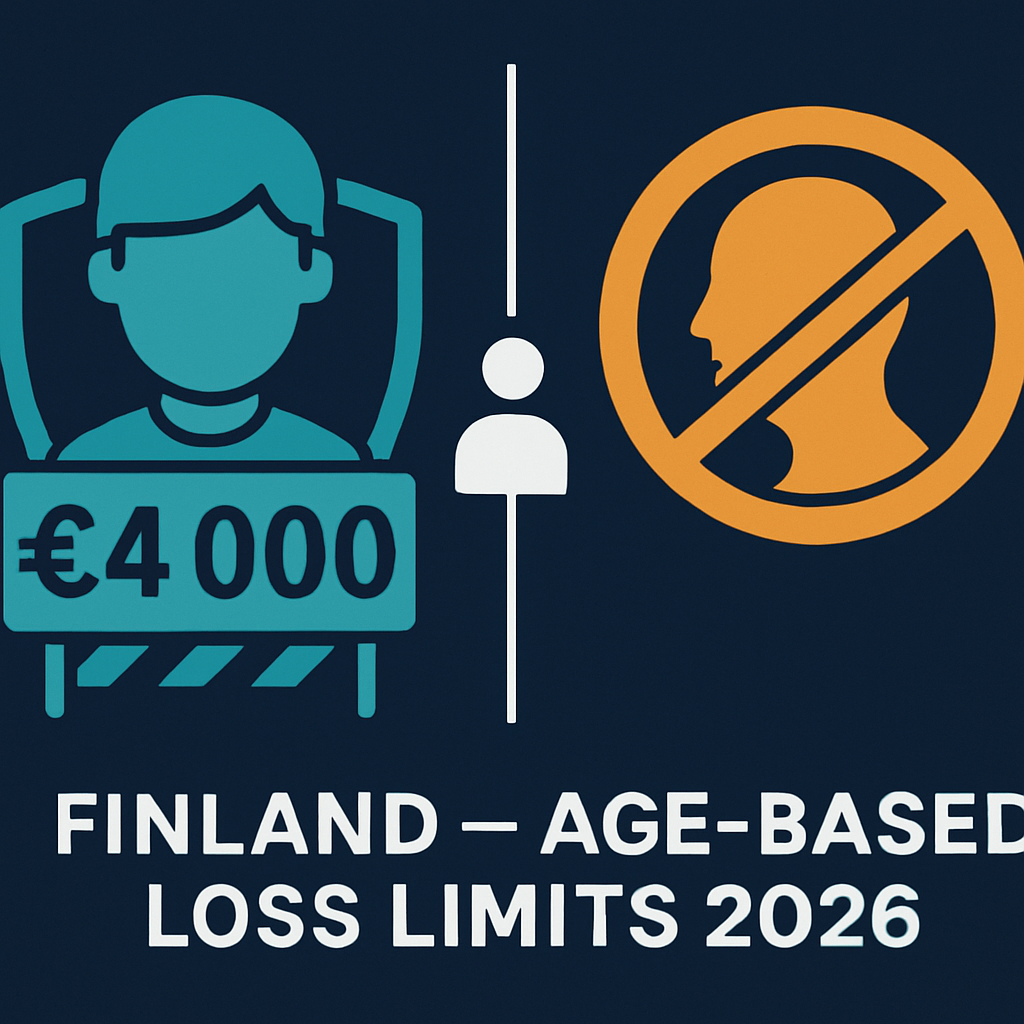
Finland's state-owned gambling operator Veikkaus has announced a fundamental restructuring of its player loss limits, effective immediately on 9 June 2026. Rather than maintaining uniform spending thresholds across all adult demographics, the operator is implementing a tiered, age-sensitive approach that concentrates protective measures on younger player segments.
The new framework introduces graduated loss checkpoints beginning at €4,000 for the youngest player cohorts, with escalating thresholds for older age brackets. Simultaneously, Veikkaus has eliminated the previously universal €25,000+ annual loss limit that applied to players aged 25 and older, effectively removing a hard ceiling on spending for mature adult gamblers.
This dual-track regulatory shift comes as European gambling markets increasingly grapple with balancing consumer protection mandates against operator commercial interests and adult autonomy principles.
What This Means
The policy reversal signals a nuanced regulatory philosophy: maximum intervention for developmentally vulnerable populations, minimal intervention for established adults. By concentrating loss-limit checkpoints on players under 25, Veikkaus acknowledges scientific evidence suggesting that prefrontal cortex development ��� key to impulse control and long-term consequence assessment — continues into the mid-20s.
Conversely, removing the ceiling for 25+ players represents a significant liberalisation compared to the previous universal framework. This suggests regulatory confidence in adult decision-making capacity and may reflect competitive pressures within Nordic markets or internal Veikkaus assessments that uniform caps were economically inefficient without corresponding player-protection gains.
For the broader iGaming industry, this approach offers a potential template: protecting minors and young adults through escalating loss limits while maintaining a level playing field for established adults. Jurisdictions considering new responsible gambling frameworks may look to this model as a middle path between blanket restrictions and minimal intervention.
What to Watch
Monitor player behaviour data from Veikkaus in the months following implementation — specifically whether the removal of the 25+ cap leads to measurable increases in average adult spending or problem gambling indicators. If harm metrics remain stable while player satisfaction improves, this model may accelerate adoption across Nordic and European markets.
What this means for B2B outreach: Responsible gambling technology providers and age-verification specialists should use the Veikkaus model as a case study when engaging European operators. The shift toward demographically segmented loss-limit frameworks creates demand for tools that can dynamically apply different limit rules by verified player age — a capability many legacy platform providers do not natively support.
Source: iGamingBusiness. Published 2026-06-09.
Source: iGamingBusiness
Sofia Eriksson
Senior Reporter
Member of the iGaming Pulse editorial team. Covering industry news, analysis, and B2B developments across the global iGaming sector.