Europe's Strictest Ad Restrictions Take Shape
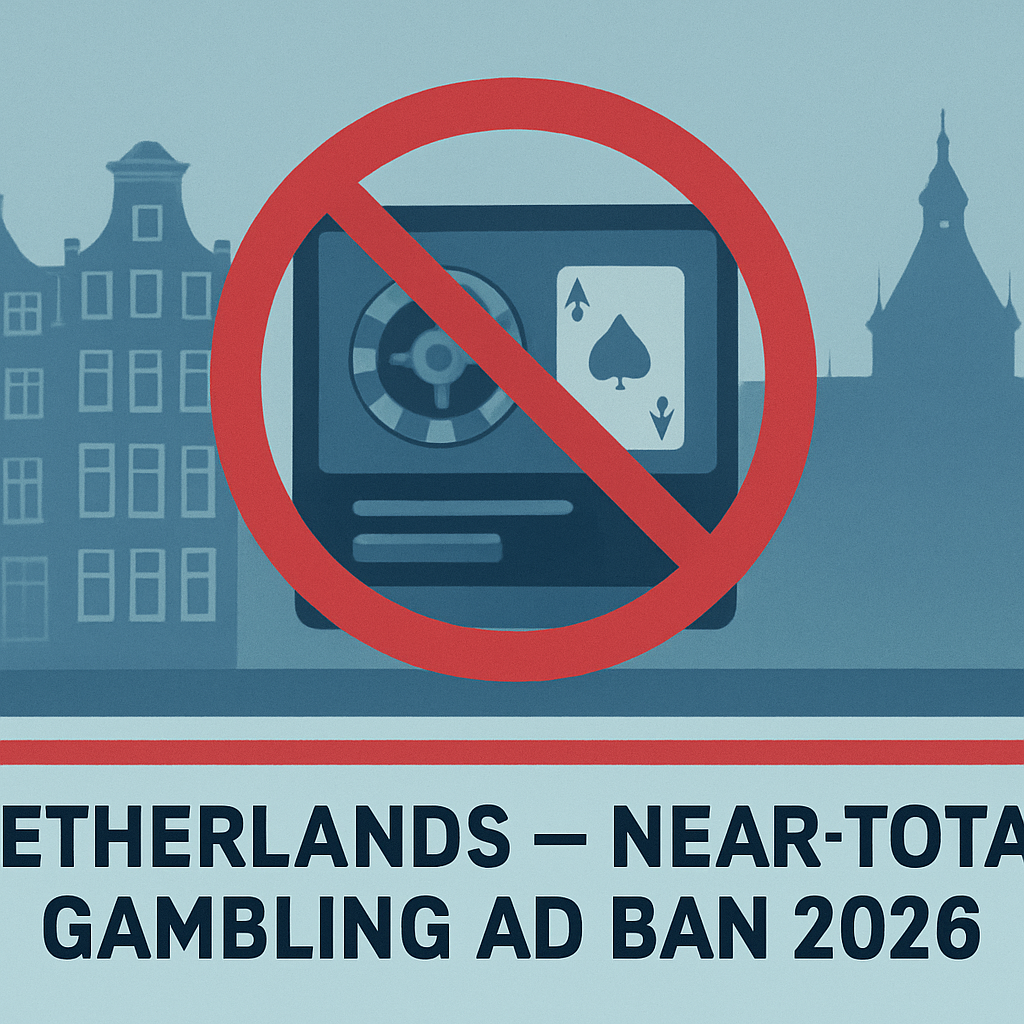
The Dutch government has announced a comprehensive gambling harm reduction agenda featuring a near-total prohibition on online gambling advertising. Released by the Secretary of State for Justice and Security, the five-year strategy represents one of the most restrictive advertising policies in Europe's regulated iGaming markets.
The initiative marks a fundamental shift in Dutch gambling policy philosophy. Rather than limiting product availability or raising age restrictions, regulators have opted to dramatically constrain operator marketing channels — a choice with profound implications for customer acquisition strategies across the sector.
Context
The Netherlands has maintained one of Europe's more liberal but regulated iGaming markets since implementing its remote gambling licensing system. The Dutch market has attracted major operators and generated substantial tax revenue, but concern over problem gambling and youth exposure has grown significantly.
Previously, Dutch gambling policy centred on product-level restrictions: banning certain games, limiting bet sizes, or controlling promotional offers. The new strategy pivots toward demand-side intervention through advertising restrictions rather than supply-side product controls.
Notably, the government decided against raising the minimum gambling age for high-risk products — a measure advocated by some harm reduction specialists. This decision suggests policymakers believe age restrictions are either ineffective or politically infeasible, making advertising restrictions the preferred policy lever.
What This Means
Operators conducting business in the Dutch market must fundamentally restructure customer acquisition approaches. Digital advertising channels — traditionally the primary method for scaling player bases in Europe — face severe restrictions. Operators will need to pivot toward direct marketing, affiliate relationships, organic search, and loyalty-driven retention strategies rather than paid acquisition.
The near-total advertising ban creates a significant competitive advantage for operators with large, established player bases who rely less on continuous acquisition spending. Newer market entrants and operators without substantial organic traffic face disproportionate commercial impact.
For the broader European market, the Netherlands provides a potential policy template. If the five-year strategy succeeds in reducing problem gambling harm metrics without dramatically reducing tax revenue, regulators in Germany, France, Italy, and other markets may pursue similar advertising restrictions.
What to Watch
Monitor the Dutch regulator KSA's enforcement of the advertising ban — the breadth of "near-total" will be defined by which specific channels remain permissible and which are explicitly prohibited. Operators should seek regulatory clarification on affiliate marketing treatment, brand-building content, and sponsorship arrangements before restructuring acquisition strategies.
What this means for B2B outreach: SEO technology providers, CRM and retention marketing platforms, loyalty programme vendors, and affiliate network operators all have compelling propositions for Dutch-licensed operators who must now acquire and retain players without traditional paid advertising. The ban creates immediate demand for acquisition-alternative technology and strategy consulting.
Source: iGamingBusiness. Published 2026-06-16.
Source: iGamingBusiness
Sofia Eriksson
Senior Reporter
Member of the iGaming Pulse editorial team. Covering industry news, analysis, and B2B developments across the global iGaming sector.