The Sweepstakes Casino Supply Chain Is Breaking Down — Pragmatic Exits Every US Unregulated Market
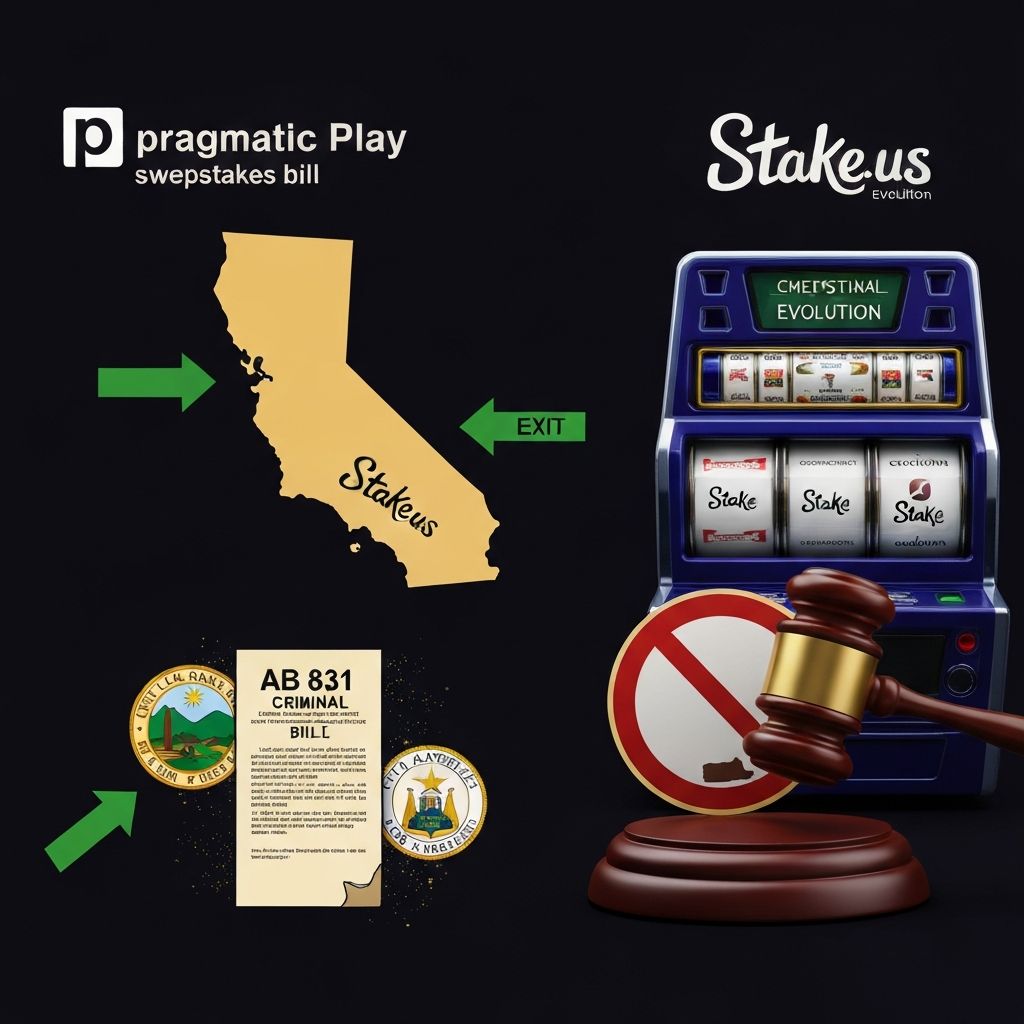
The US sweepstakes casino sector's regulatory crisis reached a new inflection point as Pragmatic Play — the world's most widely distributed slot studio — announced it is exiting the entire category in US states that have not already blocked supply, following Evolution's withdrawal from Stake.us after the City of Los Angeles filed a civil enforcement action against the platform.
What Happened
The City of Los Angeles filed a civil enforcement action against Stake.us and more than 20 associated entities, claiming the platform operates as an illegal online gambling business under California law. Evolution and several of its subsidiaries — including NetEnt, Red Tiger, Big Time Gaming, and NoLimit City — were named as parties in the lawsuit. Within days, Evolution confirmed it had pulled all games from Stake.us in California.
Pragmatic Play then made the more consequential announcement: it would discontinue licensing its entire game portfolio to sweepstakes casino operators across all US states where restrictions were not already in place. Pragmatic cited "regulatory developments and evolving legislation" as the rationale, explicitly referencing California's AB 831 as the triggering framework. AB 831 would impose criminal penalties on any business that provides material support to sweepstakes platforms — creating direct supplier liability that no publicly traded content studio can accept.
Why It Matters
Pragmatic Play is present in virtually every US sweepstakes casino. Its portfolio of hundreds of slot titles forms the backbone of the content library at Stake.us, Fortune Coins, Global Poker, and a dozen other major platforms. An exit of this scale does not leave operators with a gap in their library — it hollows out the premium content stack entirely. For operators in the sweepstakes sector, losing Evolution and Pragmatic content simultaneously while facing active legislation in California (AB 831) and congressional attention creates an existential product and legal environment.
For licensed iGaming operators and their B2B suppliers, the sweepstakes contraction is commercially positive: it reduces the grey-market product competition and accelerates player migration to regulated platforms.
Industry Context
The California lawsuit mechanism — combined with the criminal liability framework of AB 831 — is structurally different from the civil cease-and-desist letters that sweepstakes operators have been managing for years. Supplier liability under criminal law is a category of risk that publicly traded companies like Evolution (NASDAQ-listed) and Pragmatic's investors cannot tolerate regardless of revenue contribution. The precedent, once established in California, will be referenced by other states' attorneys general — making the sweepstakes sector's supply chain vulnerability a national rather than a state-specific issue.
Source: NEXT.io / Deadspin / casino.org
James Whitfield
Editor-in-Chief
Member of the iGaming Pulse editorial team. Covering industry news, analysis, and B2B developments across the global iGaming sector.