Swedish Channelisation Continues Downward Slide
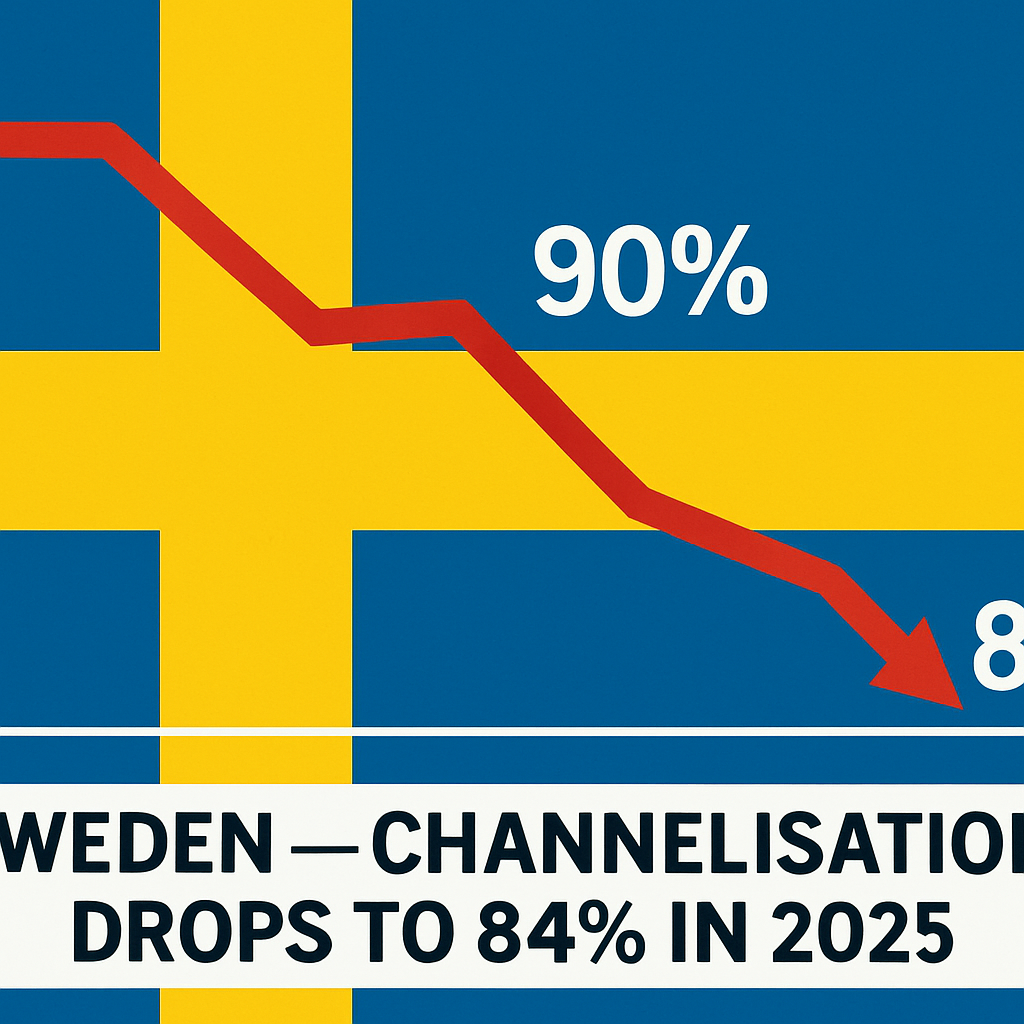
Spelinspektionen, Sweden's gambling authority, has released 2025 channelisation figures revealing a significant drop in the share of betting activity flowing through licensed operators. The headline figure stands at 84%, a decline from prior-year levels, with an even more concerning 78% when survey-based estimates are excluded from the calculation.
Channelisation measures the percentage of total gambling activity — across all operators, licensed and unlicensed — that occurs on regulated platforms. A declining ratio indicates players are increasingly patronising grey-market and offshore providers, bypassing Sweden's licensing framework.
Context: Sweden's Regulatory Framework
Sweden implemented a licensing system in 2019, requiring all operators to hold Swedish licences. The framework was designed to:
- Ensure player protection through standardised requirements
- Generate tax revenue for public services
- Combat money laundering and problem gambling
- Maintain market integrity
Licensed operators pay significant taxes and compliance costs, creating price and convenience disadvantages relative to unlicensed competitors offering lower margins and fewer restrictions. This structural tension has consistently driven channelisation decline across regulated markets globally.
What This Means
The 84% (or 78% adjusted) figure signals that approximately 16–22% of Swedish betting activity now occurs outside the licensed ecosystem. For licensed operators, this represents:
- Reduced addressable market size
- Lower total tax contributions to the state
- Weakened competitive position against well-capitalised offshore brands
- Pressure on profit margins and marketing budgets
Spelinspektionen's continued monitoring and transparent reporting is commendable, but the data also indicates that regulatory enforcement ��� whether through payment system controls, IP blocking, or operator liability measures — has not been sufficient to reverse the trend.
For the broader European market, Sweden's declining channelisation is a cautionary signal. Markets with strict product restrictions and high tax burdens structurally incentivise player migration to unlicensed alternatives, regardless of enforcement intensity.
What to Watch
Monitor whether Spelinspektionen or the Swedish government respond to these figures with regulatory adjustments — particularly any proposals to relax product restrictions (stake limits, RTP floors, spin speed requirements) that currently make licensed products less competitive. Any policy shift toward improving product competitiveness would be a significant positive signal for licensed operators and their B2B suppliers.
Source: iGamingBusiness, Spelinspektionen reports. Published 2026-06-17.
Source: iGamingBusiness
James Whitfield
Editor-in-Chief
Member of the iGaming Pulse editorial team. Covering industry news, analysis, and B2B developments across the global iGaming sector.