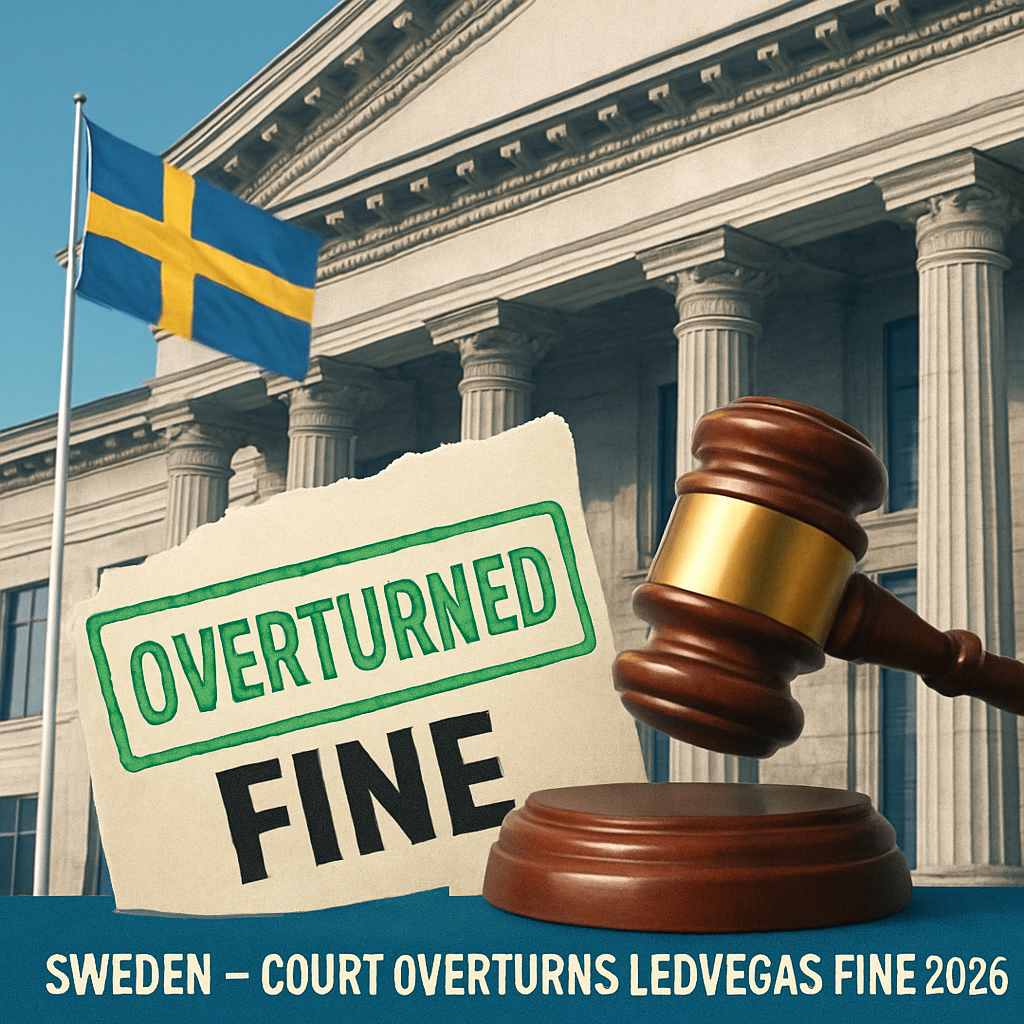
Court Validates Operator Compliance Procedures
A Swedish court has overturned a fine against Roar Vegas — the operator formerly known as LeoVegas — originally imposed in March 2025 for alleged responsible gambling compliance failures. The court's decision affirms that the operator had implemented and maintained adequate responsible gambling enforcement procedures, rejecting the regulator's initial findings.
The ruling represents a significant legal victory for the operator and establishes important precedent regarding how Swedish regulators must substantiate compliance violation allegations.
Context
Sweden maintains one of Europe's most rigorous gambling regulatory frameworks, with Spelinspektionen — the Swedish Gambling Authority — actively monitoring operator compliance with responsible gambling requirements. Swedish law mandates robust player protection measures including self-exclusion systems, deposit limits, and identification verification.
Roar Vegas operates under Swedish licence and has historically positioned itself as a compliance-focused operator. The March 2025 fine represented a significant enforcement action, and the operator's prompt legal challenge signalled confidence in their documented compliance systems.
The case illustrates broader tension in European gambling regulation between regulators interpreting compliance requirements broadly and operators defending documented procedures. Swedish courts have occasionally sided with operators when regulators fail to demonstrate specific compliance failures with adequate evidentiary support.
What This Means
The court's decision establishes that documented responsible gambling enforcement procedures constitute meaningful legal protection against regulatory fines. Regulators cannot rely solely on general assertions about inadequate player protection — they must demonstrate specific procedural failures with evidence.
For operators across Sweden and Europe, this ruling creates both an opportunity and an obligation. The opportunity: well-documented compliance processes provide genuine legal protection, not merely reputational benefit. The obligation: operators must invest in compliance documentation infrastructure to capture the evidentiary record necessary to defend against regulatory challenges.
For Spelinspektionen and equivalent regulators across Europe, the ruling raises the evidentiary bar for enforcement actions. Future fines and sanctions will need to be supported by specific documented failures rather than general compliance concerns.
What to Watch
Monitor whether Spelinspektionen modifies its enforcement approach following this ruling — specifically whether it develops more detailed evidentiary standards before issuing fines. Also watch whether other operators with pending Swedish regulatory challenges use this precedent to mount similar legal defences.
What this means for B2B outreach: Compliance documentation platforms, responsible gambling technology vendors with audit trail capabilities, and legal advisory firms specialising in Swedish gaming law all have stronger propositions following this ruling. The case demonstrates that compliance technology investment is not merely regulatory cost — it is legal risk management with demonstrated ROI when enforcement actions arise.
Source: iGamingBusiness. Published 2026-06-16.
Source: iGamingBusiness
James Whitfield
Editor-in-Chief
Member of the iGaming Pulse editorial team. Covering industry news, analysis, and B2B developments across the global iGaming sector.