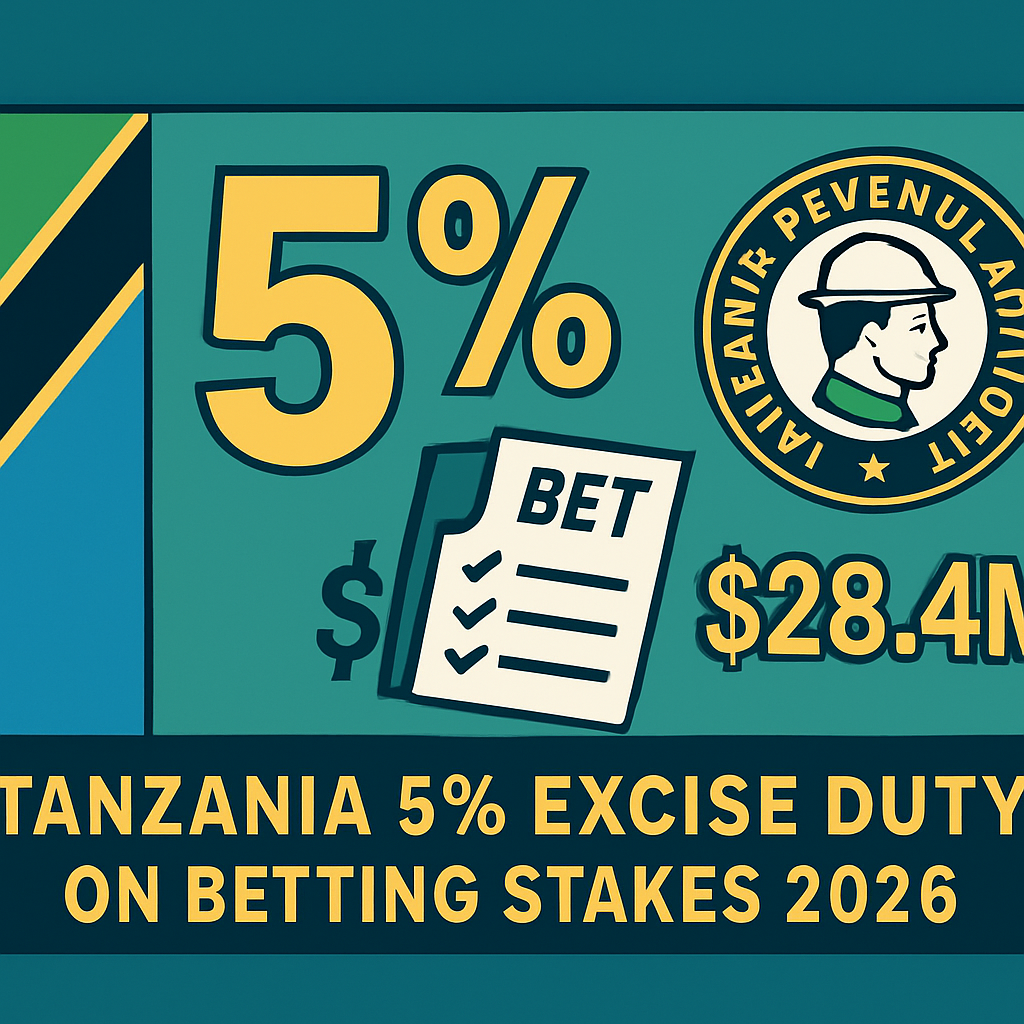
Tanzania Levies 5% Excise Duty on Betting Stakes
Tanzania's government has announced plans to implement a 5% excise duty on betting stakes across all licensed operators, marking a substantial increase in the country's betting sector taxation. The new levy is projected to generate approximately $28.4 million in additional annual revenue, reflecting the government's strategic focus on monetising regulated gambling markets.
Context
Tanzania has developed a growing betting industry over the past decade, with sports betting particularly popular among the country's mobile-first population. The government previously relied on standard business taxation and licensing fees, but the new excise duty represents a more aggressive revenue extraction strategy common in maturing African betting markets.
The 5% duty applies to betting stakes — the total amounts wagered rather than operator profits — meaning the tax is levied at the point of transaction. This approach contrasts with profit-based taxation and ensures consistent revenue regardless of operator performance.
What This Means
Operators in Tanzania face increased operating costs that will likely be passed to bettors through adjusted odds or reduced promotional spending. The 5% stake tax is cumulative with existing licensing fees and corporate taxes, potentially creating a combined tax burden exceeding 10% on betting revenues. This cost structure will require operators to optimise pricing models to remain competitive while maintaining profitability.
Market consolidation is likely in response to the tax burden. Smaller operators may struggle to absorb the increased costs, leading to potential exits or acquisitions by larger regional players with economies of scale. International operators evaluating East African expansion should factor the new tax structure into market entry modelling, as the effective total tax burden on Tanzanian operations is now materially higher than in comparable markets such as Kenya or Uganda.
The stake-based levy model is spreading across African markets — Ghana, Nigeria, and Kenya have all implemented or considered similar approaches. Tanzania's adoption reinforces the regional trend and provides a template that other East African governments may follow. For operators with multi-market African strategies, building tax modelling that accounts for potential stake-based levies in adjacent markets is now a planning imperative.
What to Watch
Monitor the Tanzania Revenue Authority's implementation timeline and any subsequent amendments to the levy rate or scope. Watch also for operator responses — whether leading operators pass costs to players or absorb them — which will signal the market's price elasticity.
Source: iGaming Business. Published 2026-06-23.
Source: iGaming Business

Illia Lisovskyy
Senior Editor
Member of the iGaming Pulse editorial team. Covering industry news, analysis, and B2B developments across the global iGaming sector.